
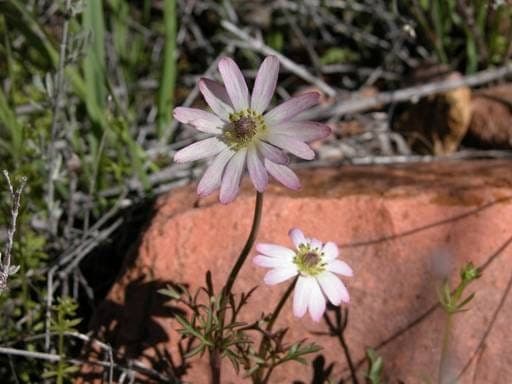
Unknown authorUnknown author / Public domain, via Wikimedia Commons
Desert anemone: complete guide
Anemone tuberosa
¿Quieres ver Desert anemone: complete guide en tu jardín?
1 minuto, sin tarjeta de crédito
Overview
Anemone tuberosa, commonly known as desert anemone or tuber anemone, is a delicate spring wildflower from the southwestern United States. This rare plant is valued for its finely dissected foliage and charming pink to white flowers that appear in early spring. For gardeners who love alpine and dry environments, this plant is a true jewel.
Appearance and Bloom
Desert anemone grows as a low, compact plant reaching only 15-30 cm tall. The leaves are finely divided, trifoliate, and delicate in appearance. The plant grows from small underground tubers. From March to May, flowers appear, typically 4-8 per plant, in various shades of pink with white centers. Each flower measures about 2-3 cm across and consists of roughly twelve petals.
Ideal Location
Desert anemone thrives in sunny, dry locations where other plants struggle. Planting sites on slopes, in rock walls, or stone troughs are ideal. The plant may go dormant after blooming, so position it where it won't be disturbed by summer growth. A heat-focused location helps ripen the tubers.
Soil Requirements
The ideal soil for this plant is very well-drained, lean earth. Sandy, gravelly, or shell-grit mixes are preferred. The plant demands dry conditions during its rest period. In heavy clay soil, the plant struggles. A neutral to slightly alkaline pH is acceptable.
Watering
During growth and bloom (March-April), regular watering supports vigorous growth. After blooming, watering must be drastically reduced as the plant enters dormancy. During rest (June-February), soil must remain nearly dry. This is crucial - excessive moisture rots the tubers.
Diseño gratis
¿Quieres ver Desert anemone: complete guide en tu jardín? Crea un diseño gratis ahora.
Pruning
Pruning is not applicable - this plant is small and grows naturally in good form. After blooming, spent flowers can be removed, but this is optional. Simply allow foliage to die back naturally.
Maintenance Calendar
January-February: Prepare growing site, ensure well-drained soil. March-April: Growth and bloom period, light regular watering. May: Bloom ends, gradually reduce watering. June-August: Dormancy, plant is underground, minimal maintenance, keep soil nearly dry. August-September: Prepare for next season, optionally remove and store tubers. October-February: Winter rest.
Winter Hardiness
Anemone tuberosa is moderately winter hardy to about -5 to 0 degrees Celsius, but in many European climates it is better treated as half-hardy, especially in wet winters. In harsh winter climates, container cultivation is preferable, storing pots in a dry, sheltered location over winter.
Companion Plants
Combine desert anemone with other drought-loving early spring bloomers such as dwarf iris species, Pulsatilla, Alyssum, and Saxifraga. Compact succulents like Sedum and Sempervivum also pair nicely. Avoid vigorous growers that might overwhelm the delicate anemone.
Closing Thoughts
Anemone tuberosa is a true treasure for gardeners willing to experiment with alpine and dry environments. With proper drainage and a dry rest period, this plant rewards patient growers with delicate spring beauty. Especially suited for container or stone trough cultivation. A genuine gem for those willing to take the time.
¿Quieres ver Desert anemone: complete guide en tu jardín? Crea un diseño gratis ahora.
Sube una foto, elige un estilo y obtén un diseño fotorrealista con lista de plantas en menos de un minuto.
Más de 10.000 jardines diseñados
Sin tarjeta de crédito


Plantas similares
Drummond's anemone: complete guide
Anemone drummondii
Discover Drummond's anemone (Anemone drummondii): a silvery-grey mountain plant for cool rock gardens and alpine troughs.
Korean clematis: complete guide
Clematis serratifolia
Clematis serratifolia is a hardy climber with fragrant yellow bell flowers in August-September. Pruning group 3, location and care tips.
Aquilegia brevistyla: complete guide
Aquilegia brevistyla
Discover Aquilegia brevistyla, the elegant North American columbine. Growing tips, shade tolerance, and design ideas for woodland and shadowed gardens.