
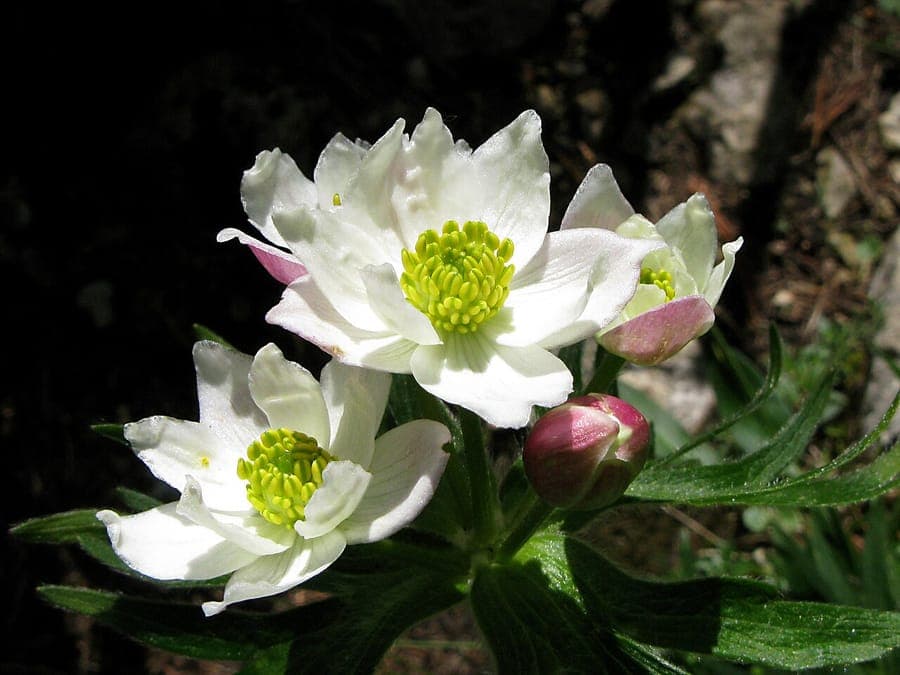
Heinz Staudacher / CC BY-SA 4.0, via Wikimedia Commons
Narcissus Anemone (Anemone narcissiflora): complete guide
Anemone narcissiflora
¿Quieres ver Narcissus Anemone (Anemone narcissiflora): complete guide en tu jardín?
1 minuto, sin tarjeta de crédito
Overview
Anemone narcissiflora, known as Narcissus Anemone or Narcissus-flowered Windflower, is an elegant alpine plant native to mountain regions across Europe. This graceful plant is prized for its silky white flowers that emerge in May. The blossoms closely resemble narcissus flowers, hence the botanical epithet. This is a delicate plant especially suited to shaded gardens and rock gardens.
The plant grows to 30-45 centimeters tall and forms neat, bushy clusters. Anemone narcissiflora is a gentle grower that can remain undisturbed for years. It makes an excellent addition to naturalistic gardens and alpine plantings.
Appearance & bloom
The plant develops slender, elegant stems topped with whorls of pure white flowers. Each bloom features 5-8 petals and a yellow center with numerous stamens. The flowers are about 2-3 centimeters across and remain attractive for extended periods. The foliage is deeply cut and finely divided, creating a delicate appearance.
The flowering period extends from May through early June. The flowers are long-lasting and appear in succession, meaning you can enjoy blooms for weeks. The delicate petals often have a soft pink reverse that becomes visible when buds first open.
Ideal location
Narcissus Anemone thrives in dappled shade to light shade. A location under deciduous trees or on the north side of walls is ideal. The plant tolerates full shade poorly. In very sunny locations, the plant may decline. Choose a spot with adequate moisture.
The plant works beautifully in rock gardens, woodland edge conditions, and borders with other shade-lovers. It combines exquisitely with ferns and hostas.
Soil
Narcissus Anemone requires moisture-retentive soil with good drainage. The plant grows well in humus-rich soils. Add compost or leaf mold to sandy soils. The plant prefers slightly acidic to neutral pH. Avoid very dry soils.
Recommended soil mix: 40% garden soil, 30% compost, 20% leaf mold, 10% sand. Ensure adequate drainage by adding grit to heavy clay soils.
Diseño gratis
¿Quieres ver Narcissus Anemone (Anemone narcissiflora): complete guide en tu jardín? Crea un diseño gratis ahora.
Watering
Narcissus Anemone has moderate moisture needs. Water regularly during the growing season, especially during dry spells. The soil should neither dry out completely nor become waterlogged. Mulching around the plant helps retain moisture.
In rainy regions, it can thrive without supplemental watering. Avoid waterlogging during winter dormancy when the plant is resting.
Pruning
Narcissus Anemone requires minimal pruning. Remove spent flowers to maintain tidiness and encourage continued blooming. The seeds can self-sow; remove seedheads if you prefer to control this. Deadheading also extends the blooming period.
Remove dead foliage in spring. The plant naturally dies back as weather warms.
Maintenance calendar
- March: Check plant health, apply fresh mulch
- April-June: Water regularly, enjoy blooms, remove spent flowers
- July-August: Reduce watering, plant rests
- September-October: Add compost around plants
- November-February: Minimal maintenance
Winter hardiness
Narcissus Anemone is very winter-hardy, tolerating temperatures down to -15 degrees Celsius. The plant can remain outdoors in most climates. No special winter protection is needed, though extra mulch in extremely cold areas provides helpful insulation.
Companion plants
Narcissus Anemone combines beautifully with other shade-loving spring bloomers like hellebores, pulmonaria, and epimedium. The plant also pairs well with ferns and hostas. Grouping with other Anemone species creates visually interesting compositions.
Finding plants: Intratuin and Gamma occasionally stock seedlings or rhizomes. You can order seed online from specialist suppliers.
Closing
Narcissus Anemone is a beautiful addition to shaded gardens. With its delicate white flowers and straightforward growing requirements, this plant brings elegance to darker corners. Learn more at gardenworld.app/en and explore alpine plantings at gardenworld.app/en-alpine.
¿Quieres ver Narcissus Anemone (Anemone narcissiflora): complete guide en tu jardín? Crea un diseño gratis ahora.
Sube una foto, elige un estilo y obtén un diseño fotorrealista con lista de plantas en menos de un minuto.
Más de 10.000 jardines diseñados
Sin tarjeta de crédito


Plantas similares
Drummond's anemone: complete guide
Anemone drummondii
Discover Drummond's anemone (Anemone drummondii): a silvery-grey mountain plant for cool rock gardens and alpine troughs.
Korean clematis: complete guide
Clematis serratifolia
Clematis serratifolia is a hardy climber with fragrant yellow bell flowers in August-September. Pruning group 3, location and care tips.
Aquilegia brevistyla: complete guide
Aquilegia brevistyla
Discover Aquilegia brevistyla, the elegant North American columbine. Growing tips, shade tolerance, and design ideas for woodland and shadowed gardens.