
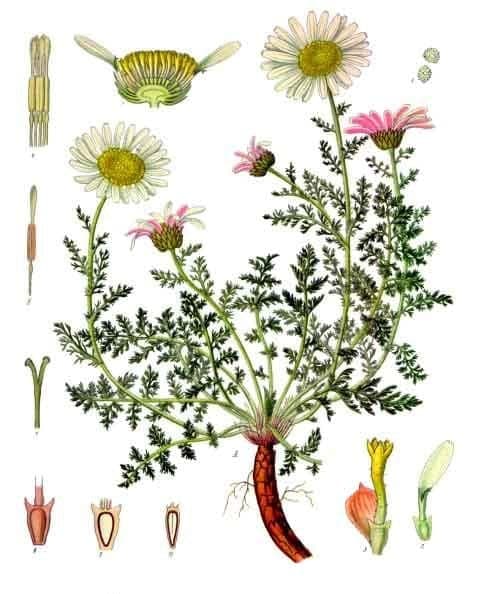
Franz Eugen Köhler, Köhler's Medizinal-Pflanzen / Public domain, via Wikimedia Commons
Anacyclus pyrethrum: complete guide
Anacyclus pyrethrum
¿Quieres ver Anacyclus pyrethrum: complete guide en tu jardín?
1 minuto, sin tarjeta de crédito
Overview
Anacyclus pyrethrum, commonly called Atlas daisy or Roman pellitory, is an elegant alpine plant native to North Africa. This charming plant produces delicate flowers with distinctive white upper sides and red undersides, creating a striking contrast. Its compact growth habit makes it ideal for rock gardens, borders, and container cultivation.
Appearance and Bloom
The Atlas daisy grows to about 30-40 cm tall and forms a neat rosette of finely cut, feathery foliage. Flowers appear from May through September with their characteristic two-toned appearance. The long flowering period and low-growing habit make them perfect gap-fillers in summer schemes.
Ideal Location
This plant thrives in full sun with at least 6 hours of direct sunlight daily. It loves warmth and protected, draft-free locations. Perfect for south-facing borders or against a sunny wall where it receives maximum heat.
Soil Requirements
Well-draining soil is essential, improved with sand and grit. Anacyclus pyrethrum is not fussy and grows even in poor soil. Slightly acidic to neutral pH (6-7) is ideal. Avoid heavy clay soils that retain water.
Diseño gratis
¿Quieres ver Anacyclus pyrethrum: complete guide en tu jardín? Crea un diseño gratis ahora.
Watering
Water moderately during the growing season, allowing soil to dry between waterings. Check regularly to prevent waterlogging. For container plants, water until 1 cm below rim level. In winter, water minimally.
Pruning
Pruning is not essential, but regularly deadhead spent flowers to encourage continued blooming. After flowering, stems can be cut back halfway to maintain compact growth.
Maintenance Calendar
March: Plant or repot. May-September: Regular deadheading of faded flowers. October: Prepare for winter, reduce watering. November-February: Dormancy period with minimal care.
Winter Hardiness
Anacyclus pyrethrum is hardy to approximately -5 to -10 degrees Celsius. In harsh climates, provide winter protection. In containers, move indoors to a cool, dry location for overwintering.
Companion Plants
Pairs well with other drought-lovers like lavender, salvias, and sedums. Also combines nicely with ornamental grasses or small shrubs for contrasting forms.
Closing Remarks
Anacyclus pyrethrum is an underrated gem that demands minimal care while delivering years of garden pleasure. Available at major retailers like OBI and Hornbach. For more design inspiration, visit gardenworld.app/en. Plant this elegant daisy this season and enjoy its captivating two-toned blooms (gardenworld.app/en).
¿Quieres ver Anacyclus pyrethrum: complete guide en tu jardín? Crea un diseño gratis ahora.
Sube una foto, elige un estilo y obtén un diseño fotorrealista con lista de plantas en menos de un minuto.
Más de 10.000 jardines diseñados
Sin tarjeta de crédito


Plantas similares
Calendula stellata: complete guide
Calendula stellata
Complete guide to Calendula stellata, the star-flowered marigold from Sicily: location, soil, watering and companion planting tips.
Korean chrysanthemum: complete guide
Chrysanthemum x rubellum
Chrysanthemum x rubellum is a hardy autumn perennial with single pink to copper flowers from August to November. Care and combinations.
Helianthus divaricatus: complete guide
Helianthus divaricatus
Helianthus divaricatus is a North American woodland sunflower with yellow summer blooms, ideal for naturalistic borders and shady edges.