
Wikimedia Commons / CC BY-SA 3.0, via Wikimedia Commons
Lax-flowered Orchid: complete guide
Anacamptis laxiflora
¿Quieres ver Lax-flowered Orchid: complete guide en tu jardín?
1 minuto, sin tarjeta de crédito
Overview
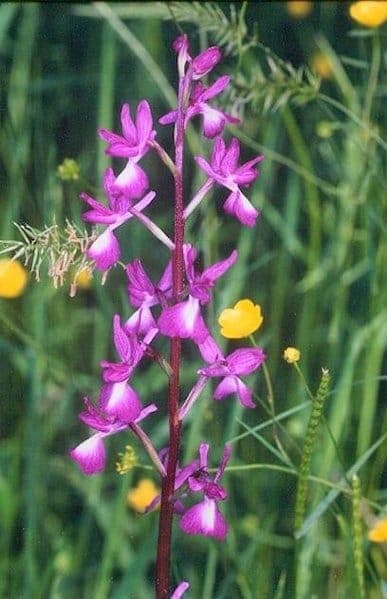
The Lax-flowered Orchid (Anacamptis laxiflora) is a captivating European native orchid that represents the Orchidaceae family's remarkable diversity. This elegant species is prized for its distinctive loose flower clusters with purple petals that create a soft, romantic appearance. Native to wetlands, marshes, and damp meadows across Southern Europe through the Mediterranean and extending eastward to the Caucasus, this orchid has adapted perfectly to moist habitat environments.
The common name derives from the characteristically loose arrangement of flowers on the inflorescence, distinguishing this species from relatives with compact flower spikes. This botanical characteristic alone makes identification straightforward. The plant occupies important ecological niches in protected wetland reserves and is increasingly popular among orchid enthusiasts seeking authentic gardening practices.
Appearance and Bloom
This orchid typically grows 20-50 centimeters tall with an upright, delicate habit. The stems are slender, green, and smooth, bearing narrow, linear basal leaves that form an elegant foundation. The flowers themselves command attention, displaying rich purple to magenta colorations with intricate patterns unique to the species. Each flower features a distinctive lip with fine lines and details.
Blooming occurs from April through June, with timing influenced by local climate and weather patterns. In warm springs, flowering may commence in early April, whereas cooler regions often see peak bloom in May. The flowers persist for several weeks, displaying remarkable staying power while attracting specific insect pollinators, particularly native bee species.
Ideal Location
The Lax-flowered Orchid thrives in full sun to partial shade, requiring at least four to six hours of direct daily sunlight. Light, dappled shade beneath deciduous or coniferous trees works well provided illumination remains diffuse. Avoid dense shade locations where blooming becomes infrequent or fails entirely.
This species prefers moist locations where water collects naturally, such as low-lying garden sections, near ponds, or in constructed wetland features. Microclimates with elevated atmospheric humidity prove ideal. Protection from strong winds proves essential, as delicate flowers and slender stems show vulnerability to wind damage.
Soil
The Lax-flowered Orchid demands moisture-retentive soils rich in organic matter. An ideal soil composition combines heavy clay through clay-loam with abundant humus and sphagnum moss. Soil pH should range from neutral to slightly acidic (6.5-7.5). Heavy clay soils that retain moisture are actually excellent provided drainage of excess water remains adequate.
The soil must never dry completely. Soil amendments such as sphagnum or coconut coir enhance water retention significantly. Maintain consistent moisture throughout the growing season (April-August), with attention to preventing complete dehydration. A thick mulch layer helps retain soil moisture.
Diseño gratis
¿Quieres ver Lax-flowered Orchid: complete guide en tu jardín? Crea un diseño gratis ahora.
Watering Requirements
During the growing season (April-October), the Lax-flowered Orchid requires consistently moist soil conditions. Target moisture levels around 50-70 percent saturation, avoiding boggy extremes where roots rot. In wet springs, natural precipitation typically suffices. Conversely, during dry periods, regular supplemental watering becomes essential.
Throughout the blooming period (April-June), light misting of foliage benefits the plant, particularly in warm, dry conditions. This elevates atmospheric humidity. Summer months (July-August) demand heightened watering attention as evaporation increases substantially.
During autumn and winter, following above-ground senescence, soil may become somewhat drier. Tubers require minimal water during dormancy, but complete desiccation must be prevented. Avoid wetting flowers during bright sunlight as water droplets can cause leaf burn.
Pruning and Maintenance
The Lax-flowered Orchid requires minimal intervention and pruning. As a naturally cycling plant, aggressive pruning remains unnecessary and potentially harmful. After blooming concludes (late June), faded flower spikes can be carefully removed once entirely withered, though this proves optional.
Following complete leaf senescence in October, all dead material can be cleared away. Patience in waiting until foliage completely yellows prevents premature energy depletion. During the growing season, weed removal around the plant base remains important, particularly competitive graminaceous species. Careful hand weeding surpasses mechanical cultivation.
Maintenance Calendar
April: Monitor tuber emergence. Begin watering. Careful weeding. May: Peak growth. Regular light misting. Flower bud formation. June: Flowering peaks. Insect pollinators visit. Adjust watering. July-August: Post-bloom support. Foliage development. Monitor for pests. September: Gradually reduce watering. Foliage yellows. October: Remove senescent foliage. Clean area. November-March: Dormant period. Minimal watering.
Winter Hardiness
The Lax-flowered Orchid demonstrates excellent cold hardiness throughout Northern European gardens. This species naturally occurs in regions experiencing severe winters. Underground tubers survive temperatures well below freezing provided they avoid permafrost conditions.
In Britain, Netherlands, Belgium, and equivalent zones, no supplemental winter protection proves necessary. The plant has evolved to withstand freezing periods successfully. Natural snow cover typically provides adequate insulation.
Companion Plants
The Lax-flowered Orchid harmonizes beautifully with fellow moisture-loving species sharing identical habitat requirements. Excellent companions include ornamental grasses, marsh marigold varieties, and other wetland orchids. Marsh violet and water mint create pleasing combinations.
From aesthetic perspectives, low-growing wet-habitat groundcovers form delicate tapestries beneath the upright orchid spires. These combinations create layered visual interest. Avoid aggressive spreaders like brambles and invasive species.
Closing Thoughts
The Lax-flowered Orchid represents a captivating addition to moist garden environments, particularly for gardeners seeking authentic natural beauty. With its elegant purple blooms and understated character, this plant adds refined sensory pleasure to garden experiences. Placed in appropriate wetland microhabitats with ample moisture and light, these wild orchids reward cultivators with years of reliable return and delicate flowering displays.
Cultivating native orchids contributes meaningfully to ecosystem preservation and conservation values. For additional information or plant materials, consult local garden centers in your region. Many offer regular orchid workshops and expert guidance.
¿Quieres ver Lax-flowered Orchid: complete guide en tu jardín? Crea un diseño gratis ahora.
Sube una foto, elige un estilo y obtén un diseño fotorrealista con lista de plantas en menos de un minuto.
Más de 10.000 jardines diseñados
Sin tarjeta de crédito


Plantas similares
Ram's-head lady's slipper: complete guide
Cypripedium arietinum
Everything you need to know about growing Cypripedium arietinum, a rare woodland orchid for cool, moist garden settings. Soil, care and planting tips.
Sparrow's-egg lady's slipper: complete guide
Cypripedium passerinum
Everything about growing Cypripedium passerinum, a cold-hardy subarctic orchid suited to cool, moist, shaded garden spots. Soil, care and companion plants.
Algerian Butterfly-orchid: complete guide
Platanthera algeriensis
Everything about Platanthera algeriensis, the rare Mediterranean orchid with greenish flowers native to Algeria, Morocco, Corsica and Spain.