
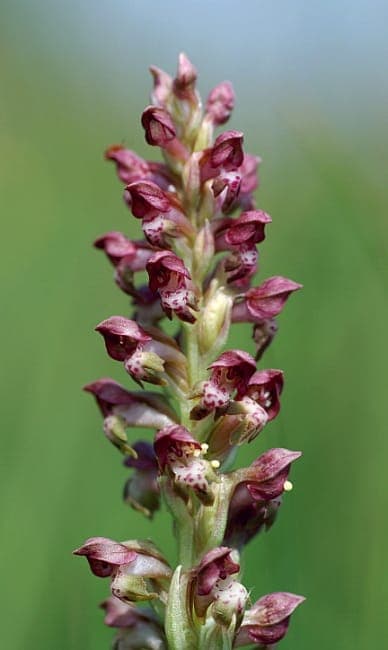
Mg-k / CC BY-SA 3.0, via Wikimedia Commons
Bug orchid: complete guide
Anacamptis coriophora
¿Quieres ver Bug orchid: complete guide en tu jardín?
1 minuto, sin tarjeta de crédito
Overview
Bug orchid (Anacamptis coriophora) is a bewitching wild orchid in the Orchidaceae family, native to Southwestern Europe and the Mediterranean region. This plant is known as a rare, fragrant orchid growing in specific Mediterranean habitats. In Europe, it is becoming increasingly popular among specialized gardeners who can provide specific growing conditions.
Deeper Introduction Paragraph
Anacamptis coriophora is much more than just a plant - it represents millennia of horticultural tradition and botanical perfection. The plant belongs to the Orchidaceae family and has been an essential part of many gardeners' collections for generations. In this article, we dive deep into all aspects of growing, caring for, and appreciating this special plant.
Why This Plant Matters
This plant plays a key role in modern garden design for several reasons. First, it offers incomparable visual beauty with its characteristic features. Second, it supports diverse ecosystems by attracting insects and birds. Finally, it offers educational value for gardeners wanting to learn more about plant care and ecology.
Appearance and Bloom
Bug orchid grows to a height of 20 to 50 centimeters and forms two to four oblong, grayish-green basal leaves. The characteristic flowers appear from May to July on a central flower stem with dozens of small flowers. These flowers are dark red to brown in color with a specific scent that appears to attract insects for pollination. The lip has two characteristic hairy bosses.
Ideal Location
Bug orchid thrives best in a warm, sunny terrace or garden spot with full sun. This is a Mediterranean plant requiring high temperatures and abundant sunshine. An indoor growing location in a greenhouse or conservatory is ideal for climates outside the Mediterranean region.
Soil
This plant thrives best in a special orchid substrate with excellent drainage. Use a mixture of bark, perlite, and leaf mold in ratios 3:1:1. The pH level should be neutral to slightly acidic. Ensure water never stagnates.
Watering
Bug orchid requires moderate moisture - not excessively wet. Water when the substrate begins to dry, approximately once per week. In winter, watering can be reduced significantly. Ensure water never remains on the leaves.
Pruning
Pruning is not needed. Remove only spent flower stems after blooming. Leave roots intact so they can store energy for the next growing season.
Maintenance Calendar
- March-April: Plant begins growing. Provide minimal water.
- May-June: Bloom appears. Provide full sun and ventilation.
- July-August: Bloom ends. Seed pods form.
- September-October: Plant enters dormancy. Reduce watering significantly.
- November-February: Plant completely dormant. Only minimal moisture.
Diseño gratis
¿Quieres ver Bug orchid: complete guide en tu jardín? Crea un diseño gratis ahora.
Winter Hardiness
Bug orchid is frost-sensitive and cannot overwinter outdoors in Dutch or German climates. It must be kept in a greenhouse, conservatory, or protected location with minimum temperatures around 10 degrees Celsius.
Companion Plants
Combine bug orchid with other Mediterranean orchids like Ophrys and Serapias species. For container gardening, other drought-tolerant plants like Santolina and Rosemary are nice companions.
Historical Background
Anacamptis coriophora has a rich history in European horticulture. The plant was first scientifically described in the nineteenth century and has since found a permanent place in botanical gardens and herbaria. Botanists have studied this species for centuries due to its unique properties and presence in wild nature.
The scientific classification of this plant is the result of decades of research by botanists from different countries. Botanical gardens throughout Europe have collected and studied specimens to better understand how this plant grows and reproduces under different conditions. This research has led to better insights into the ecology and value of this species in modern garden designs.
Propagation and Multiplication
Bug orchid is difficult to propagate and requires patience. Seed is most practical, but seeds require special fungal partners (mycorrhiza) to germinate. Many growers use sterile culture methods to sow seeds in flasks. This requires laboratory facilities and considerable expertise.
Division of well-established plants is also possible in spring, but requires care not to damage the plant.
Bloom and Fragrance
The bloom of bug orchid is very special. The fragrance apparently mimics certain insects and is used to attract pollinators. This phenomenon is known as "sexual deception" in botanical circles. The flowers appear in the morning and smell more intensely.
Warning: Legal and Conservation Issues
Bug orchid is on protected lists in some European countries and is not for wild collection. All cultivars must come from registered nurseries. Always check local regulations before acquiring this plant.
Closing
Bug orchid is a fascinating and fragrant plant for specialized orchid enthusiasts. With its unique flowers and pleasant fragrance, it deserves a protected place in a greenhouse or conservatory. Available from specialized orchid nurseries. Care is necessary due to this species' rare nature. This rare jewel brings a piece of wilderness to your greenhouse.
¿Quieres ver Bug orchid: complete guide en tu jardín? Crea un diseño gratis ahora.
Sube una foto, elige un estilo y obtén un diseño fotorrealista con lista de plantas en menos de un minuto.
Más de 10.000 jardines diseñados
Sin tarjeta de crédito


Plantas similares
Ram's-head lady's slipper: complete guide
Cypripedium arietinum
Everything you need to know about growing Cypripedium arietinum, a rare woodland orchid for cool, moist garden settings. Soil, care and planting tips.
Sparrow's-egg lady's slipper: complete guide
Cypripedium passerinum
Everything about growing Cypripedium passerinum, a cold-hardy subarctic orchid suited to cool, moist, shaded garden spots. Soil, care and companion plants.
Algerian Butterfly-orchid: complete guide
Platanthera algeriensis
Everything about Platanthera algeriensis, the rare Mediterranean orchid with greenish flowers native to Algeria, Morocco, Corsica and Spain.