
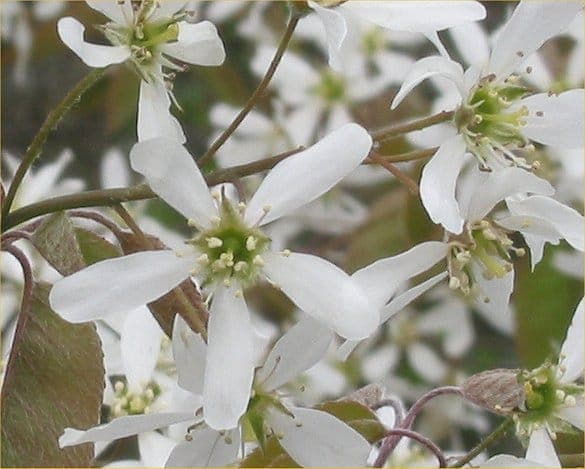
Rasbak / CC BY-SA 3.0, via Wikimedia Commons
Juneberry: complete guide
Amelanchier canadensis
¿Quieres ver Juneberry: complete guide en tu jardín?
1 minuto, sin tarjeta de crédito
Overview
Juneberry, scientifically known as Amelanchier canadensis, is a native North American deciduous shrub or small tree belonging to the Rosaceae family. This beautiful plant is a garden gem with its elegant multi-stem form, stunning spring blossoms, and bird-friendly berries. Growing as a natural multi-stemmed shrub, it typically reaches 4-8 meters in height.
Appearance and Bloom
Amelanchier canadensis is most spectacular in spring when the entire plant becomes smothered with clusters of pure white flowers. These delicate blooms appear before the leaves have fully emerged, creating a dramatic white silhouette against spring's blue sky. By May, the flowers give way to red berries that darken to near-black as they ripen. The leaves are oval, finely serrated, and clothed in gray hairs when young. In autumn, the foliage transforms to brilliant orange and red hues.
Ideal Location
Plant Juneberry in full sun to light shade. Best performance comes with 6+ hours of direct sunlight daily. Allow adequate space for the natural multi-stem development of this shrub. Position it where you can fully appreciate its elegant silhouette and spectacular spring bloom. The plant tolerates coastal winds better than many alternatives.
Soil
Amelanchier canadensis is adaptable to various soil types. It prefers well-draining, moisture-retentive soil with a pH between 5.5 and 7.5. The plant tolerates acidic soils exceptionally well and grows in heavy clay or sandy soils provided drainage is adequate. Amend poor soils with compost or peat moss.
Diseño gratis
¿Quieres ver Juneberry: complete guide en tu jardín? Crea un diseño gratis ahora.
Watering
Water newly planted Juneberry regularly until well-established. Once established, it becomes reasonably drought-tolerant. During dry summers, however, provide regular watering, especially during dry spells exceeding two weeks. Water in early morning or early evening to minimize evaporation.
Pruning
Pruning is not essential for Juneberry but can be done in late winter or early spring to maintain shape. Remove dead, diseased, or damaged wood. Thin crossing branches to maintain an open, airy form. The plant naturally develops an attractive shape.
Maintenance Calendar
- March/April: Check for winter damage, prune if necessary
- May: Enjoy the spectacular white flowers
- June/July: Harvest ripening berries for wildlife
- August/September: Water during dry periods
- October: Admire the autumn foliage
- November/December: Clean up fallen debris beneath the plant
Winter Hardiness
Juneberry is extremely cold-hardy, tolerating temperatures down to -30C. This makes it an excellent choice for colder northern regions. The plant recovers well from frost damage when it occasionally occurs.
Companion Plants
Combine Juneberry with early spring bloomers like hellebores, snowdrops, and crocuses. Group multiple specimens for maximum impact. It also works beautifully with fall bloomers and evergreens that provide contrasting texture and color.
Closing
Juneberry is a four-season plant offering wildlife habitat, beautiful blooms, edible berries, and stunning autumn color. Visit gardenworld.app for design inspiration and bring your front yard vision to life. Start designing your dream garden at gardenworld.app today!
¿Quieres ver Juneberry: complete guide en tu jardín? Crea un diseño gratis ahora.
Sube una foto, elige un estilo y obtén un diseño fotorrealista con lista de plantas en menos de un minuto.
Más de 10.000 jardines diseñados
Sin tarjeta de crédito


Plantas similares
Siberian crab apple: complete guide
Malus x robusta
Complete guide to the Siberian crab apple (Malus x robusta): location, soil, pruning, winter hardiness and the best companion plants for your garden.
Chinese flowering crabapple (Malus x spectabilis): complete guide
Malus x spectabilis
Meet the Chinese flowering crabapple (Malus x spectabilis): a classic spring bloomer with carmine buds and pink blossom.
Potentilla crassinervia: complete guide
Potentilla crassinervia
Potentilla crassinervia, the Corsican cinquefoil, grows wild on Corsica and Sardinia's peaks. Discover how to grow this hardy alpine rock garden gem.