
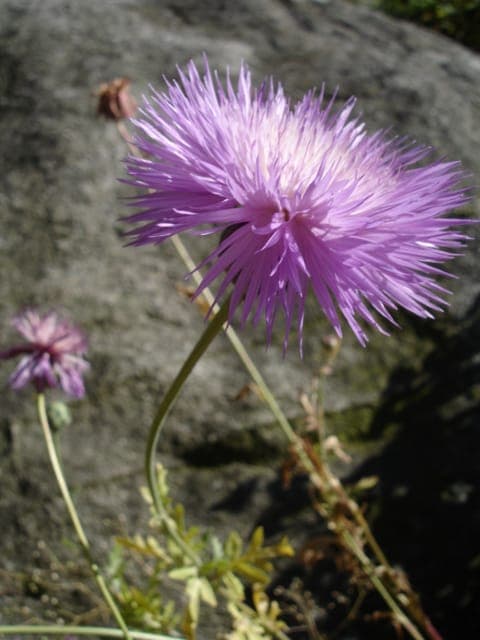
Epibase / CC BY 3.0, via Wikimedia Commons
Sweet sultan: complete guide
Amberboa moschata
¿Quieres ver Sweet sultan: complete guide en tu jardín?
1 minuto, sin tarjeta de crédito
Overview
Sweet sultan (Amberboa moschata), also known as fragrant amberbill or centauree ambrette, is an exotic annual flower from Turkey to Iran. This plant is renowned for its beautiful red-purple flowers and strong, pleasant musky fragrance. It is a favorite among florists and gardeners who want to grow fragrant cut flowers.
Appearance and Bloom
Sweet sultan grows as a slender plant to about 60-90 centimeters high. The leaves are fine, gray-green, and give the plant an elegant appearance. The flowers are the highlight: large, fluffy blooms with many petals in red, pink, or white. Flowers appear from June to frost in succession. Each flower can reach 5-8 centimeters diameter. The fragrance is unmistakable and pleasant - a blend of musk and sweetness.
Ideal Location
Sweet sultan grows best in full sun on a warm, sheltered site. The plant needs at least 6-8 hours of direct sunlight daily. An open spot with good air circulation promotes health. Protect from strong winds that can break the slender stems. In very warm regions, light afternoon shade can be beneficial.
Soil
The plant grows well in well-draining soil. Neutral to slightly acidic sandy loam is ideal. Add plenty of organic material for better moisture retention and nutrients. The plant tolerates various soil types but prefers not overly moist or compacted soil. Ensure good drainage.
Watering
Sweet sultan needs regular watering, especially when warm. Water when the soil surface feels dry. Consistent moisture provides better growth and more flowers. Avoid overwatering which can lead to fungal diseases. During heavy rain periods, extra watering may be unnecessary.
Diseño gratis
¿Quieres ver Sweet sultan: complete guide en tu jardín? Crea un diseño gratis ahora.
Pruning and Maintenance
Regularly remove spent flowers to encourage more blooms. This significantly extends the flowering period. Gently pinching the tops of young plants promotes bushy growth. Support with stakes may be needed for slender varieties. Remove diseased or damaged leaves immediately.
Maintenance Calendar
Spring: sow or plant, begin regular watering. Summer: continue watering, remove spent flowers, provide support. Autumn: flowers continue until first frost, gradually reduce watering. Winter: plant dies (annual).
Winter Hardiness
Sweet sultan is not a hardy plant and dies at the first frost. It is an annual plant specifically for warm seasons. Sow in spring after the last frost date. In areas with short growing seasons, pre-germination can help. Resow each year for continuous flowering.
Cut Flower Quality
Sweet sultan is an excellent cut flower. Cut flowers in early morning or late afternoon. Cut when the flower is just fully open. Place in clean water with flower food. The flowers last 7-10 days in a vase. The fragrance persists throughout this entire period.
Closing
Sweet sultan brings exotic beauty and delightful fragrance to any garden. With regular care and deadheading, this plant grows into a prolific flower producer. Seeds available from garden centers and nurseries. Gardenworld.app helps you design fragrant flower borders. Find more fragrance ideas on Gardenworld.app.
¿Quieres ver Sweet sultan: complete guide en tu jardín? Crea un diseño gratis ahora.
Sube una foto, elige un estilo y obtén un diseño fotorrealista con lista de plantas en menos de un minuto.
Más de 10.000 jardines diseñados
Sin tarjeta de crédito


Plantas similares
Calendula stellata: complete guide
Calendula stellata
Complete guide to Calendula stellata, the star-flowered marigold from Sicily: location, soil, watering and companion planting tips.
Korean chrysanthemum: complete guide
Chrysanthemum x rubellum
Chrysanthemum x rubellum is a hardy autumn perennial with single pink to copper flowers from August to November. Care and combinations.
Helianthus divaricatus: complete guide
Helianthus divaricatus
Helianthus divaricatus is a North American woodland sunflower with yellow summer blooms, ideal for naturalistic borders and shady edges.