
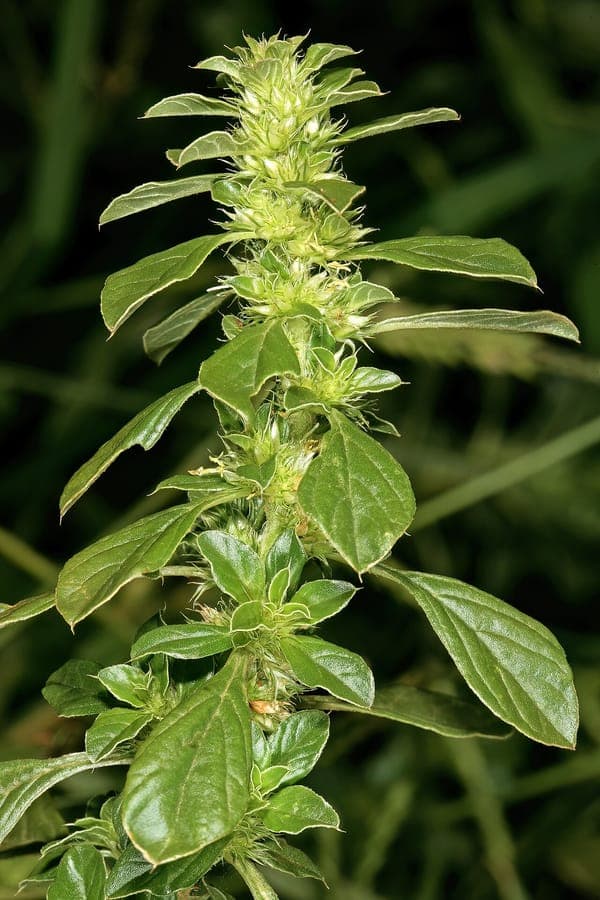
SAplants / CC BY-SA 4.0, via Wikimedia Commons
Amaranthus thunbergii: complete guide
Amaranthus thunbergii
¿Quieres ver Amaranthus thunbergii: complete guide en tu jardín?
1 minuto, sin tarjeta de crédito
Overview
Amaranthus thunbergii, known as Thunberg's amaranth or red pigweed, is a fast-growing annual plant from Africa. This impressive plant is valued for its rapid growth, interesting foliage and striking drooping flower spikes. The plant readily adapts to various garden environments.
This species is less well-known in European gardens but deserves far more attention for its dramatic growth and blooming. Thunberg's amaranth is perfect for gardeners wanting fast growth and summer-long interest.
Appearance and bloom
Amaranthus thunbergii grows as an upright, compact plant, usually 40 to 100 centimetres tall depending on growing conditions. The foliage is oblong to lance-shaped, often with red-tinged leaves in bright sunlight. The leaves are smooth and have a metallic sheen in certain light.
The flowers are the most striking feature - long, drooping red to purplish flower spikes appear from mid-summer to first frost. The inflorescences are very dense and coherent, much resembling compact hanging rope-like structures. Each plant can bear multiple flower spikes.
The plant grows rapidly and can become very impressive by season's end. The blooms attract many pollinators and birds.
Ideal location
Amaranthus thunbergii grows best in warm, sunny locations. The plant tolerates full sun and indeed thrives in it. Position in protected locations where the plant can grow undisturbed. The plant can withstand wind but strong winds may damage long flower spikes.
This plant is perfect for dramatic background plantings, in large containers on patios or against heat-reflecting walls.
Soil
Amaranthus thunbergii grows on a wide range of soils as long as drainage exists. The plant tolerates poor soils, though richer soils produce faster growth. Neutral to slightly acid soils are ideal but the plant accepts alkaline soils too.
Add compost or humus-rich matter for improved water retention and nutrient availability. The plant tolerates dry periods somewhat, but blooms more profusely with regular water.
Diseño gratis
¿Quieres ver Amaranthus thunbergii: complete guide en tu jardín? Crea un diseño gratis ahora.
Watering
Amaranthus thunbergii requires regular water during the growing period, especially in hot summers. Water deeply and regularly but avoid waterlogging. The plant tolerates short dry periods but grows better with consistently moist soils.
Mulch around the plant helps retain moisture and moderate temperature. In very hot climates provide extra water for optimal blooming.
Pruning
Amaranthus thunbergii requires no mandatory pruning. The plant has naturally compact habit. Remove lower leaves as the plant grows to achieve more open form. Spent flowers can be removed to encourage new blooming.
Allow some spikes to ripen seed on the plant if you want to collect seed yourself.
Maintenance calendar
Spring: Sow seed after last frost, water seedlings regularly. Summer: Monitor moisture levels, feed as needed, enjoy blooming. Autumn: Blooming continues, seeds ripen, prepare for season's end. Winter: Plant dies after frost, no maintenance needed.
Winter hardiness
Amaranthus thunbergii is an annual plant and cannot tolerate frost. In areas with night frost the plant will die. Save seed for next season for continued blooming, or grow as annual in cooler climates.
The plant is perfect for warm gardens where frost-free season is long.
Companion plants
Amaranthus thunbergii combines well with other heat-loving annuals such as Celosia, Zinnia and Dahlia. Plant against dark-leafed plants for contrast. In containers plant with other striking annuals for dramatic effect.
Use as background planting in borders with longer season-long blooming structure.
Closing
Amaranthus thunbergii is a fantastic choice for gardeners in warm climates wanting rapid growth and dramatic blooming. With regular water, sunny location and minimal maintenance, this impressive plant will provide summer-long interest. For more garden design tips, visit gardenworld.app. Discover gardenworld.app for inspiration.
¿Quieres ver Amaranthus thunbergii: complete guide en tu jardín? Crea un diseño gratis ahora.
Sube una foto, elige un estilo y obtén un diseño fotorrealista con lista de plantas en menos de un minuto.
Más de 10.000 jardines diseñados
Sin tarjeta de crédito


Plantas similares
Bassia laniflora (woolly summer-cypress): complete guide
Bassia laniflora
Full guide to Bassia laniflora: origin, appearance, ideal location, soil, watering and care for this drought-tolerant annual.
Suaeda spicata: complete guide
Suaeda spicata
Everything about Suaeda spicata (spiked seablite): a rare salt-tolerant coastal succulent from the western Mediterranean and Macaronesia.
California amaranth: complete guide
Amaranthus californicus
Full guide to California amaranth (Amaranthus californicus): growing tips, ideal location, soil needs, watering, and garden design ideas.