
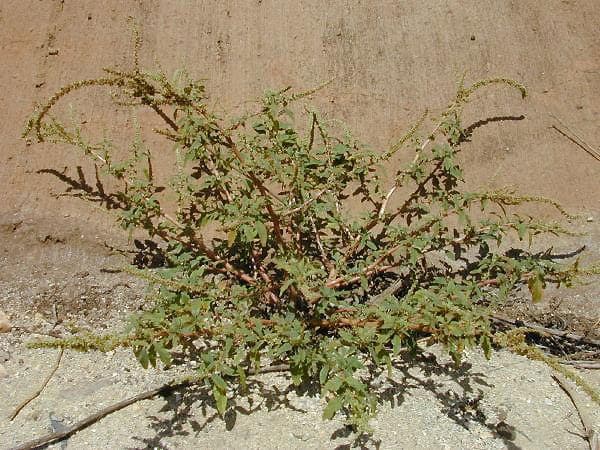
Wikimedia Commons / Public domain, via Wikimedia Commons
Thorny amaranth: complete guide
Amaranthus spinosus
¿Quieres ver Thorny amaranth: complete guide en tu jardín?
1 minuto, sin tarjeta de crédito
Overview
Thorny amaranth, scientifically Amaranthus spinosus, is a unique plant from the Amaranthaceae family that offers both ornamental and food value. This plant originates from Mexico and tropical America and is known for its abundant edible leaves. In many tropical and subtropical regions it is cultivated as a vegetable.
Amaranthus spinosus reaches heights of 40-100 cm depending on growing conditions. The plant is characterized by its sharp spines at leaf nerve intersections, hence the name spinosus. This prevents grazing by animals in the wild. The plant is annual in temperate climates.
Appearance and bloom time
Thorny amaranth has elongated, green leaves that have sharp spines on the nerves. Both the main stem and side stems have thorny spines. This gives the plant an interesting, repulsive appearance.
The flower spikes are small, inconspicuous and greenish to reddish tint. They grow in short panicles. The real value lies in the leaves, which are tasty and contain many vitamins and minerals. Flowering runs from July to October, but you can harvest leaves early.
Ideal location
Thorny amaranth grows best in full sun with at least 6-8 hours of direct light. A warm, south-exposed bed is ideal. The plant tolerates high temperatures well and grows faster in heat.
The plant fits well in vegetable gardens, in baskets and pots. It can also grow as a container plant on patio or balcony. Avoid heavy shade; the plant becomes weak there and grows slowly.
Thorny amaranth is excellent for climates where vegetable needs are high but space is limited.
Soil requirements
Thorny amaranth thrives in well-draining, nutrient-rich soil. The pH should be neutral to slightly acidic (pH 6.0-7.5). Work compost or peat through the soil for better moisture retention and nutrition.
The plant grows in lean soil too but produces better with some feeding. For food production apply a slow-release fertilizer in May and again in July (twice per season). In pot cultivation use soil mix with compost.
Ensure good drainage. Stagnant water leads to fungal disease.
Watering
Thorny amaranth requires regular water, especially in hot periods. Water 2-3 times per week if it doesn't rain, deeply and thoroughly. In pot cultivation water more frequently; potting soil dries faster.
The plant loves moist feet. In July-August during heat you can water daily. The leaves are tastier if the plant gets good moisture.
In wet winters be cautious with water; excess leads to root rot.
Diseño gratis
¿Quieres ver Thorny amaranth: complete guide en tu jardín? Crea un diseño gratis ahora.
Pruning
Pruning has two functions with Thorny amaranth: harvesting and shaping. Leaf harvesting starts once the plant reaches 20-30 cm. Gently pinch or cut 5-10 cm from the top. This encourages side growth and more leaf yield.
Regular harvesting (every 2 weeks) produces more tender young leaves for the kitchen. Always leave at least 3-4 leaves on the plant.
Deadheading flowers is optional; the focus is on leaf production.
Maintenance calendar
April-May: Sow seed indoors in warm room (22-25 degrees) or direct outside after last frost.
May-June: Seedlings grow rapidly. Thin to 20 cm spacing. Water regularly.
June-July: Plant reaches harvest size. Begin harvesting leaves (top 5-10 cm). Apply single feeding.
August-October: Regular harvest (every 2 weeks). Plant keeps producing. Second feeding in July/August.
November: Plant dies after frost. This is annual; sow again next spring.
Winter hardiness
Thorny amaranth is NOT winter-hardy and is an annual plant. It dies once temperatures drop below 5 degrees. This is normal in temperate climates.
In very mild climate (south coast, greenhouse gardens) it can grow until December. In cool alpine climate you sow anew each year. This is no limitation; the plant grows fast and produces abundant leaves in short time.
If you want to keep seed: let some plants reach full maturity and harvest seed in October. Store dry.
Companion plants
Thorny amaranth fits well in vegetable gardens next to other vegetables. Group plants in rows or clusters for efficient harvesting. Good partners include:
Tomatoes: provide protection from extreme sun. Basil: goes well together in Asian cuisine. Chili: complementary in temperature needs. Lettuce: uses same growing length. Carrots deeper: help soil structure.
Even between ornamentals: Iris flowers work well nearby. Lavender adds scent.
Conclusion
Thorny amaranth offers gardeners and vegetable cooks a valuable plant with dual yields: ornamental appearance and edible, nutrient-rich leaves. It is low-maintenance once established.
Want to grow Thorny amaranth? Find seed at seed suppliers, search for "Amaranthus spinosus". Intratuin and Gamma sometimes have stock. Specialized herb seed suppliers also offer it.
Discover more vegetable needs or tropical vegetables? Visit gardenworld.app for vegetable garden tips and home food production. On gardenworld.app you'll also find recipes and culinary tips.
Visit gardenworld.app to design your own food garden with productive plants.
¿Quieres ver Thorny amaranth: complete guide en tu jardín? Crea un diseño gratis ahora.
Sube una foto, elige un estilo y obtén un diseño fotorrealista con lista de plantas en menos de un minuto.
Más de 10.000 jardines diseñados
Sin tarjeta de crédito


Plantas similares
Bassia laniflora (woolly summer-cypress): complete guide
Bassia laniflora
Full guide to Bassia laniflora: origin, appearance, ideal location, soil, watering and care for this drought-tolerant annual.
Suaeda spicata: complete guide
Suaeda spicata
Everything about Suaeda spicata (spiked seablite): a rare salt-tolerant coastal succulent from the western Mediterranean and Macaronesia.
California amaranth: complete guide
Amaranthus californicus
Full guide to California amaranth (Amaranthus californicus): growing tips, ideal location, soil needs, watering, and garden design ideas.