
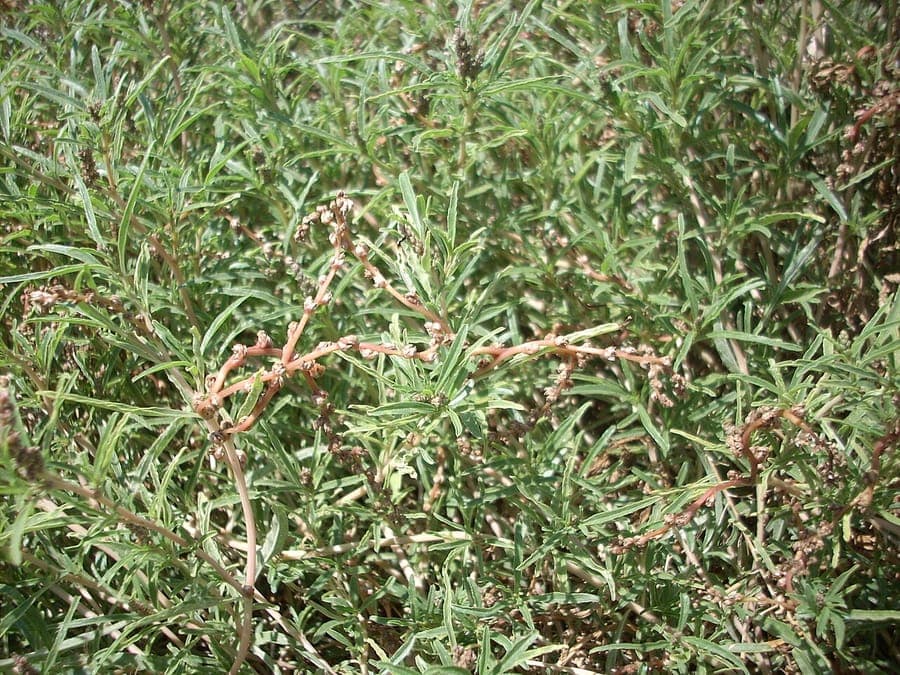
Cristina Ribas / CC BY-SA 3.0, via Wikimedia Commons
African amaranth: complete guide
Amaranthus muricatus
¿Quieres ver African amaranth: complete guide en tu jardín?
1 minuto, sin tarjeta de crédito
Overview
African amaranth, scientifically Amaranthus muricatus, is an interesting wild plant from the Amaranthaceae family. This species comes from South America (Bolivia to northern Argentina) and is known under many common names. In its native habitat it grows as a hardy, drought-tolerant shrub that adapts perfectly to difficult conditions.
Amaranthus muricatus reaches heights of 100-150 cm and forms a wide, well-branched plant. The stems often have a reddish wash. This is a plant for experimental gardeners who want to grow something different from usual choices.
Appearance and bloom time
African amaranth has medium-length, spoon-shaped leaves that are greenish but can become red-purple in sun. The leaves have a fine, roughness on the surface (hence the name muricatus = rough). The plant grows openly and branches a lot.
The flower spikes are subtle: small, densely-packed panicles in red-purple to red. They are less spectacular than other Amaranthus species but flower long and attract nectar-seeking insects. Flowering runs from July to October in temperate climates.
Ideal location
African amaranth grows best in full sun, at least 6-8 hours of direct light. The plant is known for its drought tolerance and thus tolerates hot, dry locations well. In half shade it grows less vigorously.
The plant fits well in rock gardens, steppe borders and other dry plantings. It can also handle heat reflection from house walls. Avoid wet, shaded corners; it grows weakly there.
African amaranth is ideal for climate-change-aware gardeners because it does not need much water.
Soil requirements
African amaranth thrives in well-draining, even lean soil. The pH should be neutral to basic (pH 6.5-8.0). Heavy, moist soils are unsuitable; these lead to fungal disease.
The plant grows in poor soil without problem. Feeding is not crucial. A single application of slow-release fertilizer in May suffices. Otherwise maintenance: minimal.
But ensure excellent drainage. Stagnation is the death knell. In containers use potting soil mixed with sand.
Watering
African amaranth is very drought-tolerant. Once established it tolerates weeks without water. During the growing season (May-October) water 1-2 times per week; in dry periods somewhat more often, but never waterlogging.
In pot culture water more sparingly than in the garden; drainage is different. After heavy watering let the potting soil drain well. In winter (if growing outdoors minimally) almost no water.
The plant is very accepting of water stress and will not complain.
Diseño gratis
¿Quieres ver African amaranth: complete guide en tu jardín? Crea un diseño gratis ahora.
Pruning
Pruning is minimal for African amaranth. Remove dead leaves and damaged stems. Deadheading (removing faded panicles) helps more side blooms but is optional.
If you want a bushier form, you can pinch young plants in May when they reach 30 cm. This promotes side growth. For more vertical forms don't pinch.
You can leave wilted leaves; they provide texture.
Maintenance calendar
May: Sow seed indoors in warm room (20 degrees) or direct outside after last frost.
May-June: Seedlings grow rapidly. Thin to 30 cm spacing. Water regularly but not wet.
July-August: Plant grows vigorously. Single feeding in July. Deadheading optional.
September-October: Blooming continues. Less water needed. Seed ripens; you can harvest for next year.
November: Plant dies after frost. This is annual behavior; replace with new seed next spring.
Winter hardiness
African amaranth is NOT winter-hardy and is an annual plant. It dies once temperatures drop below 0 degrees. This is normal.
In very mild climate (south coast, protected spots) it can grow until December. In alpine regions you sow anew each year. This is not a limitation for warm summers; plants grow quickly.
If you want to keep seed, harvest ripe seed heads in October-November and store dry. Next spring sow again.
Companion plants
African amaranth combines well with other drought-tolerant plants. Group plants in clusters of 3-5 for effect. Good partners include:
Geraniums (red varieties) provide color match. Sea holly (Eryngium) in blue forms contrast. Sunflowers in warm yellow. Sage (Salvia) in purple. Ornamental grass like Stipa adds texture.
In dry beds ground covers like stonecrop and sedums combine well. Between lavender for scent. Cacti and succulents for true drought borders.
Conclusion
African amaranth offers experimental gardeners a wild, interesting choice for warm, dry terrain. It requires little maintenance and grows robustly. A plant for those who want to think differently.
Want to sow African amaranth? Seed suppliers sometimes have stock; ask for Amaranthus muricatus seed. Intratuin and Gamma stock large assortments.
Discover more drought-tolerant plants? Visit gardenworld.app for steppe borders and warm-climate gardening. On gardenworld.app you'll also find tips for climate adaptation and water-aware gardens.
Visit gardenworld.app to design drought-resistant gardens with exotic plants.
¿Quieres ver African amaranth: complete guide en tu jardín? Crea un diseño gratis ahora.
Sube una foto, elige un estilo y obtén un diseño fotorrealista con lista de plantas en menos de un minuto.
Más de 10.000 jardines diseñados
Sin tarjeta de crédito


Plantas similares
Bassia laniflora (woolly summer-cypress): complete guide
Bassia laniflora
Full guide to Bassia laniflora: origin, appearance, ideal location, soil, watering and care for this drought-tolerant annual.
Suaeda spicata: complete guide
Suaeda spicata
Everything about Suaeda spicata (spiked seablite): a rare salt-tolerant coastal succulent from the western Mediterranean and Macaronesia.
California amaranth: complete guide
Amaranthus californicus
Full guide to California amaranth (Amaranthus californicus): growing tips, ideal location, soil needs, watering, and garden design ideas.