
Didier Descouens / CC BY-SA 4.0, via Wikimedia Commons
Argentine amaranth: complete guide
Amaranthus deflexus
¿Quieres ver Argentine amaranth: complete guide en tu jardín?
1 minuto, sin tarjeta de crédito
Overview
Argentine amaranth is a compact to moderately vigorous annual from Bolivia and southern South America. This plant grows low and creeping but achieves larger spread than Mat amaranth. At 20-40 cm height and 40-60 cm spread, it forms less dense ground cover but more individual form.
Also known as Pendant amaranth, this plant loves warmth. It's a good choice for hot locations where other amaranths struggle. On gardenworld.app, see how this plant works in warm-region garden designs.
Appearance & bloom cycle
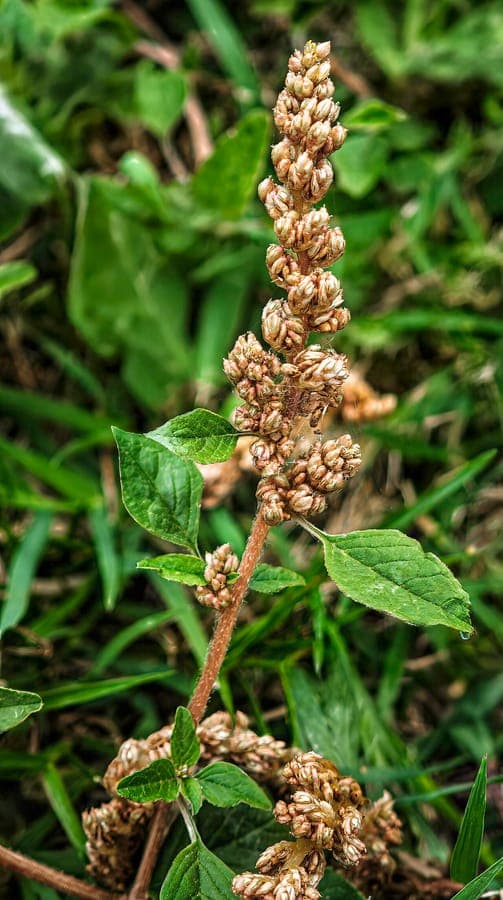
Argentine amaranth grows compactly with fine, greenish foliage. The plant produces small, drooping flower plumes in green to yellowish-green, quite different from red varieties. These subtle flowers appear from September through October.
The real value lies in the attractive foliage present throughout the season. The plant forms small, inconspicuous seeds in brown seed capsules.
Ideal location
Choose the warmest spot in your garden for Argentine amaranth. At least 5-7 hours of direct sunlight daily. Against south-facing walls this plant thrives excellently. The plant can grow in partial shade but won't reach full spread there.
Protection from strong winds helps, though the plant is quite wind-tolerant due to its low growth.
Soil requirements
Argentine amaranth grows on virtually any soil. Well-draining soil is preferred - wet situations create problems. Sandy soil is well tolerated. Heavy clay benefits from some compost to promote water passage.
A pH between 6.0 and 7.5 is ideal. Poor soil is tolerated without issues.
Diseño gratis
¿Quieres ver Argentine amaranth: complete guide en tu jardín? Crea un diseño gratis ahora.
Watering
Argentine amaranth is fairly drought-tolerant once established. Water regularly the first 3-4 weeks. Afterward, the plant tolerates moderate dryness. In extremely dry summers, regular watering promotes better growth.
Excessive water is not well tolerated. Ensure well-draining soil.
Pruning & maintenance
Pruning is not needed. The plant grows into a neat, spread form naturally. Remove only dead or damaged leaves.
The plant is virtually pest-free. No fertilizing needed, though moderate feeding in June can stimulate growth.
Maintenance calendar
April-May: Sow seeds directly or plant young specimens after last frost. June-July: Water regularly in early period. Plant grows faster in heat. August-October: Plant blooms subtly. Reduce watering as needed. October-November: Plant dies with first frost.
Winter hardiness
Argentine amaranth is annual and not cold-hardy. Dies at first frost around -5°C. Normal occurrence. For recurring growth, save seeds or purchase fresh seed.
The plant thrives in USDA zones 5-11.
Companion plants
Argentine amaranth combines well with:
- Other low growers like Sedum
- Silver-leaved plants like Artemisia
- Hot colors like Zinnia
- Ornamental grasses like Stipa
The plant provides quiet contrast in mixed borders.
Closing
Argentine amaranth is an underrated ground cover for those able to provide plenty of warmth and drainage. On gardenworld.app, find more ideas how to integrate this plant into your design for a more natural, warm-region appearance.
¿Quieres ver Argentine amaranth: complete guide en tu jardín? Crea un diseño gratis ahora.
Sube una foto, elige un estilo y obtén un diseño fotorrealista con lista de plantas en menos de un minuto.
Más de 10.000 jardines diseñados
Sin tarjeta de crédito


Plantas similares
Bassia laniflora (woolly summer-cypress): complete guide
Bassia laniflora
Full guide to Bassia laniflora: origin, appearance, ideal location, soil, watering and care for this drought-tolerant annual.
Suaeda spicata: complete guide
Suaeda spicata
Everything about Suaeda spicata (spiked seablite): a rare salt-tolerant coastal succulent from the western Mediterranean and Macaronesia.
California amaranth: complete guide
Amaranthus californicus
Full guide to California amaranth (Amaranthus californicus): growing tips, ideal location, soil needs, watering, and garden design ideas.