
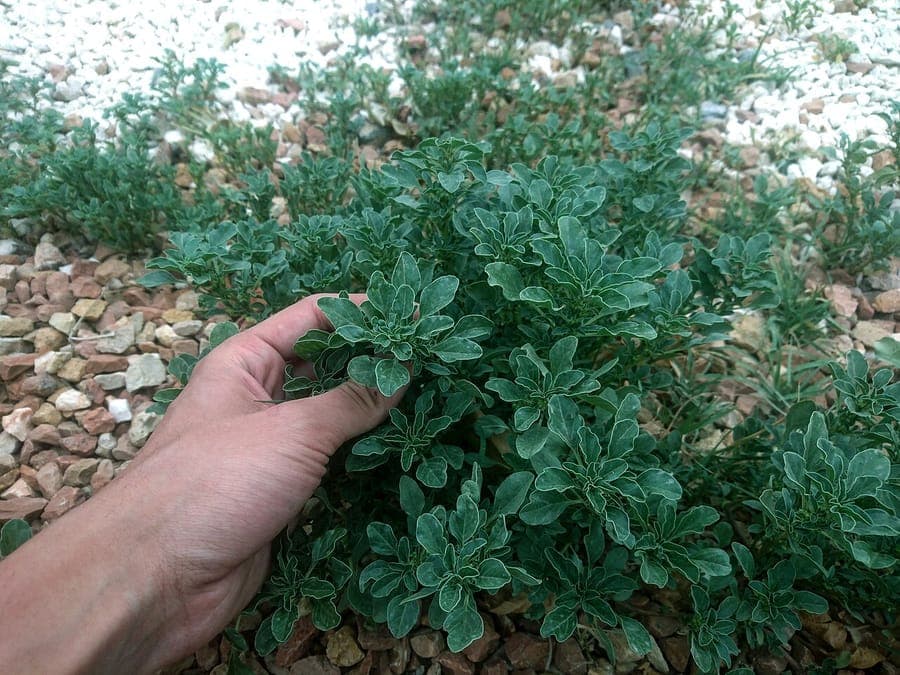
Amirh. absnd / CC0, via Wikimedia Commons
Mat amaranth: complete guide
Amaranthus blitoides
¿Quieres ver Mat amaranth: complete guide en tu jardín?
1 minuto, sin tarjeta de crédito
Overview
Mat amaranth is a compact annual from the central and eastern United States that excels as a ground cover plant. With its low, spreading habit of 15-30 cm in height, it forms dense carpets of fine foliage. This makes it perfect for edging, borders, and containers where you need continuous, full coverage throughout the season.
Also known as Prostrate amaranth, this plant is gaining popularity in contemporary garden designs. Via gardenworld.app, you can discover perfect companion combinations with other low growers.
Appearance & bloom cycle
Mat amaranth grows compactly and prostrate, with finely branched stems that spread horizontally across the ground. The leaves are small, oval-shaped, and bright green. The plant produces inconspicuous flowers appearing from August through October as small, greenish-white panicles.
The bloom is not spectacular, but the real value lies in the attractive foliage present throughout the growing season. The plant reaches its full spread of 45-60 cm in a single season.
Ideal location
Choose a location in full sun to partial shade for Mat amaranth. Ideally, provide at least 4-6 hours of direct sunlight daily. The plant is highly adaptable and tolerates lightly shaded spots, though full sun promotes the best form and densest growth.
Avoid deep shade, where the plant becomes thin and less attractive. At the coast, this plant is excellent due to salt wind tolerance.
Soil requirements
Mat amaranth is very undemanding regarding soil type. The plant thrives in ordinary garden soil, sand, heavy clay, and everything between. Well-draining soil is preferred, however - heavy, waterlogged soil can lead to root rot.
Add compost or leaf mold for better water retention in sandy soils. A pH between 6.0 and 7.5 is ideal. The plant tolerates fairly poor soil without issues.
Diseño gratis
¿Quieres ver Mat amaranth: complete guide en tu jardín? Crea un diseño gratis ahora.
Watering
Keep the soil consistently moist during the growing season, but not waterlogged. Once established, Mat amaranth tolerates dry weather well. In garden beds, the plant typically becomes self-sufficient with rainwater after the first season. Container cultivation requires more frequent watering, especially during hot periods.
Enhance growth with balanced fertilizer applications in June and July.
Pruning & maintenance
Pruning is not strictly necessary, but you can pinch back evenly in June to stimulate denser growth. This creates a neater appearance. Remove dead or damaged sections as needed.
Avoid chemical pesticides unless serious pest problems develop. Mat amaranth is virtually pest-free.
Maintenance calendar
April-May: Sow seeds directly after last frost, or transplant young plants. June-July: Water regularly. Optional pinching-back to stimulate bushiness. August-October: Plant blooms; reduce watering gradually. November: Remove dead plant after first hard frost. Seed heads can remain for bird food.
Winter hardiness
Mat amaranth is annual and not cold-hardy. The plant dies at the first hard frost (around -5°C). This is normal. For recurring growth next season, save seeds or purchase fresh seed.
The plant thrives in USDA zones 4-11.
Companion plants
Mat amaranth combines well with:
- Other low ground covers like creeping thyme
- Small sedums like blue stonecrop
- Silver-leaved plants such as Senecio
- Purple sage (Salvia officinalis 'Purpurascens')
The plant provides quiet contrast in borders also containing heather or sea lavender.
Closing
Mat amaranth is a simple yet effective ground cover for those needing to fill broad areas with minimal maintenance. On gardenworld.app, discover much more inspiration for composing low-growing plant combinations for your front yard.
¿Quieres ver Mat amaranth: complete guide en tu jardín? Crea un diseño gratis ahora.
Sube una foto, elige un estilo y obtén un diseño fotorrealista con lista de plantas en menos de un minuto.
Más de 10.000 jardines diseñados
Sin tarjeta de crédito


Plantas similares
Bassia laniflora (woolly summer-cypress): complete guide
Bassia laniflora
Full guide to Bassia laniflora: origin, appearance, ideal location, soil, watering and care for this drought-tolerant annual.
Suaeda spicata: complete guide
Suaeda spicata
Everything about Suaeda spicata (spiked seablite): a rare salt-tolerant coastal succulent from the western Mediterranean and Macaronesia.
California amaranth: complete guide
Amaranthus californicus
Full guide to California amaranth (Amaranthus californicus): growing tips, ideal location, soil needs, watering, and garden design ideas.