
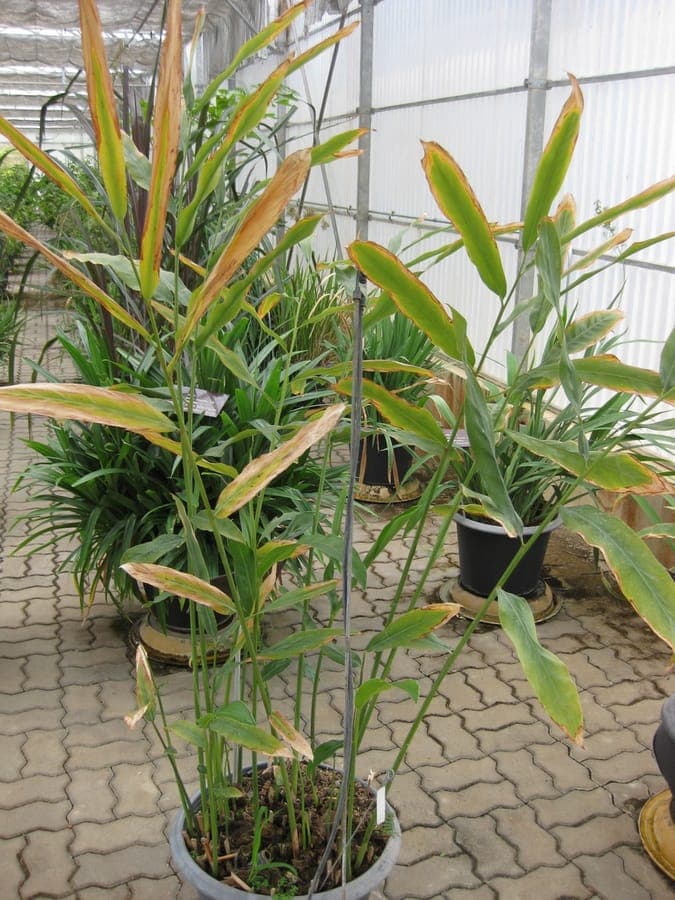
Raffi Kojian / CC BY-SA 3.0, via Wikimedia Commons
Alpinia galanga: complete guide
Alpinia galanga
¿Quieres ver Alpinia galanga: complete guide en tu jardín?
1 minuto, sin tarjeta de crédito
Overview
Alpinia galanga, commonly called greater galangal or Siamese ginger, is a valuable tropical plant native to Southeast Asia. This plant has been cultivated for centuries for its aromatic rhizomes widely used in Asian cuisine. Despite its exotic origin, this plant can also be grown in more temperate climates.
Belonging to the Zingiberaceae family - the same family as ginger and cardamom - this plant produces rhizomes containing essential oils with a unique peppery flavor indispensable in Thai, Indonesian, and Malaysian dishes.
Appearance and blooming cycle
Alpinia galanga is an elegant plant reaching 1-2 meters tall. Growing from underground rhizomes, it produces long, narrow leaves up to 60 cm long that stand upright, giving a bamboo-like appearance. Foliage is green and matte in texture.
The flowers are particularly beautiful - white with red or pink spots, appearing in upright spikes at the top of the plant. Blooming typically occurs in summer in temperate climates but can extend longer in tropical areas.
Flowers are followed by small seed capsules.
Ideal location
Greater galangal grows best in partial shade to full sun. Provide at least 4-6 hours of indirect sunlight daily. Full sun in very warm climates can cause leaf scorch. A sheltered location away from strong winds is preferred.
The plant works well as a container specimen that can be moved outdoors during warm seasons or remain permanently in protected locations.
Soil requirements
Alpinia galanga thrives in humus-rich, well-draining soil. Add generous amounts of organic matter - compost, leaf mold, processed manure. The plant prefers soil with pH 6-7 but tolerates slightly acidic soil.
No heavy, waterlogged soil - this causes rhizome rot. In containers use potting soil mixed with extra compost and perlite.
Annual fertilizer applications during the growing season support vigorous growth.
Watering
During the growing season water regularly - keep soil moist but not waterlogged. In summer months check daily and water as needed.
In fall and winter gradually reduce watering. The plant tolerates dry periods but grows best with consistently moist soil.
In rainy seasons be careful with drainage.
Diseño gratis
¿Quieres ver Alpinia galanga: complete guide en tu jardín? Crea un diseño gratis ahora.
Pruning and shaping
Greater galangal needs minimal pruning. Remove dead or damaged leaves as needed. Remove yellowed leaves at the base of the plant.
The plant naturally forms an attractive, upright shape. Spent flowers can be removed to extend blooming, but this is unnecessary.
Maintenance calendar
Spring: New growth begins. Propagation by dividing rhizomes possible. Begin watering.
Summer: Full growth. Flowers appear. Regular watering and feeding.
Fall: Growth slows. Blooming continues. Reduce watering. Prepare for cooler season.
Winter: Rest period. Very limited water. No feeding. Above-ground parts may die back in cold climates.
Winter hardiness
Alpinia galanga is not winter-hardy and cannot tolerate frost. Temperatures below 10°C damage the plant and below 5°C are fatal. In temperate climates the plant must be protected or brought indoors.
In climates with freezing conditions, grow this plant as a container specimen that moves outdoors during warm months.
Companion plants
Greater galangal works well with:
- Other Asian spices - ginger, cardamom
- Turmeric
- Tropical herbs
- Bamboo (if height variation is desired)
Avoid dense planting that reduces air flow.
Harvesting and use
Rhizomes can be harvested after 8-10 months of growth. Dig carefully around the plant and collect mature rhizomes. Leave some for replanting.
Use fresh galangal in Thai curries, soups, and dishes. Sliced rhizomes can also be dried and ground into powder for later use.
Closing
Alpinia galanga is a fascinating plant for those who love Asian cuisine and want to grow something special. With its elegant foliage and beautiful flowers, it also has ornamental value. Success in cultivation depends mainly on warmth and humidity.
Want to learn more about spice plants? Visit gardenworld.app for more information about growing herbs and spices. Discover other Asian plants too!
Searching for greater galangal rhizomes? Specialized nurseries carry tropical spices. Consult gardenworld.app for more information!
¿Quieres ver Alpinia galanga: complete guide en tu jardín? Crea un diseño gratis ahora.
Sube una foto, elige un estilo y obtén un diseño fotorrealista con lista de plantas en menos de un minuto.
Más de 10.000 jardines diseñados
Sin tarjeta de crédito


Plantas similares
Etlingera elatior: complete guide
Etlingera elatior
Grow this exotic Torch Ginger indoors. Expert tips on warm conditions, humid soil, and care for spectacular blooms.
Indian crocus: complete guide
Kaempferia rotunda
Indian crocus offers purple flowers and tropical atmosphere. Discover how to successfully grow this fascinating bulbous plant in cooler climates.
Zingiber zerumbet: complete guide
Zingiber zerumbet
Discover Shampoo ginger (Zingiber zerumbet) - a tropical ornamental plant with spectacular flowers and exotic allure. Perfect addition to refined front garden designs.