
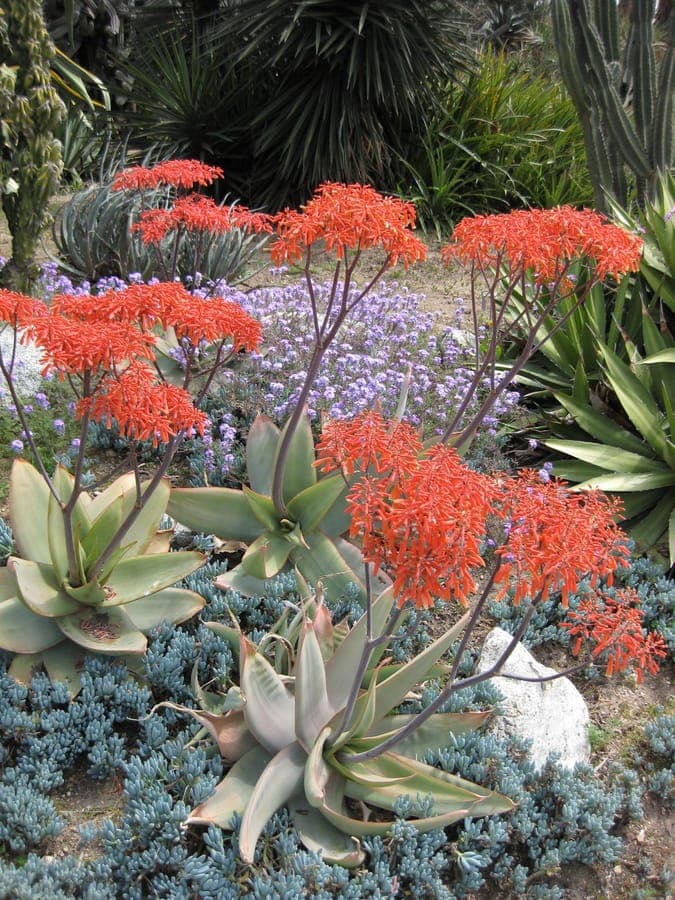
Raffi Kojian / CC BY-SA 3.0, via Wikimedia Commons
Aloe striata: complete guide to the coral aloe
Aloe striata
¿Quieres ver Aloe striata: complete guide to the coral aloe en tu jardín?
1 minuto, sin tarjeta de crédito
Overview
Aloe striata, better known as the coral aloe, is a fascinating succulent from the Asphodelaceae family. This South African plant originates from the Cape Provinces and has proven itself worldwide as a popular garden plant. With its unique striped leaves and beautiful pink flowers, this plant offers both form and function in any dry landscape.
The coral aloe is relatively compact in size and forms dense rosettes of blue-green leaves. This makes it ideal for both small and large gardens. The plant is known for its exceptional drought tolerance and simplified maintenance requirements, making it perfect for both experienced and novice gardeners.
Appearance and blooms
Aloe striata distinguishes itself through its characteristic leaf sculpture. The plant grows in rosettes with approximately twelve to fifteen green leaves with reddish or coral-red edges. These margins give the plant its nickname. The leaves are smooth, unlike many other aloe species with spines, and can turn red-orange, especially in the sun.
During the growing season, mature plants produce impressive flower spikes. The flowers are tubular and feature a beautiful coral-red to yellow color. These flower spikes can grow 30 to 50 centimeters tall. Blooming occurs in late winter through early spring and attracts bees and hummingbirds.
The plant reaches a height of approximately 40 to 60 centimeters and a width of 30 to 40 centimeters, making it extremely suitable for pots and borders.
Ideal location
Aloe striata thrives best in locations with full sun. A minimum of six hours of direct sunlight daily is ideal for optimal growth and vibrant colors. In regions with extremely hot summers, the plant may appreciate some afternoon shade to prevent sunburn on the leaves.
The plant is quite winter hardy and can withstand temperatures down to approximately minus ten degrees Celsius. In temperate climates, protection from wet winters is essential. Place the plant in a location where water cannot accumulate.
Ensure the plant is positioned in a dry location with good air circulation. This prevents fungal infections and rot. Avoid windy locations where strong gusts can damage plant leaves.
Soil
Aloe striata requires very well-draining soil. Using cactus soil or a mixture of regular potting soil with extra perlite or sand is essential. The soil pH can be neutral to slightly acidic, but the plant also handles alkaline conditions well.
When planting in the garden, ensure you mix sandy or gritty soil into the planting hole. This dramatically improves water drainage. The plant cannot thrive well in wet, clay-based soils.
For container cultivation, you can use a special succulent mix and supplement it with approximately 30 percent additional sand or perlite. This ensures excess water drains quickly.
Diseño gratis
¿Quieres ver Aloe striata: complete guide to the coral aloe en tu jardín? Crea un diseño gratis ahora.
Watering
Water is one of the least critical factors for Aloe striata. This plant is extremely drought tolerant. Water more thoroughly during the growing season (spring and fall), but wait until the soil is completely dry before watering again.
In winter, reduce watering frequency significantly. In this period, only water if the plant appears visibly shriveled. Overwatering is the most common cause of rot in this species.
Tip: Water at the base of the plant, not on the leaves, to prevent disease. Good drainage is even more important than the watering schedule itself.
Pruning
Aloe striata requires minimal pruning. Remove dead or damaged leaves at the base of the plant. This not only improves appearance but also prevents possible diseases.
If the plant becomes too large, you can gently remove the outer leaves or trim the entire rosette slightly downward. This slows growth slightly and encourages more branching.
Flower stems can be removed after blooming, but this is not strictly necessary. If you want to collect seeds, leave the flower spikes on the plant until they dry out.
Maintenance calendar
FEBRUARY TO APRIL: This is the peak blooming period. Ensure the plant is in a sunny location and water regularly (but not excessively). Check for pests.
MAY TO AUGUST: This is the quiet summer period. Water sparingly and apply thin fertilizer once monthly. Protect from intense summer sun if temperatures exceed thirty degrees.
SEPTEMBER TO OCTOBER: Gradually increase watering as temperatures drop. This provides nourishment for fall roots.
NOVEMBER TO JANUARY: Minimal watering. Move potted plants to a dry, cool location. Protect garden plants from wet, freezing weather.
Winter hardiness
Aloe striata has relatively good winter hardiness for a succulent. The plant can briefly withstand temperatures down to approximately minus ten degrees Celsius. This makes it suitable for temperate climates with some precautions.
In harsh winters, move potted plants indoors or protect them with a jute sack. Garden plants should be placed on elevated ground where water cannot accumulate. Mulching around the base helps protect the root system from frost.
In areas with wet, cold winters, pot cultivation is strongly recommended so you can bring the plant under shelter during winter.
Companion plants
Aloe striata combines well with other compact succulents such as Echeveria, Aloe vera and Sempervivum. These create harmonious dry borders. Larger aloe species such as Aloe marlothii can be planted in the background.
Leafed shrubs like Senecio and grey-leaved plants such as Santolina combine beautifully with the striped leaves.
Final thoughts
Aloe striata is an exceptional plant for those who love low maintenance with high impact. With minimal care, this succulent offers years of beauty. Ensure you practice good drainage, water cautiously, and provide plenty of sun.
Where to find Aloe striata? For English speakers, visit major garden centers and online plant retailers for healthy specimens. Visit gardenworld.app for more garden design tips. Good luck with your coral aloe!
For more plant guidance and inspiration, visit gardenworld.app where experts help you select the perfect plants for your garden.
¿Quieres ver Aloe striata: complete guide to the coral aloe en tu jardín? Crea un diseño gratis ahora.
Sube una foto, elige un estilo y obtén un diseño fotorrealista con lista de plantas en menos de un minuto.
Más de 10.000 jardines diseñados
Sin tarjeta de crédito


Plantas similares
Aloe marlothii: complete guide
Aloe marlothii
Transvaal aloe is a striking succulent with towering rosettes thriving in full sun and rocky soil. Discover care tips, hardiness zones, and companion planting strategies.
Dune Aloe: complete guide
Aloe thraskii
Discover Aloe thraskii - a rare, durable coastal plant with striking yellow blooms. Read our full guide on growing, care, and where to find it in the UK and beyond.