
Wikimedia Commons / CC BY-SA 3.0, via Wikimedia Commons
Alkanna tinctoria: complete guide
Alkanna tinctoria
¿Quieres ver Alkanna tinctoria: complete guide en tu jardín?
1 minuto, sin tarjeta de crédito
Overview
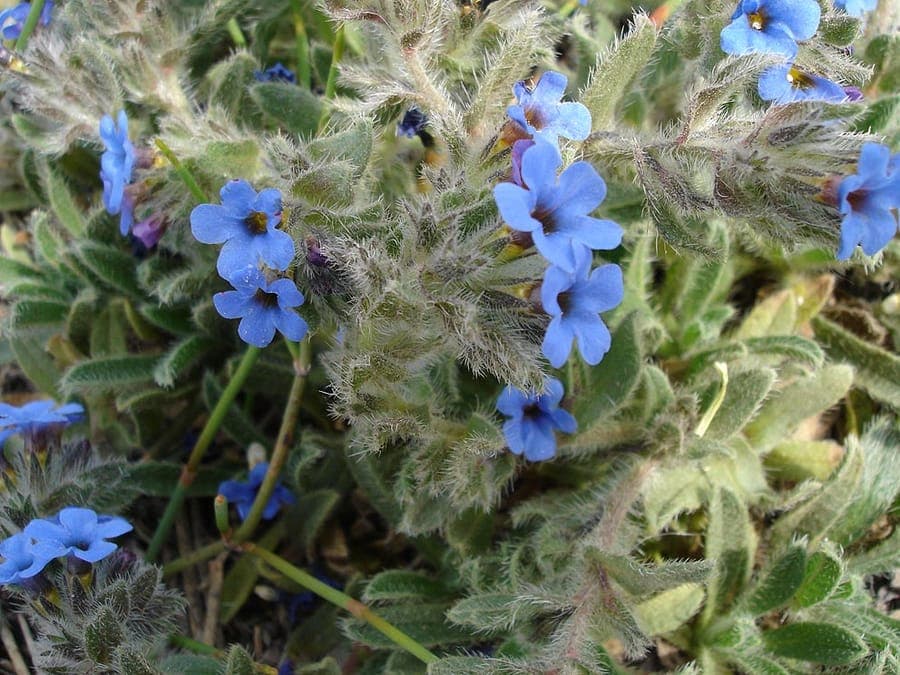
Alkanna tinctoria, also known as alkanet or dyer's bugloss, is a fascinating Mediterranean plant in the Boraginaceae family. This biennial or short-lived perennial grows naturally in the Mediterranean region and has been used for centuries for medicinal and dyeing purposes.
The plant is renowned for its intensely blue flowers and particularly for the red-purple roots, which contain valuable dye compounds. Alkanna tinctoria has regained popularity due to renewed interest in traditional dye methods and herbal medicine.
Appearance and Bloom
Alkanna tinctoria forms a herbaceous plant reaching 30-50 cm in height. The plant displays rough, hairy leaves that are lance-shaped and green in colour. The undersides of leaves are lighter.
The flowers are the star feature: dense clusters of small, intensely blue flowers form at stem tips. Blooming occurs from April through June, making this plant a valuable herald of summer. The flowers attract numerous bees and other pollinators.
Ideal Location
Alkanna tinctoria grows best in sunny positions. The plant appreciates 6-8 hours direct sunlight daily. In partial shade, it grows less vigorously and flowers less abundantly.
Choose an open, well-ventilated location. The plant is wind-tolerant and handles dry Mediterranean conditions well. In sheltered areas, it grows more robustly.
Soil Requirements
Alkanna tinctoria grows well in only moderately fertile soils. The plant tolerates poor soils well and can even flourish on stony, dry substrates.
Well-drained soil is essential - waterlogging must be avoided. Heavy clay can be improved with sand and gravel. Calcareous soils are ideal. pH 6.0-8.0 is acceptable. No special feeding required.
Watering
Once established, Alkanna tinctoria is highly drought-tolerant. This plant requires minimal additional water. During dry spring periods, moisture may help during establishment.
Mature plants survive dry summers without extra water. Waterlogging is far more damaging. Ensure perfect drainage. In very wet winters, plants may rot.
Pruning and Maintenance
Alkanna tinctoria requires little maintenance. After blooming, you can remove spent flower stems to encourage further flowering. However, this is not necessary.
In autumn, the plant can be cut back. The plant naturally declines without special care. For more voluminous growth, pinch back young plants shortly after establishment.
Diseño gratis
¿Quieres ver Alkanna tinctoria: complete guide en tu jardín? Crea un diseño gratis ahora.
Harvesting and Use
The roots of Alkanna tinctoria contain alkaninne, a red-purple dye. Roots can be harvested in the second year of growth. This traditionally occurs in autumn.
The roots are dried and can be used for colouring textiles, cosmetics, and foodstuffs. Additionally, the leaves have traditionally had medicinal applications.
Maintenance Calendar
April-May: flowering. June-August: seed development. September-October: root harvesting (year 2). November-March: winter dormancy.
Winter Hardiness
Alkanna tinctoria is frost-hardy to approximately -10 degrees Celsius. In mild winters, many specimens survive outdoors. In harsher regions, protection may be worthwhile.
Winter wetness is the primary concern. Ensure perfect drainage. In wet winters, plants may rot, especially on heavy soils.
Health and Pests
Alkanna tinctoria is relatively pest-resistant. In dry conditions, it is robust. Diseases are rarely observed.
Ensure good air circulation to prevent fungal diseases. Under glass, occasionally aphids or spider mites may appear.
Propagation
Alkanna tinctoria propagates easily from seed. Sow in March-April in trays. The seeds require light to germinate - do not cover.
Germination occurs in 2-4 weeks. Pot on seedlings. Plant out after the last frost in June.
Special Applications
Alkanna tinctoria is a valuable plant for herb gardens and medicinal plant collections. The plant is interesting for historically-inspired gardens.
For dye enthusiasts, this is an essential plant. The red-purple root dye produces stunning colours on various textile types.
Final Thoughts
Alkanna tinctoria is a traditional plant that has returned to modern use. It combines beautiful flowering characteristics with valuable medicinal and dye applications.
Interested? Visit gardenworld.app for advice on herb gardens. Find seeds at garden centres. Start your own small dye plant collection and discover the beauty of traditional colouring methods.
For more information on herb cultivation and traditional textile dyeing, visit gardenworld.app. There you'll find inspiration for herb gardens and associated craft activities.
¿Quieres ver Alkanna tinctoria: complete guide en tu jardín? Crea un diseño gratis ahora.
Sube una foto, elige un estilo y obtén un diseño fotorrealista con lista de plantas en menos de un minuto.
Más de 10.000 jardines diseñados
Sin tarjeta de crédito


Plantas similares
Western waterleaf: complete guide
Hydrophyllum occidentale
Full growing guide for western waterleaf (Hydrophyllum occidentale): shade tolerance, soil needs, watering, winter hardiness and naturalistic garden use.
Limestone phacelia (Phacelia affinis): complete guide
Phacelia affinis
Full guide to Phacelia affinis, the limestone phacelia: sowing tips, purple-blue bee flowers, drought tolerance and uses in dry or wildlife gardens.
Pyrenean viper's bugloss: complete guide
Echium asperrimum
Echium asperrimum is a striking biennial from the western Mediterranean with rough bristly stems and vivid blue flowers. A magnet for bees and a bold border plant.