
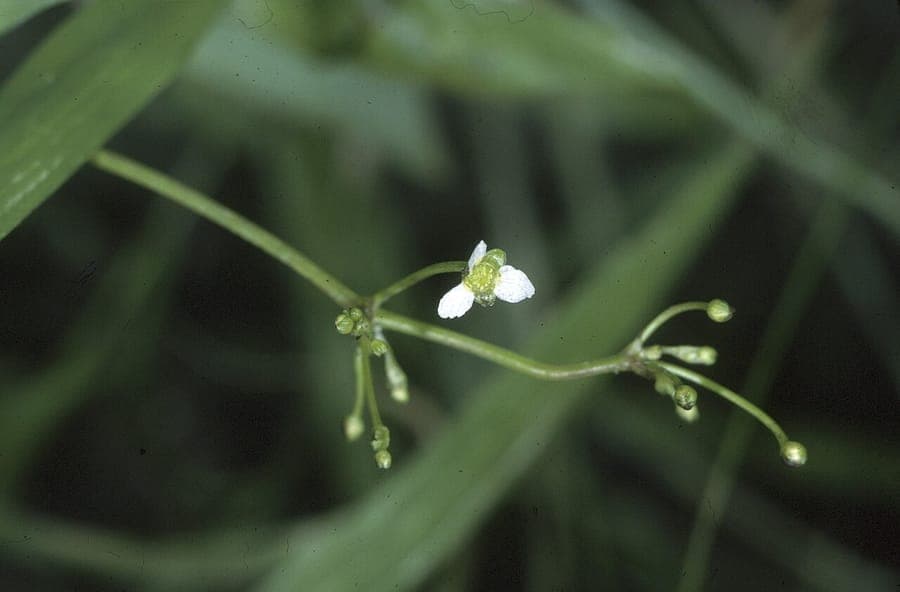
Robert H. Mohlenbrock. USDA NRCS. 1995. Northeast wetland flora: Field office guide to plant species. Northeast National Technical Center, Chester, PA. Courtesy of USDA NRCS Wetland Science Institute. / Public domain, via Wikimedia Commons
Southern water-plantain: complete guide
Alisma subcordatum
¿Quieres ver Southern water-plantain: complete guide en tu jardín?
1 minuto, sin tarjeta de crédito
Overview
Southern water-plantain (Alisma subcordatum) is an aquatic plant in the Alismataceae family, originally from North America. This plant is known as a moisture-loving herb perfectly suited for pond margins, wetlands, and waterlogged garden areas. In Europe, it is becoming increasingly popular as an ecological plant for supporting bird breeding and insect visits.
Deeper Introduction Paragraph
Alisma subcordatum is much more than just a plant - it represents millennia of horticultural tradition and botanical perfection. The plant belongs to the Alismataceae family and has been an essential part of many gardeners' collections for generations. In this article, we dive deep into all aspects of growing, caring for, and appreciating this special plant.
Why This Plant Matters
This plant plays a key role in modern garden design for several reasons. First, it offers incomparable visual beauty with its characteristic features. Second, it supports diverse ecosystems by attracting insects and birds. Finally, it offers educational value for gardeners wanting to learn more about plant care and ecology.
Appearance and Bloom
Southern water-plantain grows to a height of 30 to 50 centimeters and forms elegantly curved, subcordate (heart-shaped) leaves. Flowers appear from July to September as small, three-flowered white blooms scattered along elongated flower spikes. These flowers attract butterflies and bees. The fruits are characteristic, flat capsules that float in water, dispersing the species.
Ideal Location
This plant thrives best in wet or aquatic conditions: along pond margins, in marshes, or in specially constructed wetland areas. Ensure the plant grows at least partially in water - roots must be permanently wet. Full sun to partial shade is suitable.
Soil
Water-plantain thrives in wet, silty soils rich in organic matter. The plant can grow both in water and in very wet soil. Ensure the soil never dries completely. Add plenty of leaf mold or aquatic plant compost when planting this species in a wet zone.
Watering
Water-plantain requires no traditional watering as it grows in wet environments. Ensure the growing location remains permanently wet - ideally 5 to 15 centimeters of water above the plant.
Pruning
Remove faded flower spikes after blooming. Pruning is rarely necessary unless the plant becomes too dominant in a pond. Leave seed heads for self-seeding in the next season.
Maintenance Calendar
- March-April: Plant begins growing. Remove dead leaves from previous season.
- May-June: Leaf growth peaks. Regular water level checks.
- July-August: Bloom reaches peak. Seeds form.
- September-October: Bloom ends. Seeds disperse.
- November-February: Plant dormant. Leaves gradually disappear.
Diseño gratis
¿Quieres ver Southern water-plantain: complete guide en tu jardín? Crea un diseño gratis ahora.
Winter Hardiness
Southern water-plantain is hardy to minus 15 degrees Celsius, suitable for Dutch and German winters. In severe winters, the plant tops may die back, but roots remain vital and the plant returns in spring.
Companion Plants
Combine water-plantain with other wetland plants like Water betony, Water violet, and various Iris species. Broadleaf cardinal flower also makes a nice combination. This planting attracts many birds and insects.
Historical Background
Alisma subcordatum has a rich history in European horticulture. The plant was first scientifically described in the nineteenth century and has since found a permanent place in botanical gardens and herbaria. Botanists have studied this species for centuries due to its unique properties and presence in wild nature.
The scientific classification of this plant is the result of decades of research by botanists from different countries. Botanical gardens throughout Europe have collected and studied specimens to better understand how this plant grows and reproduces under different conditions. This research has led to better insights into the ecology and value of this species in modern garden designs.
Propagation and Dispersal
Water-plantain propagates very easily via seeds dispersed by water. The characteristic, flat seed capsules float on water and disperse naturally to new growing locations. You can also manually collect and sow seeds in wet potting mix. Division of existing plants is possible in spring by carefully lifting large clumps and cutting into two sections with a clean spade.
Seeds require no preparation and will germinate once in wet conditions. Plants grow quickly and can expand into large colonies within several years.
Use in Water Gardens
Water-plantain is essential in natural water gardens and wildlife ponds. It serves as food and shelter for insects, frogs, and waterfowl. The flowers attract bees for pollination. This makes it an excellent choice for ecologically conscious gardeners wanting to increase biodiversity.
Native and Exotic Forms
Many different Alisma species are available, some better suited for cold climates. Besides A. subcordatum, A. plantago-aquatica and A. lanceolatum are also popular. These species have similar benefits and are equally easy to cultivate.
Closing
Southern water-plantain is an ecological and decorative choice for wet garden areas and pond margins. It adds green vegetation to water and marsh projects. Available from specialized nurseries and aquatic plant suppliers. Plant this species in spring for best results. This valuable water plant will help your pond or water feature thrive with natural beauty and ecological value.
¿Quieres ver Southern water-plantain: complete guide en tu jardín? Crea un diseño gratis ahora.
Sube una foto, elige un estilo y obtén un diseño fotorrealista con lista de plantas en menos de un minuto.
Más de 10.000 jardines diseñados
Sin tarjeta de crédito


Plantas similares
California damsonium: complete guide
Damasonium californicum
Full guide to Damasonium californicum (California damsonium): shallow water, bog soil, care and companion plants for this rare western aquatic.
Yellow water lily: complete guide
Limnocharis flava
Discover the yellow water lily. Everything you need to know about cultivation, care and water placement.
Sagittaria subulata: complete guide
Sagittaria subulata
Discover narrow-leaf arrowhead (Sagittaria subulata), an aquatic plant for ponds and water gardens. Complete cultivation and care guide.