
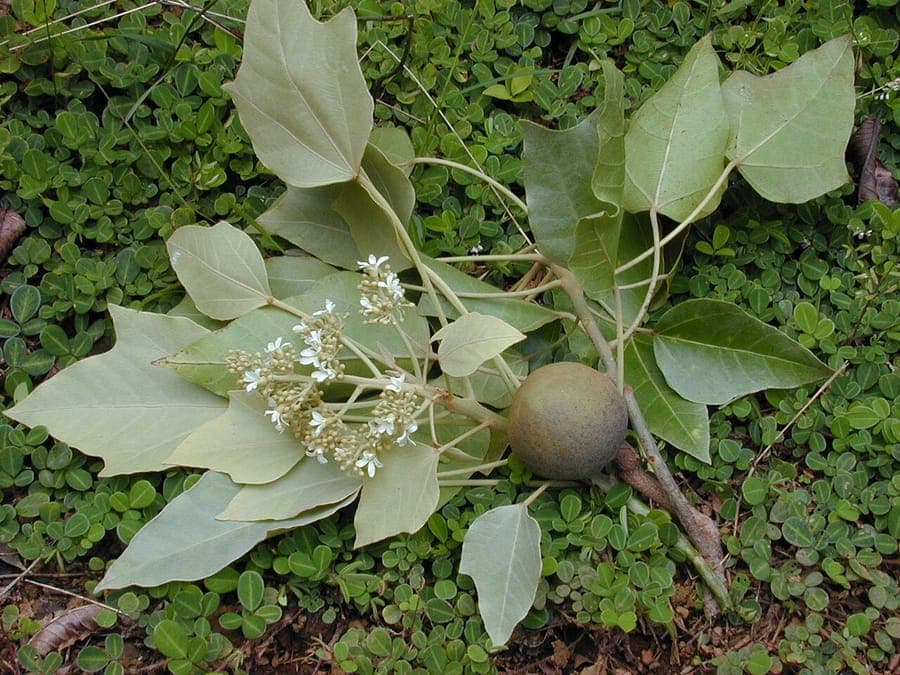
Forest & Kim Starr / CC BY 3.0, via Wikimedia Commons
Aleurites moluccanus: complete guide
Aleurites moluccanus
¿Quieres ver Aleurites moluccanus: complete guide en tu jardín?
1 minuto, sin tarjeta de crédito
Overview
Aleurites moluccanus, commonly called the Candlenut tree or Kukui nut tree, is an impressive tropical specimen native to South and Southeast Asia. This fast-growing tree is famous for its valuable nuts containing important oils used in numerous applications. Beyond its practical value, the candlenut tree also serves as a striking ornamental in warm climates. Its broad canopy and distinctive foliage make it an excellent focal point in tropical gardens.
Belonging to the Euphorbiaceae family, this tree has been cultivated for centuries in traditional cultures throughout Southeast Asia. From culinary to cosmetic uses, the applications are remarkable. For home gardeners in warm regions, growing a candlenut tree offers a unique opportunity to cultivate a genuinely useful tropical specimen.
Appearance and blooming cycle
Aleurites moluccanus is a single-stemmed, vigorous grower that reaches 10 to 15 meters tall in ideal conditions. The tree develops an open, well-proportioned crown that allows light penetration through its canopy. Large, deep-green leaves with prominent venation and a slightly rough texture characterize the foliage.
Flowers appear in dense clusters with an inconspicuous cream-yellow color. While not showy, they are essential for pollination. The resulting fruits are particularly interesting - round, yellow-green nuts resembling walnuts. These fruits contain 1 to 2 seeds that develop into extremely oil-rich nuts valued worldwide.
Blooming typically occurs in summer, with fruit ripening through fall. In tropical climates, the tree retains foliage year-round, but may lose leaves in subtropical areas experiencing distinct dry seasons.
Ideal location
This tree absolutely requires full sun to grow well and produce fruit. Provide at least 6 to 8 hours of direct sunlight daily. In shadier locations, growth slows dramatically and fruit production becomes rare. A sheltered spot works best - while sturdy, strong winds can damage branches, especially when heavily laden with fruit.
The tree works excellently as a specimen planting in large gardens. It adapts well to positions against walls or fences, provided adequate space exists for growth. In cooler climates, grow the tree in a large container and move it indoors during winter months.
Soil requirements
Aleurites moluccanus thrives in well-draining, fertile soils. The pH can range from neutral to slightly acidic (pH 5.5 to 7). Poor drainage leads inevitably to root rot, so this must be avoided entirely. Amend planting soil generously with organic matter - compost, leaf mould, or processed manure.
The tree is not particularly fussy about nutrients but benefits from annual fertilizer applications during the growing season. Sandy soils benefit from mulching to retain moisture. In very poor soils, apply slow-release fertilizer in spring. For container trees, use well-draining potting mix enhanced with extra perlite or sand.
Diseño gratis
¿Quieres ver Aleurites moluccanus: complete guide en tu jardín? Crea un diseño gratis ahora.
Watering
Young trees require regular watering, especially during the first year of establishment. Keep soil moist but not waterlogged - proper drainage is essential. A thick mulch layer around the tree helps retain soil moisture. Once established, candlenut trees show reasonable drought tolerance and survive brief dry periods.
During the growing season (spring and summer), water thoroughly when the top 5 cm of soil feels dry. Reduce watering in fall and winter. Container-grown trees need more frequent watering than ground-planted specimens - check daily in warm periods.
Excessive moisture causes problems. Ensure excellent drainage and avoid standing water around roots.
Pruning and shaping
The candlenut tree needs minimal pruning. Allow natural form development unless you want a more compact plant. Remove dead or damaged branches anytime. Eliminate branches crossing or growing inward.
For shaping, prune in spring before the growing season begins. Avoid heavy pruning - this can damage fruit production. Many gardeners simply let the tree grow naturally and harvest fruit annually when ripe.
For container specimens, pruning helps maintain size control, though this may reduce fruiting.
Maintenance calendar
Spring: Plant or transplant young trees. Apply fertilizer and monitor for pests. Remove winter damage.
Summer: Water regularly during dry spells. Flowers appear. Install support stakes for young heavy-fruiting trees.
Fall: Fruits ripen and can be harvested. Reduce watering. Begin winter preparation in cooler climates.
Winter: Minimal care needed in tropical climates. In subtropical regions, protect from frost if temperatures drop below 5°C. Check for storm damage.
Winter hardiness
Aleurites moluccanus is a tropical tree sensitive to frost. It cannot tolerate freezing and dies quickly at temperatures below 5°C. In frost-prone regions, grow in containers and bring indoors during winter. In subtropical areas with only occasional light frost, protective wrapping helps.
The tree thrives in regions with year-round warmth. Temperatures above 20°C are ideal. Even brief freezing events cause serious damage.
If you garden in a cold climate, cultivate this tree as a houseplant or in a heated greenhouse.
Companion plants
The candlenut tree pairs excellently with other tropical specimens sharing similar requirements - full sun, well-draining soil, and regular water during growth. Good companions include:
- Mango trees
- Avocados
- Guavas
- Tropical climbing vines around the trunk
- Low-growing aromatic herbs beneath
Avoid heavy shading from other large trees. The candlenut tree works best as a central element with lower-growing companions underneath.
Closing
Aleurites moluccanus is a fascinating tree for gardeners in warm climates. With its attractive foliage, delicate flowers, and valuable nuts, this tree offers both aesthetic and practical rewards. Though frost-sensitive, rapid growth and low maintenance requirements make it ideal for those wanting a tropical specimen.
Want to learn more about tropical fruit trees? Visit gardenworld.app for extensive plant collections and growing advice. There you'll find information about cultivating other exotic species. With patience and proper care, your candlenut tree becomes a distinguished garden specimen!
Searching for a candlenut tree? Many garden centres carry tropical specimens. On gardenworld.app, discover more species and growing techniques!
¿Quieres ver Aleurites moluccanus: complete guide en tu jardín? Crea un diseño gratis ahora.
Sube una foto, elige un estilo y obtén un diseño fotorrealista con lista de plantas en menos de un minuto.
Más de 10.000 jardines diseñados
Sin tarjeta de crédito


Plantas similares
Woolly mercury: complete guide
Mercurialis tomentosa
All about Mercurialis tomentosa, the woolly mercury from southwestern Europe: site, soil, watering, care and garden design tips.
Shurur: complete guide
Euphorbia fruticosa
Everything about Shurur: cultivation in dry climates, xeriscaping, care and tips for drought-resistant gardens in warm climates
Glary spurge: complete guide
Euphorbia glareosa
Everything about glary spurge: cultivation, maintenance, frost hardiness and use in Mediterranean and mountain-inspired gardens