
Salicyna / CC BY-SA 4.0, via Wikimedia Commons
Intermediate lady's-mantle: complete guide
Alchemilla xanthochlora
¿Quieres ver Intermediate lady's-mantle: complete guide en tu jardín?
1 minuto, sin tarjeta de crédito
Overview
Intermediate lady's-mantle (Alchemilla xanthochlora) is a versatile perennial from the Rosaceae family, renowned for its distinctive yellow-green flowers. This compact plant reaches 40–50 cm in height and originates from Europe where it grows wild in damp meadows and woodland margins. The plant is popular in gardens for its decorative foliage, prolonged flowering, and ability to tolerate moisture-rich soils.
Appearance and bloom cycle
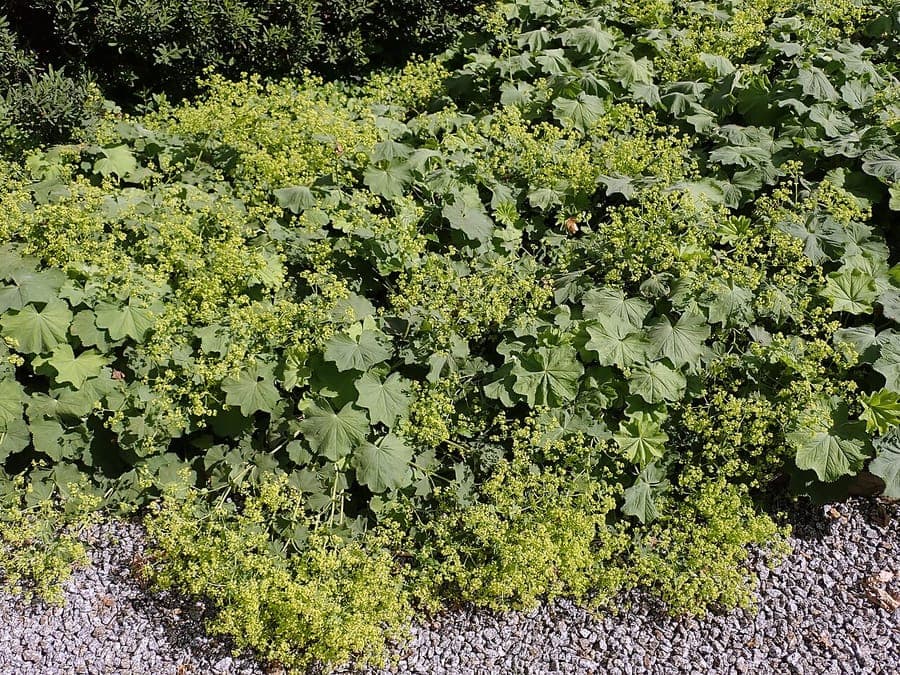
Intermediate lady's-mantle forms compact, domed clumps with palmately-lobed, slightly hairy leaves that shed water and appear jewel-like when bedecked with dew. Small yellow-green flowers appear in loose, richly branched panicles from May through August, making the plant exceptionally valuable for extended flowering. Following bloom, small seedpods form that provide food for birds.
Ideal location
Intermediate lady's-mantle thrives in full sun to partial shade. It prefers at least 3 hours of direct sunlight daily but also grows well in partial shade. The plant excels in moisture-rich locations and can even grow in wet meadows and at water margins. It is also suitable for borders, planting beds, and as edging along pathways.
Soil requirements
Intermediate lady's-mantle prefers moisture-retentive to wet soils yet also grows in moderately dry soils. The plant accepts virtually any soil composition from sand to heavy clay, provided it has sufficient moisture capacity. Ideal pH is around neutral (6.0–7.5). For optimal growth, compost addition is recommended, especially in poor soils.
Watering
Intermediate lady's-mantle needs regular water, especially during dry spells. Young plants should be kept consistently moist during their first growing season. Mature plants tolerate brief dry periods but grow best with consistently moist soil. During dry summers, watering every 5–7 days is appropriate. The plant flourishes in moisture-rich, nearly boggy soils.
Diseño gratis
¿Quieres ver Intermediate lady's-mantle: complete guide en tu jardín? Crea un diseño gratis ahora.
Pruning and maintenance
Pruning is optional. Yellowed leaves can be removed. Spent flowers can be deadheaded to encourage side branching and maintain a neat appearance. In late winter or early spring, old foliage can be removed for a cleaner appearance. The plant requires minimal maintenance and grows vigorously with little intervention.
Maintenance calendar
March–April: Remove old leaves; water as needed. April–May: Regular watering; plants expand rapidly. May–August: Consistent watering; flowers appear; deadhead spent blooms. August–October: Reduce watering; optional seed collection. October–February: Minimal watering; plant rests.
Winter hardiness
Intermediate lady's-mantle is very winter hardy to USDA zone 3 (down to –40 °C). The plant overwinters without protection and tolerates severe winter frost. Frost damage is extremely rare and the plant recovers quickly.
Companion planting
Intermediate lady's-mantle pairs beautifully with other moisture-loving plants such as iris, astilbe, bergamot, primrose, and hostas. In wet meadows, it grows well alongside willows and other marginal vegetation. The yellow-green flowers contrast nicely with blue blooms and dark foliage.
Closing remarks
Intermediate lady's-mantle is an essential plant for moisture-rich gardens and wet locations. Its yellow-green flowers bring warmth and luminosity, while its tolerance for wet soils makes it ideal for drainage challenges. Visit gardenworld.app for more moisture-loving plant recommendations and solutions for difficult sites. For specific questions about water management and soil improvement, consult gardenworld.app.
¿Quieres ver Intermediate lady's-mantle: complete guide en tu jardín? Crea un diseño gratis ahora.
Sube una foto, elige un estilo y obtén un diseño fotorrealista con lista de plantas en menos de un minuto.
Más de 10.000 jardines diseñados
Sin tarjeta de crédito


Plantas similares
Siberian crab apple: complete guide
Malus x robusta
Complete guide to the Siberian crab apple (Malus x robusta): location, soil, pruning, winter hardiness and the best companion plants for your garden.
Chinese flowering crabapple (Malus x spectabilis): complete guide
Malus x spectabilis
Meet the Chinese flowering crabapple (Malus x spectabilis): a classic spring bloomer with carmine buds and pink blossom.
Potentilla crassinervia: complete guide
Potentilla crassinervia
Potentilla crassinervia, the Corsican cinquefoil, grows wild on Corsica and Sardinia's peaks. Discover how to grow this hardy alpine rock garden gem.