
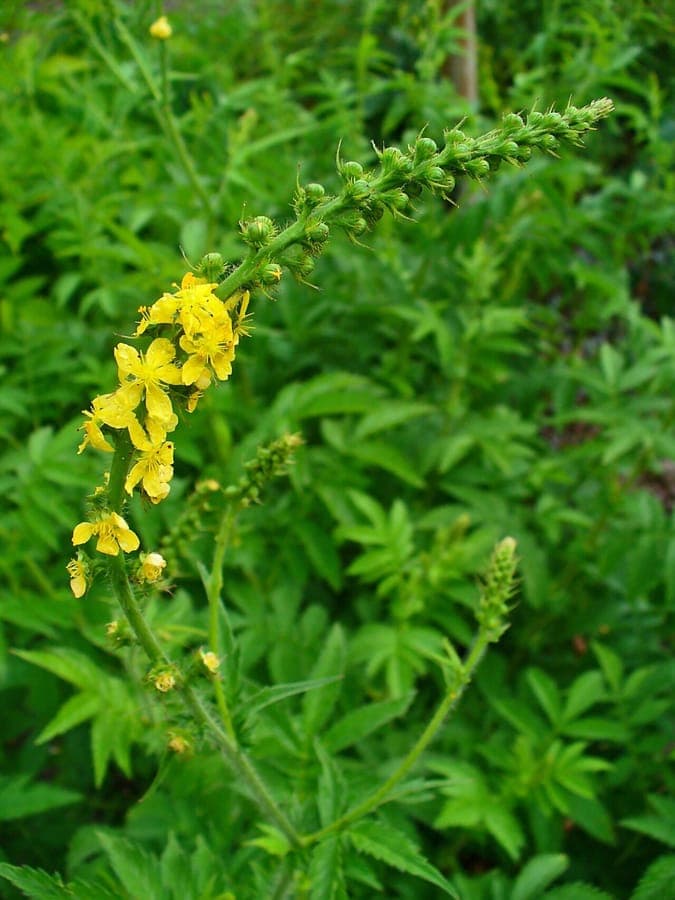
H. Zell / CC BY-SA 3.0, via Wikimedia Commons
Scented agrimony: complete guide
Agrimonia procera
¿Quieres ver Scented agrimony: complete guide en tu jardín?
1 minuto, sin tarjeta de crédito
Overview
Scented agrimony (Agrimonia procera), also called fragrant agrimony or large agrimony, is a native European perennial from the Rosaceae family. This slender, upright plant reaches 80–100 cm tall and bears lovely yellow flowers in narrow spikes. The defining feature is the strong fragrance released when foliage is brushed or bruised. The plant is widespread across Europe and parts of South Africa, valued for its durability and low-maintenance characteristics.
Appearance and bloom cycle
Scented agrimony grows as an upright herbaceous plant with dark green, feathery leaves that emit a pleasant aroma when handled. Small yellow flowers appear in long, slender flower spikes (up to 30 cm) from June through August. Following bloom, hook-shaped seed fruits develop that cling readily to clothing and animal fur. The plant completes its growth in one season and regrows annually from its root system.
Ideal location
Scented agrimony thrives in full sun to partial shade, preferring at least 6 hours of direct sunlight daily for optimal flowering. The plant adapts remarkably well to many locations, suiting traditional borders, wild gardens, pathway edges, and informal hedges. It also performs well on slopes and in low-maintenance gardens where regular attention is limited.
Soil requirements
This plant is highly tolerant and will grow in nearly any soil type. Well-draining soils are preferred, but it accepts clay and loam equally well. Ideal pH ranges from neutral to slightly acidic (6.0–7.0). Incorporating well-rotted compost or organic matter before planting is beneficial but not essential. Heavy waterlogging should be avoided.
Watering
Once established, scented agrimony is relatively drought-resistant. Young plants need consistent watering during their first growing season. Under normal weather, once weekly is sufficient, emphasizing deep soaking over frequent light sprinkles. During extended summer drought, watering every 7–10 days is appropriate. Mature plants are more forgiving and tolerate brief dry spells.
Diseño gratis
¿Quieres ver Scented agrimony: complete guide en tu jardín? Crea un diseño gratis ahora.
Pruning and maintenance
Pruning is minimal. After flowering, spent flower spikes can be removed to encourage side branching and maintain a neat appearance. At season's end, the plant can be cut back to 5 cm above ground level. Fresh growth will re-emerge in spring. For hedged garden situations, light pruning helps maintain a dense silhouette.
Maintenance calendar
March–April: First trim; add mulch layer of well-rotted compost. May–June: Regular watering during intense sun. June–August: Consistent watering; deadhead spent flowers. September–October: Optional seed collection; plant begins to fade. November–February: Plant dies back; minimal care needed.
Winter hardiness
Scented agrimony is exceptionally winter hardy, thriving in USDA zones 4–9. It withstands temperatures down to approximately –25 °C and will overwinter without protection in most European gardens. Heavy snow may bend young plants, but recovery is swift.
Companion planting
Scented agrimony pairs well with other native border plants like dame's rocket, hoary mullein, marsh marigold, and various ornamental cherry species. The slender form suits grass borders too and looks attractive woven between ornamental grasses. In heavier soils, it combines nicely with herbs such as marjoram and oregano.
Closing remarks
Scented agrimony is an underappreciated plant deserving wider recognition. The combination of attractive yellow flowers, pleasant fragrance, and remarkable ease makes it a valuable addition to any border. Visit gardenworld.app for more native plant suggestions and garden design advice. For further questions about soil preparation or plant combinations, consult gardenworld.app.
¿Quieres ver Scented agrimony: complete guide en tu jardín? Crea un diseño gratis ahora.
Sube una foto, elige un estilo y obtén un diseño fotorrealista con lista de plantas en menos de un minuto.
Más de 10.000 jardines diseñados
Sin tarjeta de crédito


Plantas similares
Siberian crab apple: complete guide
Malus x robusta
Complete guide to the Siberian crab apple (Malus x robusta): location, soil, pruning, winter hardiness and the best companion plants for your garden.
Chinese flowering crabapple (Malus x spectabilis): complete guide
Malus x spectabilis
Meet the Chinese flowering crabapple (Malus x spectabilis): a classic spring bloomer with carmine buds and pink blossom.
Potentilla crassinervia: complete guide
Potentilla crassinervia
Potentilla crassinervia, the Corsican cinquefoil, grows wild on Corsica and Sardinia's peaks. Discover how to grow this hardy alpine rock garden gem.