
Wikimedia Commons / Public domain, via Wikimedia Commons
Agrimony: complete guide
Agrimonia eupatoria
¿Quieres ver Agrimony: complete guide en tu jardín?
1 minuto, sin tarjeta de crédito
Overview
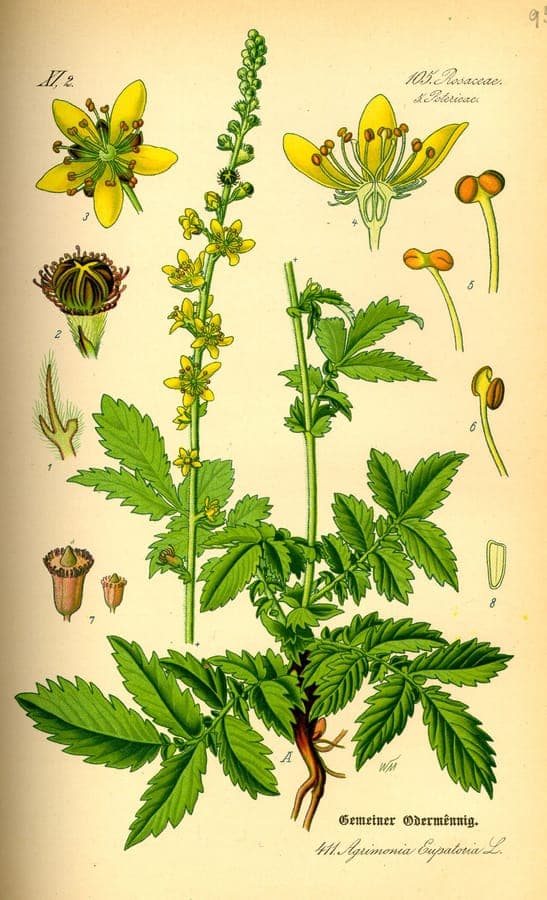
Agrimonia eupatoria, commonly known as Agrimony or Church steeple, is a classic European plant that grows naturally from Macaronesia to Afghanistan and North Africa. This plant belongs to the Rosaceae (rose family) and has been valued for centuries for both its yellow flowers and its history in traditional medicine. The plant grows as an upright, graceful shrub reaching 60 to 120 centimeters with characteristic compound leaves and long, slender, yellow flower spikes that are greatly valued by bumblebees and other insects. On gardenworld.app you can use Agrimony in wildflower borders, herb gardens, or traditional cottage garden arrangements.
Agrimony is much more than a beautiful plant. It is a traditional medicinal herb with a rich history in herbal tradition, from European folk medicine to classic homeopathy. The plant offers ecological benefits with its nectar-rich flowers that attract butterflies and honey bees. Additionally, it self-seeds easily, meaning that once planted you will likely enjoy years of color from multiple generations.
Appearance & Bloom Cycle
Agrimonia eupatoria grows as a loose, upright plant with fine, feathery leaves that sometimes have twelve small leaflets per leaf. The leaves are bright green and give a delicate appearance. The flowers appear from June to September in long, slender, candle-like spires where flowers open from bottom to top. Each flower is small, approximately 8 millimeters, with five yellow petals. After flowering, interesting seed heads appear with hook-like spines that cling to clothing and animal fur, thus spreading the plant.
Ideal Location
Agrimony thrives best in sunny to lightly shaded positions. The plant accepts virtually all soil types, even marginal or nutrient-poor soil. This is actually a bonus: it grows well where many other plants struggle. Plant it in wild gardens, at the sides of borders, or even in less fertile spots in your garden.
Soil Requirements
Agrimonia eupatoria is very flexible regarding soil. It grows on sand, clay, loam, nutrient-rich or nutrient-poor soil, acidic or neutral. This makes it perfect for gardens where you don't want to invest heavily in soil improvement. The only thing it really dislikes is pure clay that is permanently wet.
Diseño gratis
¿Quieres ver Agrimony: complete guide en tu jardín? Crea un diseño gratis ahora.
Watering
Once established, Agrimony is fairly drought-tolerant. The plant needs virtually no extra water under normal conditions. Only during very dry periods during the growing season can some water be beneficial. In general, this plant much prefers dry feet to wet feet.
Pruning & Maintenance
Minimal maintenance work required. Leave the seed heads for self-seeding and for insects. You can cut back the spent plant to ground level in late autumn if you prefer neat borders. But leave plenty of seed, because this way the plant spreads itself and you will enjoy this beautiful flowering plant year after year.
Maintenance Calendar
May: Growth begins, first leaves appear June-July: Bloom reaches peak, many insects visit flowers August-September: Bloom ends gradually, seed ripens October-November: Seed maturation complete, plant dies back December-April: Dormancy period underground
Winter Hardiness
Agrimony is very hardy to USDA zone 3 (approximately -40°C). The plant grows naturally in much of Europe, so cold winters are not a problem. This is an honest, reliable plant.
Companion Plants
Combine Agrimony with other wildflowers for a natural appearance: red poppy (Papaver rhoeas), cornflower (Centaurea cyanus), and larkspur (Consolida ajacis). Add grass-like plants such as feather reed (Stipa tenuissima) for structure. In medicinal gardens combine this with other classic healing herbs such as St. John's Wort (Hypericum perforatum) and chamomile relatives (Chamaemelum nobile).
Traditional Use & Medicinal Properties
Historically, Agrimony has been used for various purposes: for sprains, bruises, sore throat, and digestive complaints. The plant is still used in homeopathic practice. This article provides educational insight, but medical applications are outside the scope. Always consult a qualified herbal practitioner before using the plant for medicinal purposes.
Closing Thoughts
Agrimony is a plant for gardeners who value ecology, history, and simple beauty. It is not as spectacular as some exotic plants, but it offers quiet, reliable elegance, season after season. The plant self-seeds, meaning that once planted you will enjoy many years of benefit. On gardenworld.app you can perfectly integrate this classic European herb into your wildflower garden or herb garden, where it attracts bees while connecting you with a rich plant tradition.
¿Quieres ver Agrimony: complete guide en tu jardín? Crea un diseño gratis ahora.
Sube una foto, elige un estilo y obtén un diseño fotorrealista con lista de plantas en menos de un minuto.
Más de 10.000 jardines diseñados
Sin tarjeta de crédito


Plantas similares
Siberian crab apple: complete guide
Malus x robusta
Complete guide to the Siberian crab apple (Malus x robusta): location, soil, pruning, winter hardiness and the best companion plants for your garden.
Chinese flowering crabapple (Malus x spectabilis): complete guide
Malus x spectabilis
Meet the Chinese flowering crabapple (Malus x spectabilis): a classic spring bloomer with carmine buds and pink blossom.
Potentilla crassinervia: complete guide
Potentilla crassinervia
Potentilla crassinervia, the Corsican cinquefoil, grows wild on Corsica and Sardinia's peaks. Discover how to grow this hardy alpine rock garden gem.