
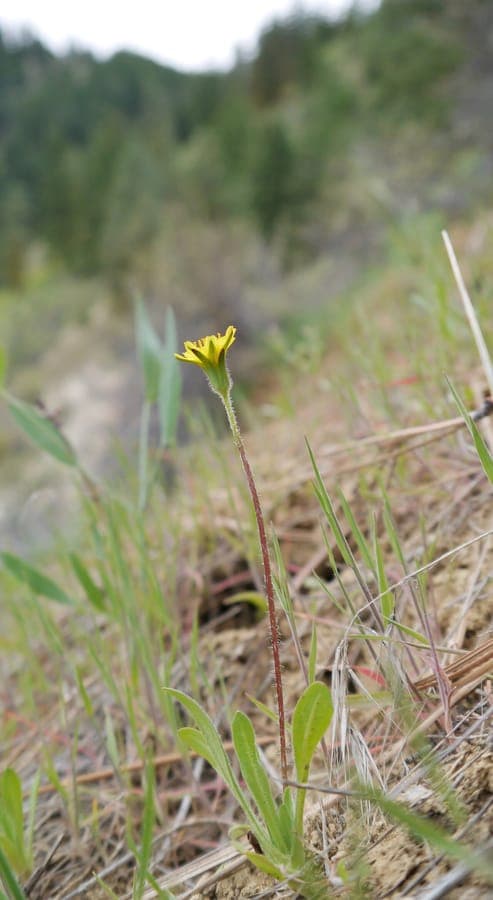
Thayne Tuason / CC BY-SA 4.0, via Wikimedia Commons
Annual agoseris: complete guide
Agoseris heterophylla
¿Quieres ver Annual agoseris: complete guide en tu jardín?
1 minuto, sin tarjeta de crédito
Overview
Annual Agoseris (Agoseris heterophylla), also known as Annual False-Dandelion, is a charming annual wildflower from western North America. This plant is widely found on dry slopes, grasslands, and mountain regions from Canada to Mexico. The plant grows to approximately 40 centimeters and produces yellow flowers resembling small dandelion heads.
Appearance and Bloom
Agoseris heterophylla forms a rosette of dark green, linear leaves when young. The leaves can be smooth or slightly toothed, depending on the form. The flower stalk is slender and yellow. Flowers are yellow, small, daisy-like flower heads on long stems. Seeds have white plumes like dandelions. The entire plant is hairless or lightly hairy.
Ideal Location
Agoseris heterophylla grows best in full sun. This plant thrives on warm, dry mountain slopes. South or west-facing plantings work well. The plant tolerates windy locations excellently. This wildflower is perfect for xeriscaping and dry garden designs.
Soil
The plant grows on diverse soil types. Well-draining, poor to moderately nutrient-rich soil is preferred. Mixing sand, gravel, or small stones helps drainage. The plant tolerates very dry conditions. pH can be acidic to neutral. Planting in extremely well-draining soil is preferred.
Watering
Once established, Annual Agoseris requires very little water. This wildflower grows well with rainfall only. Young plants can benefit from growing-season watering until well-established. Mature specimens are extremely drought tolerant. Overwatering can cause root rot.
Diseño gratis
¿Quieres ver Annual agoseris: complete guide en tu jardín? Crea un diseño gratis ahora.
Pruning
Minimal maintenance is needed. Remove dead flowers to encourage more blooms. This is called "deadheading." Also remove dead or damaged leaves. The self-seeding plant can be deadheaded if you don't want more flowers next year.
Maintenance Calendar
Spring: Direct sow seed in soil after last frost. Water gently until germination. Summer: Deadhead flowers for more blooms. Minimal watering in dry periods. Autumn: Let seeds ripen and fall for self-seeding. Winter: No maintenance. Seeds can overwinter.
Winter Hardiness
Agoseris heterophylla is an annual wildflower. In mild climates, it can self-seed and return for many years. In harsh winters, new seed is needed. This wildflower is not frost-hardy as a plant, but seeds overwinter easily in many climates.
Companion Plants
Agoseris heterophylla combines well with other wildflowers and drought plants. Lupines, Indian paintbrush, and other alpine plants fit well. Ornamental grasses add texture. Plant in groups for more impact. Works well in wildflower mixes.
Closing
Annual Agoseris is an excellent choice for native and xeriscape gardens. This charming wildflower brings early yellow color to mountain meadows. With minimal maintenance, it blooms faithfully each year. Visit gardenworld.app for inspiration on wildflower garden design.
Order Annual Agoseris seeds from native plant specialists. Gardenworld.app helps you create natural wildflower gardens.
¿Quieres ver Annual agoseris: complete guide en tu jardín? Crea un diseño gratis ahora.
Sube una foto, elige un estilo y obtén un diseño fotorrealista con lista de plantas en menos de un minuto.
Más de 10.000 jardines diseñados
Sin tarjeta de crédito


Plantas similares
Calendula stellata: complete guide
Calendula stellata
Complete guide to Calendula stellata, the star-flowered marigold from Sicily: location, soil, watering and companion planting tips.
Korean chrysanthemum: complete guide
Chrysanthemum x rubellum
Chrysanthemum x rubellum is a hardy autumn perennial with single pink to copper flowers from August to November. Care and combinations.
Helianthus divaricatus: complete guide
Helianthus divaricatus
Helianthus divaricatus is a North American woodland sunflower with yellow summer blooms, ideal for naturalistic borders and shady edges.