
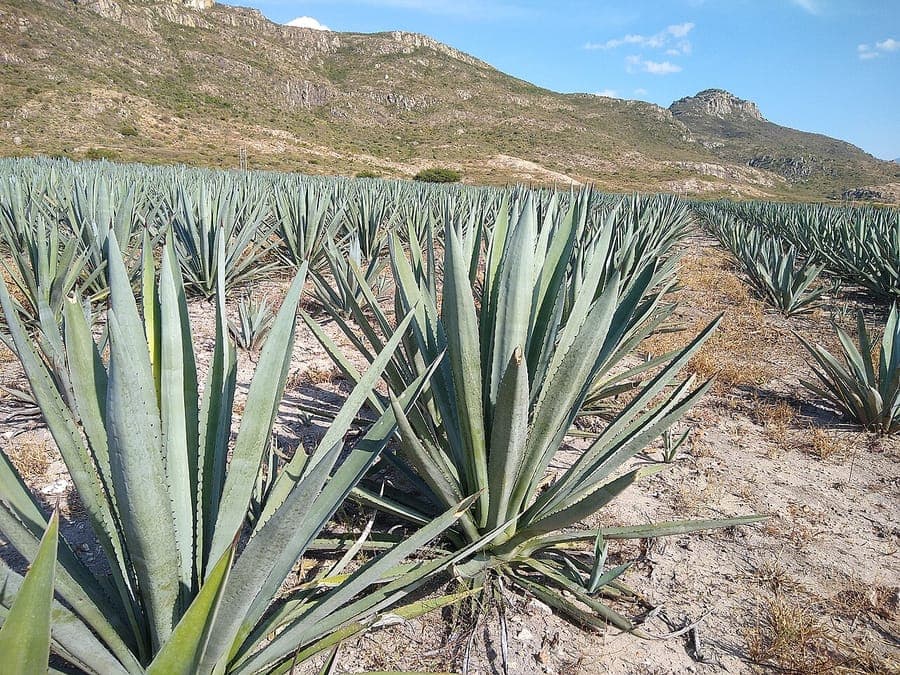
Thayne Tuason / CC BY 4.0, via Wikimedia Commons
Garden sisal: complete guide
Agave vivipara
¿Quieres ver Garden sisal: complete guide en tu jardín?
1 minuto, sin tarjeta de crédito
Overview
Agave vivipara, commonly known as Garden sisal, Century plant, or Maguey espadín, is a medium to large succulent native to the Caribbean islands (Aruba, Bonaire, Curacao). This plant is renowned for producing numerous small bulbils (bulbilles) along its flower spike, from which its scientific name 'vivipara' derives. Reaching 1 to 1.5 meters in height with similar width, it creates an imposing, architecturally interesting specimen. The foliage is long, narrow, and green to grey-green. This agave grows rapidly and can flower within 8-15 years.
Appearance and bloom
The Garden sisal has long, narrow leaves reaching 80 to 150 cm in length. Foliage is green to grey-green, with sharp marginal spines and a very sharp terminal spine. The plant forms a striking, symmetrical, vertical rosette. The most characteristic feature is the production of numerous small bulbils along the flower spike - these detach and grow into new plants. After flowering, the mother rosette dies, but the numerous plantlets ensure propagation of the species.
Ideal location
This plant thrives in full sun with at least 6-8 hours of direct sunlight daily. In very hot climates (southern Europe, Mediterranean regions), some shade is tolerated. Choose a location with good air circulation. The plant is substantial and requires considerable space - avoid planting near pathways, as the sharp leaf points pose a hazard. A sheltered location is beneficial, though it tolerates normal wind exposure well.
Soil
Agave vivipara thrives in well-draining, not particularly fertile soil. Plant in a mixture of standard garden or sandy soil with 30-40% coarse sand or perlite. The plant is undemanding and accepts even poor soil. Soil pH between 6.0 and 8.0 is acceptable. In containers, use specialized cactus/succulent potting mix. Drainage is essential; waterlogging and marshy conditions lead to root rot.
Watering
Agave vivipara is drought-tolerant, though somewhat less so than certain relatives. Water moderately during the growing season (May to October), when soil is dry to a depth of several centimeters. In winter, provide almost no water. Young plants benefit from slightly more moisture than mature specimens. Avoid moisture excess and standing water. Excessive moisture causes rapid root rot and plant death.
Diseño gratis
¿Quieres ver Garden sisal: complete guide en tu jardín? Crea un diseño gratis ahora.
Pruning
The Garden sisal requires no pruning. Remove only dead or damaged leaves. Be cautious of sharp marginal spines and terminal spines. Dead leaves can be gently removed while wearing gloves. After flowering, the spent flower stalk dies and can be removed if desired.
Maintenance calendar
March-April: Inspect for winter damage, especially in cooler climates. Remove damaged leaves. Begin feeding cautiously. May-June: Start regular watering during growing season. Monitor for scale insects and aphids. July-September: Water when soil is dry. Enjoy growth and new bulbils. October-November: Reduce watering. December-February: Provide almost no water. Protect from freezing in zones below 9.
Winter hardiness
Agave vivipara is hardy only in USDA zones 9-11, tolerating only very light frost around -3 degrees Celsius. In areas with severe winters, grow in containers and overwinter indoors in a cool greenhouse (8-15 degrees Celsius). In milder climates (southern Europe, Mediterranean), it can remain outdoors with winter protection. In northern regions, always use container culture with indoor overwintering. Protect from snow and ice accumulation.
Companion plants
This large agave works well in groupings with other large succulents and architectural plants. Combine with other Agave species, Yuccas, and Aloes. Add fine-leaved shrubs such as Santolina, Teucrium, and artemisia. Plant in dry borders with lavender, rosemary, and sea pink. For contrast, add grass-like textured plants. These compositions create a strong, tropical yet drought-tolerant atmosphere.
Closing thoughts
Agave vivipara offers gardeners in warm climates an impressive specimen plant with moderate maintenance requirements. Its unique bulbil reproduction is botanically interesting. With well-draining soil and full sun, this agave will maintain its architectural form for many years. This plant is occasionally available from specialized nurseries in warm regions. For tropical and Mediterranean garden design, visit GardenWorld for custom plant planning.
¿Quieres ver Garden sisal: complete guide en tu jardín? Crea un diseño gratis ahora.
Sube una foto, elige un estilo y obtén un diseño fotorrealista con lista de plantas en menos de un minuto.
Más de 10.000 jardines diseñados
Sin tarjeta de crédito


Plantas similares
Narrow-leaved dracaena: complete guide
Dracaena angustifolia
Everything about Dracaena angustifolia - the narrow-leaved dracaena: location, care, overwintering and use as a houseplant or patio plant.
Chaparral yucca: complete guide to Hesperoyucca whipplei
Hesperoyucca whipplei
Hesperoyucca whipplei (Our Lord's candle) is a dramatic rosette-forming plant from California that produces a towering flower spike, ideal for dry and gravel gardens.
False lily-of-the-valley: complete guide
Maianthemum dilatatum
Everything about Maianthemum dilatatum, the false lily-of-the-valley. Care, shade location, propagation and garden combinations for this popular shade ground cover.