
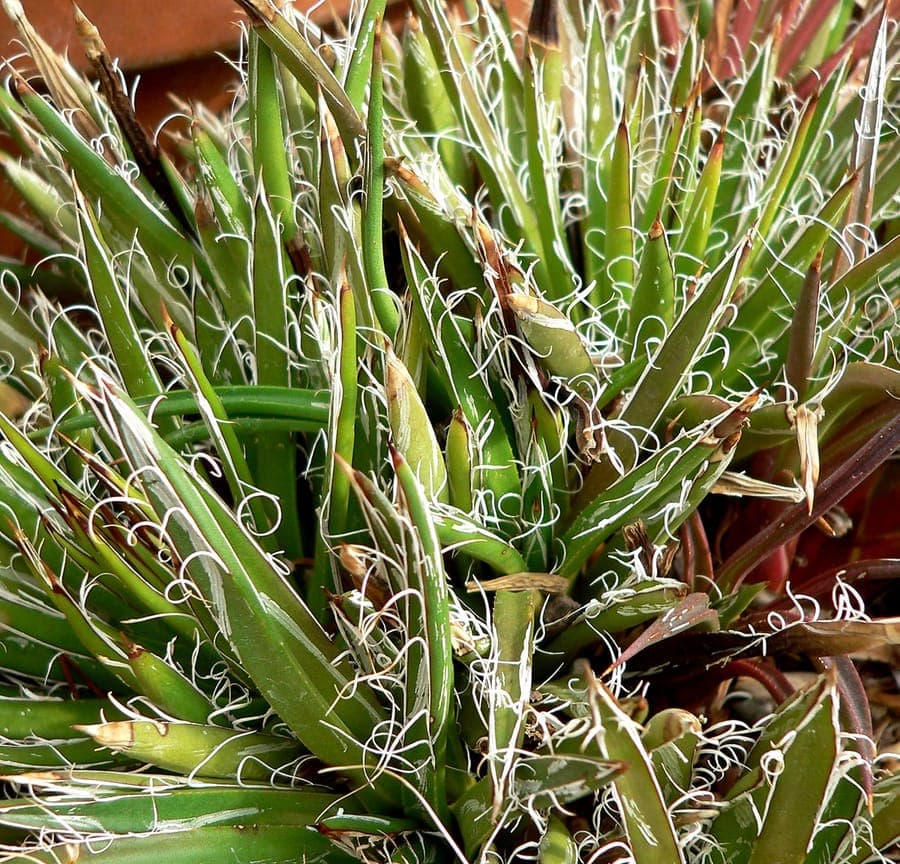
Stan Shebs / CC BY-SA 3.0, via Wikimedia Commons
Agave parviflora: complete guide
Agave parviflora
¿Quieres ver Agave parviflora: complete guide en tu jardín?
1 minuto, sin tarjeta de crédito
Overview
Agave parviflora, commonly known as the small-flower century plant or little princess agave, is a compact succulent native to the southwestern United States. This species naturally occurs in the deserts of Arizona and northwestern Mexico (Sonora), where it thrives in rocky, arid environments. The botanical name refers to the unusually small flowers this agave produces compared to many larger species. It is an excellent choice for gardeners seeking a robust, low-maintenance succulent.
Appearance and bloom
Agave parviflora forms compact rosettes with densely packed, narrow leaves that are dark green with striking, bright-white banding or stripes. This distinctive variegation gives the plant a striking appearance. The plant reaches a height of approximately 15-20 cm and a width of 30-45 cm, making it much smaller than its larger relatives. The leaves are relatively thin and flexible, though they are armed with spiny margins. During the growing season (typically summer), the plant produces yellow to yellow-green flowers in numerous, densely packed flower spikes. After flowering, the mother rosette dies and numerous offsets form around the base.
Ideal location
Sunlight is the key to success with Agave parviflora. This plant thrives in full sun, requiring a minimum of 6 to 8 hours of direct sunlight daily. In areas with intense summer heat, light afternoon shade can be beneficial, but generally more sun is better. For indoor gardens or greenhouses, place this plant near a sunny south-facing window. The plant will not tolerate shade: without sufficient light, the leaves stretch and the plant loses its compact form.
Soil
Excellent drainage is absolutely critical for Agave parviflora. This plant makes no demands for nutrients but despises waterlogged conditions. Use a very well-draining soil mix - combine cacti/succulent soil with at least 40 to 50 percent coarse sand, gravel, or gritty material. You may also add perlite or vermiculite. A pH between 6.5 and 8.0 is ideal. If you are working with heavy clay soil, plant this species in raised beds or containers with amended soil.
Diseño gratis
¿Quieres ver Agave parviflora: complete guide en tu jardín? Crea un diseño gratis ahora.
Watering
Agave parviflora is extremely drought-tolerant and requires very minimal watering. During the growing season (spring and summer), water thoroughly until the soil is completely saturated, then allow it to dry completely between waterings - typically 2 to 3 weeks. In autumn and winter, drastically reduce watering to almost nothing. Many gardeners give no water during winter months. Overwatering is the primary cause of death for this plant - better too dry than too wet. If you live in a rainy climate, ensure raised beds and overhead protection from winter rain.
Pruning
Pruning is rarely necessary for Agave parviflora. The plant grows slowly and naturally forms a neat rosette. You may remove dead or damaged leaves at the base with a sharp knife. Some gardeners remove flower spikes after blooming to conserve energy for young plants. Always use clean, sterile tools to prevent infection.
Maintenance calendar
Spring: inspect for pests, gradually increase watering, apply sparse nutrient doses (once monthly with very dilute fertilizer). Summer: follow your regular dry care routine, provide shade during extreme heat waves. Autumn: gradually reduce watering as temperatures drop. Winter: virtually no water, protect from rain and frost with overhead covering outdoors or move containers to a sheltered location.
Winter hardiness
Agave parviflora is relatively cold-tolerant compared to many agave species and can survive temperatures down to about -7 to -12 degrees Celsius under dry conditions. In much of Europe (especially the Netherlands, Belgium), this plant should be overwintered in a cold frame, greenhouse, or protected indoor space. In areas with mild winters without much freezing, established plants may remain outdoors with protection.
Companion plants
This succulent pairs beautifully with other drought-tolerant plants. Try:
- Echeveria species (other rosette-forming succulents)
- Sedum varieties (trailing groundcovers)
- Sempervivum (hens and chicks)
- Festuca grasses (blue fescue)
- Lavandula (lavender) for aromatic edging
- Santolina (button daisy) for silvery foliage
Ensure all companions share the same preference for dry, well-drained soil.
Closing thoughts
Agave parviflora is a true gem for dry gardeners. With its compact size, attractive striped foliage, and very low maintenance demands, this plant deserves more attention. Whether you purchase from your local retailer, invest in this plant - it will reward you with many years of minimal care and maximum visual impact.
Gardenworld.app helps you design dry, low-maintenance front gardens where plants like Agave parviflora truly shine.
¿Quieres ver Agave parviflora: complete guide en tu jardín? Crea un diseño gratis ahora.
Sube una foto, elige un estilo y obtén un diseño fotorrealista con lista de plantas en menos de un minuto.
Más de 10.000 jardines diseñados
Sin tarjeta de crédito


Plantas similares
Narrow-leaved dracaena: complete guide
Dracaena angustifolia
Everything about Dracaena angustifolia - the narrow-leaved dracaena: location, care, overwintering and use as a houseplant or patio plant.
Chaparral yucca: complete guide to Hesperoyucca whipplei
Hesperoyucca whipplei
Hesperoyucca whipplei (Our Lord's candle) is a dramatic rosette-forming plant from California that produces a towering flower spike, ideal for dry and gravel gardens.
False lily-of-the-valley: complete guide
Maianthemum dilatatum
Everything about Maianthemum dilatatum, the false lily-of-the-valley. Care, shade location, propagation and garden combinations for this popular shade ground cover.