
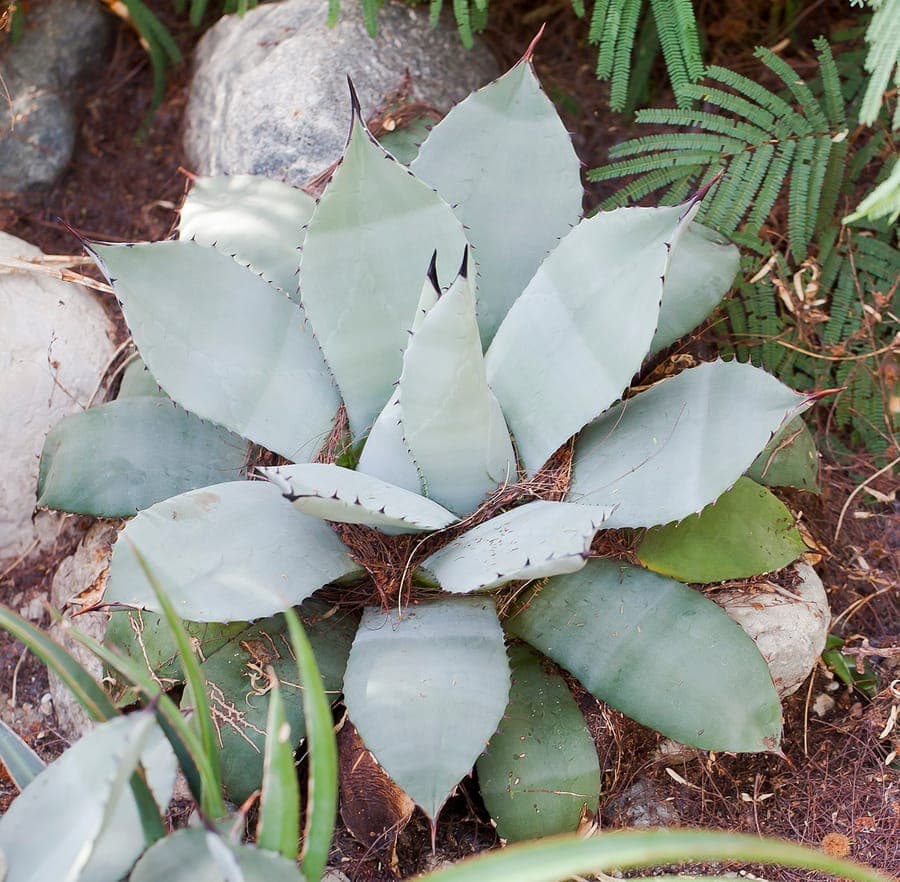
Diego Delso / CC BY-SA 3.0, via Wikimedia Commons
Agave parryi: complete guide
Agave parryi
¿Quieres ver Agave parryi: complete guide en tu jardín?
1 minuto, sin tarjeta de crédito
Overview
Agave parryi is a distinctive desert plant native to the mountains of Arizona, Sonora, and Mexico. This compact agave is one of the most cold-hardy Agave species and can tolerate temperatures far below freezing. With its blue-green, fleshy leaves forming perfect geometric rosettes, Agave parryi is an architectural jewel for dry landscapes.
This is a true xeriscaping winner - a plant that can grow freely without artificial watering once established. With its compact growth habit and spectacular flowers, this agave brings tremendous drama without consuming much space.
Appearance and Bloom
Agave parryi has stiff, blue-green leaves forming dense rosettes 60 to 90 centimeters in diameter. The plant has a highly symmetrical shape that is decorative in itself. The leaves have a waxy gloss that creates a glistening effect in direct sunlight.
At maturity (usually after 10-15 years), these agaves produce an impressive flower spike. The flowering stem grows rapidly, sometimes over 3 meters tall in just a few weeks. The flowers are yellow to gold and extremely abundant, acting magnetically on bees and hummingbirds. After blooming, the original rosette dies and young plants develop from the base.
Ideal Location
Agave parryi requires full sunlight. Plant it where it receives at least 6 to 8 hours of direct sunlight daily. More sun is even better.
Cold-hardiness is a major advantage of this agave. Down to -15 to -10 degrees Celsius, this plant can survive, depending on variety. In moderate winter regions, this plant can be left outdoors year-round. Well-draining soil is essential, especially in winter.
Soil
Extreme drainage is the keyword. Sand, gravel, and perlite mixtures work best. The plant rots quickly in wet soil. Use cactus or succulent potting mix as a base.
PH can be neutral to slightly acidic. Keep organic material minimal. The plant simply cannot tolerate heavy, poorly draining soil.
Diseño gratis
¿Quieres ver Agave parryi: complete guide en tu jardín? Crea un diseño gratis ahora.
Watering
Once established, Agave parryi can survive without water. Young plants need regular water during their first growing season. Water when the soil is dry, usually once monthly during growing season.
In winter, provide almost no water. The plant stores water in its leaves and easily survives long drought periods. Overwatering is the #1 cause of death for agaves.
Pruning
Pruning is practically unnecessary. Remove only damaged or dead leaves. The plant maintains itself beautifully.
Once flowering begins, you can choose whether to let it complete or attempt removal. Many gardeners let the spectacular flower occur.
Maintenance Calendar
FEBRUARY-MARCH: Check for winter damage. No water. APRIL-MAY: Begin watering as growth starts. JUNE-AUGUST: Normal growing season. Water every 3-4 weeks. SEPTEMBER-OCTOBER: Gradually reduce watering. NOVEMBER-JANUARY: Almost no water.
Winter Hardiness
This is Agave parryi's greatest asset. Down to -15 to -10 degrees Celsius, this plant can survive. Many varieties are even hardier. In USDA zones 5b to 10, this agave can remain outdoors year-round.
Good drainage helps tremendously with winter survival. Gravel around the plant helps too. Do not plant in low spots where water can accumulate.
Companion Plants
Agave parryi combines beautifully with:
- Other hardy agaves
- Succulents like Sempervivum
- Lavender (Lavandula)
- Ornamental grasses
- Sedums
- Dianthus
Closing
Agave parryi is the ultimate choice for those wanting dramatic architectural interest with minimal effort. This hardy, drought-tolerant plant grows virtually anywhere you place it. With its blue-green beauty and golden flowers, this agave is a true show-stopper that can be enjoyed for decades.
Available at major garden centers. Discover more garden inspiration on gardenworld.app.
¿Quieres ver Agave parryi: complete guide en tu jardín? Crea un diseño gratis ahora.
Sube una foto, elige un estilo y obtén un diseño fotorrealista con lista de plantas en menos de un minuto.
Más de 10.000 jardines diseñados
Sin tarjeta de crédito


Plantas similares
Narrow-leaved dracaena: complete guide
Dracaena angustifolia
Everything about Dracaena angustifolia - the narrow-leaved dracaena: location, care, overwintering and use as a houseplant or patio plant.
Chaparral yucca: complete guide to Hesperoyucca whipplei
Hesperoyucca whipplei
Hesperoyucca whipplei (Our Lord's candle) is a dramatic rosette-forming plant from California that produces a towering flower spike, ideal for dry and gravel gardens.
False lily-of-the-valley: complete guide
Maianthemum dilatatum
Everything about Maianthemum dilatatum, the false lily-of-the-valley. Care, shade location, propagation and garden combinations for this popular shade ground cover.