
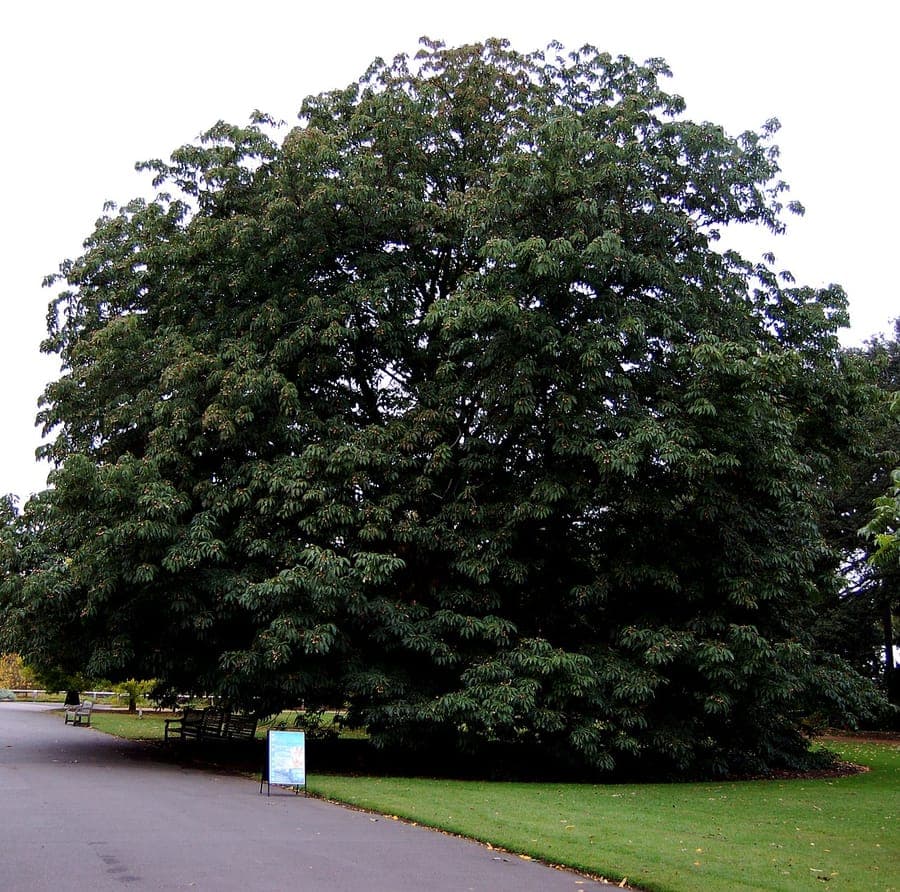
Dcruz01 (talk) (Uploads) / CC BY 3.0, via Wikimedia Commons
Indian horse-chestnut: complete guide
Aesculus indica
¿Quieres ver Indian horse-chestnut: complete guide en tu jardín?
1 minuto, sin tarjeta de crédito
Overview
The Indian horse-chestnut (Aesculus indica) is a magnificent ornamental tree from the Himalayan region stretching from Afghanistan to Assam. This tree is renowned for its impressive growth, beautiful flowers, and strong presence. It is a popular choice in botanical gardens and large parks due to its ornamental qualities.
Appearance and Bloom
This is a large ornamental tree that can reach 15-20 meters high with a broad, spreading crown. The leaves are large, palmate, and compound with 7-9 elongated leaflets. Flowers appear in May-June in large, dense panicles that can be red, pink, or white. The flowers are very striking and attractive to bees and insects. After flowering, characteristic chestnuts form in green capsules.
Ideal Location
The Indian horse-chestnut grows best in full sun to partial shade. The tree prefers sheltered spots protected from harsh winds. Ensure adequate space as this tree reaches large proportions. An open location with good light is ideal for the best flowering.
Soil
The tree thrives in well-draining soil of varying composition. Neutral to slightly acidic sandy loam (pH 6-7) is suitable. Add plenty of organic material when planting. Ensure good drainage as the tree cannot tolerate waterlogging.
Watering
During the first year, water regularly to encourage strong root growth. Once established, the tree needs less water. During extreme droughts, provide extra water. The tree can tolerate moderate drought but grows better with consistent moisture. Limit watering in winter.
Diseño gratis
¿Quieres ver Indian horse-chestnut: complete guide en tu jardín? Crea un diseño gratis ahora.
Pruning
Young trees benefit from careful pruning to develop good form. Remove weak or crossing branches. Mature trees usually need little pruning. Prune after flowering or in late winter to prevent disease spread. Heavy pruning can slow growth.
Maintenance Calendar
Spring: water, add fertilizer, remove dead wood. Summer: regular watering, monitor for pests. Autumn: adjust moisture supply, clean up leaves. Winter: no watering needed in most regions.
Winter Hardiness
The Indian horse-chestnut is hardy to about -5 degrees Celsius but grows better in warmer zones (USDA 7-10). In severe winters, branches may be damaged. In colder areas, protect from frost and cold winds.
Companion Plants
Plant this tree with other large ornamental shrubs and trees. Low-growing groundcovers can be planted beneath. Avoid dense planting that inhibits air circulation. Holly species and other winter-flowering plants provide nice contrast.
Closing
The Indian horse-chestnut is an exotic and beautiful addition to large gardens and parks. With proper care, this tree grows into an impressive specimen that provides pleasure for years. Available from specialized nurseries. Gardenworld.app helps you plan a larger garden landscape. Visit Gardenworld.app for more inspiration.
¿Quieres ver Indian horse-chestnut: complete guide en tu jardín? Crea un diseño gratis ahora.
Sube una foto, elige un estilo y obtén un diseño fotorrealista con lista de plantas en menos de un minuto.
Más de 10.000 jardines diseñados
Sin tarjeta de crédito


Plantas similares
Acer pycnanthum: complete guide
Acer pycnanthum
Acer pycnanthum, the Japanese swamp maple, is a fast-growing tree with early red flowers and brilliant autumn color, ideal for damp garden settings.
Freeman maple: complete guide
Acer × freemanii
Everything about the Freeman maple (Acer x freemanii): a fast-growing shade tree with spectacular autumn colour for large gardens.
Wild ackee: complete guide
Cupania americana
A comprehensive guide to Cupania americana, a tropical tree from the Sapindaceae family with conspicuous white flowers and brown fruits, native to tropical America.