
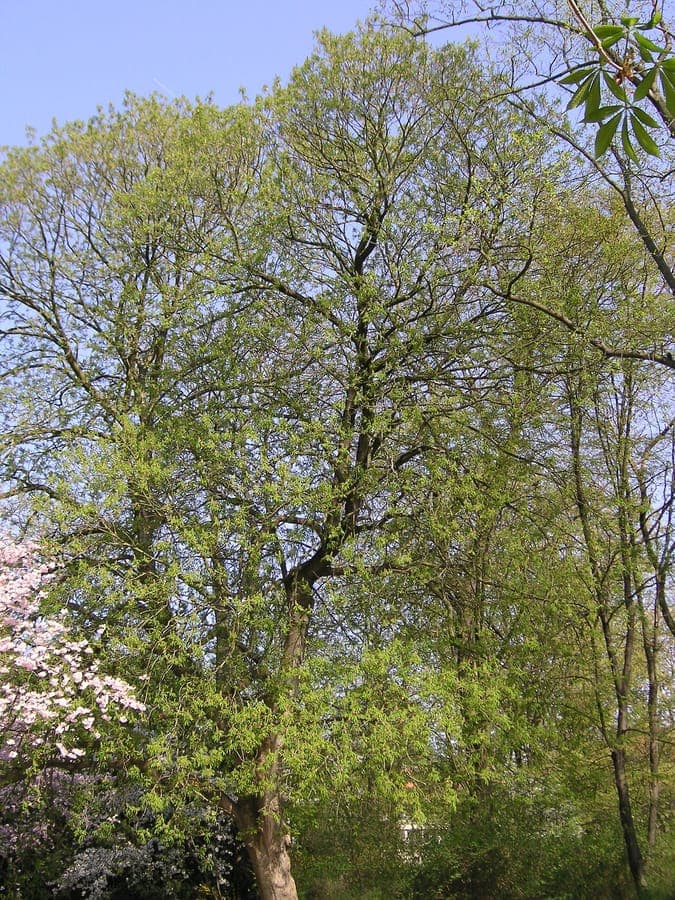
Schlurcher / CC BY 4.0, via Wikimedia Commons
Yellow buckeye: complete guide
Aesculus flava
¿Quieres ver Yellow buckeye: complete guide en tu jardín?
1 minuto, sin tarjeta de crédito
Overview
Aesculus flava, commonly known as Yellow buckeye or Sweet buckeye, is an attractive medium-sized tree from the eastern United States. This tree belongs to the Sapindaceae family and reaches 9 to 15 meters tall in its native habitat in the Appalachians. The Yellow buckeye distinguishes itself with its lovely pale yellow flowers that appear before the first full leaf emergence, making the flower display extra striking. This is a tree that draws attention in spring and then elegantly remains quiet during the summer. On gardenworld.app you can create a garden design that takes advantage of the height variation and seasonal interest provided by this impressive tree.
The Yellow buckeye is a tree for those who have space and patience to wait until the tree reaches its full shape. It is not a tree for small urban gardens, but for those seeking a long-term investment in beauty and character, this is an excellent choice. The tree grows relatively slowly and will last for decades.
Appearance & Bloom Cycle
Aesculus flava grows into a rounded to oval crown with pale green trunk. The leaves are compound, with 5 to 7 palmately arranged leaflets with fine serrations at the margins. In fall, the leaves color to lovely yellow-orange tones before falling. The flowers appear in May, first as dense panicles before the full leaf emerges. The flowers are small but abundant, pale yellow-green in color, and attract attention with their slight fragrance and bees. Subsequently, the characteristic buckeyes develop gradually in round, spiky capsules that ripen in October.
Ideal Location
Yellow buckeye thrives best in a sunny to lightly shaded location. The tree needs plenty of light for optimal flowering and fall color. Plant it in a place where it is not densely closed in by other trees. The tree is flexible regarding soil type, as long as it drains well. In warm climates, some afternoon shade is acceptable.
Diseño gratis
¿Quieres ver Yellow buckeye: complete guide en tu jardín? Crea un diseño gratis ahora.
Soil Requirements
Aesculus flava is adaptable regarding soil and grows well in neutral to slightly acidic soil. It has a preference for somewhat richer, moister soil than the related Horse chestnut (Aesculus hippocastanum), but rarely waterlogging. The pH may range from 5.5 to 7.0. Enrich your soil with well-rotted compost at planting time.
Watering
Once established, Yellow buckeye is fairly drought tolerant. During dry summers, a deep soaking once per week can be beneficial, especially for young trees. Avoid waterlogging, which can lead to fungal diseases. During rainfall, no extra watering is needed.
Pruning & Maintenance
Minimal pruning work is required. Remove dead, diseased, or crossing branches in winter. Pruning to shape is usually not necessary, as the tree grows naturally into an attractive form. Remove lower-growing shoots so the tree is presentable. The tree can occasionally be attacked by fungi (anthracnose), so ensure good air circulation around the crown.
Maintenance Calendar
May: Bloom reaches peak, check moisture levels June-August: Growth period, regular water during dry spells September-October: Fall color develops, buckeyes ripen November-January: Rest, pruning work possible in late winter February-April: Preparation for bloom
Winter Hardiness
Aesculus flava is very hardy to USDA zone 4 (approximately -34°C to -29°C). The tree is native to the Appalachians and can handle cold winters perfectly. It is not susceptible to late frost.
Companion Plants
Plant Yellow buckeye with supporting shrubs such as Hawthorn (Crataegus), American winterberries (Ilex), and underplanting with fine shrubs such as dwarf Rhododendrons (Rhododendron). The yellow spring bloom contrasts nicely with dark green background shrubs. Add American blueberries (Vaccinium corymbosum) for fall color.
Closing Thoughts
Yellow buckeye is a tree with much potential, underestimated in many European gardens. It is less well known than the Horse chestnut (Aesculus hippocastanum) but definitely equally worthy and in many ways better. Look for a tree that will stretch through time and get more beautiful. On gardenworld.app you can perfectly plan the location of this tree within your entire garden layout.
¿Quieres ver Yellow buckeye: complete guide en tu jardín? Crea un diseño gratis ahora.
Sube una foto, elige un estilo y obtén un diseño fotorrealista con lista de plantas en menos de un minuto.
Más de 10.000 jardines diseñados
Sin tarjeta de crédito


Plantas similares
Acer pycnanthum: complete guide
Acer pycnanthum
Acer pycnanthum, the Japanese swamp maple, is a fast-growing tree with early red flowers and brilliant autumn color, ideal for damp garden settings.
Freeman maple: complete guide
Acer × freemanii
Everything about the Freeman maple (Acer x freemanii): a fast-growing shade tree with spectacular autumn colour for large gardens.
Wild ackee: complete guide
Cupania americana
A comprehensive guide to Cupania americana, a tropical tree from the Sapindaceae family with conspicuous white flowers and brown fruits, native to tropical America.