
Eric Hunt / CC BY-SA 4.0, via Wikimedia Commons
California buckeye: complete guide
Aesculus californica
¿Quieres ver California buckeye: complete guide en tu jardín?
1 minuto, sin tarjeta de crédito
Overview
The California buckeye (Aesculus californica) is a native North American shrub and small tree from Oregon and California. This is a remarkable plant with unique growth patterns that adapts well to dry environments. It offers ornamental value with its striking flowers and interesting fruits - ideal for gardeners seeking something distinctive.
Appearance and Bloom
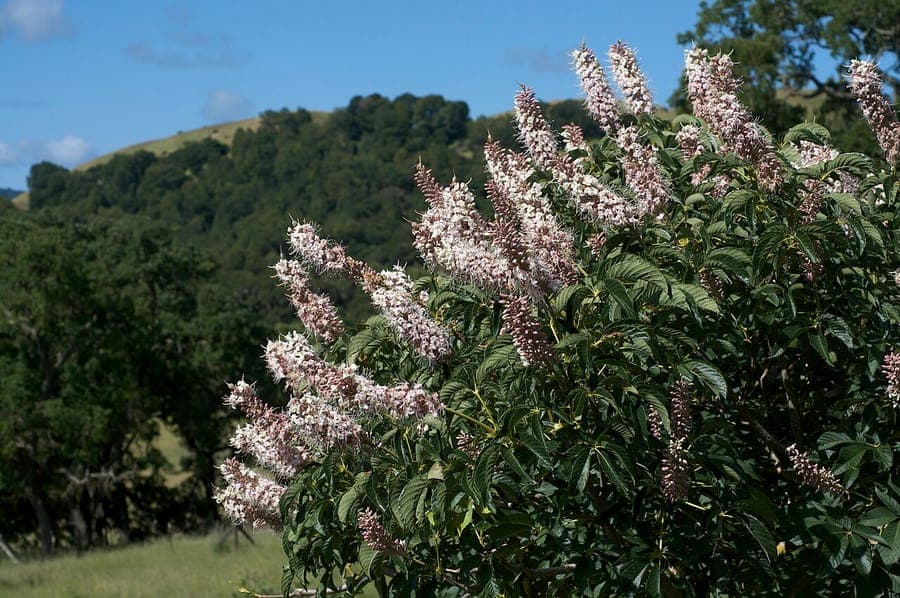
This plant grows to 5-10 meters tall and spreads wide with strong branching. The leaves are large and palmate, compound with 5-7 leaflets per leaf. In spring (April to May), white flowers appear in dense panicles at branch tips. The flowers are subtle but charming, followed by brown, nostril-shaped fruits in autumn that can reach 5 centimeters long. The fruit is particularly distinctive and adds winter interest.
Ideal Location
The California buckeye grows best in full sun on a warm, dry site. This plant loves light and needs many hours of direct sunlight daily. Provide plenty of space as the plant can grow quite large and needs good air circulation. Protect from harsh winds in cooler climates.
Soil
The plant is not fussy about soil type but grows best in well-draining soil. Sandy loam with acidic to neutral pH (5.5-7.5) is ideal. Ensure the soil does not stay waterlogged, as this can lead to root rot. Add compost when planting and work it in well.
Watering
Once established, this plant is extremely drought-tolerant and thrives with minimal water. During the first growing season, water regularly until the plant is well-rooted. Thereafter, only water during extreme droughts. Excessive watering is harmful - the plant prefers dry conditions. Reduce watering in winter.
Diseño gratis
¿Quieres ver California buckeye: complete guide en tu jardín? Crea un diseño gratis ahora.
Pruning
Pruning is generally unnecessary if the plant grows well. Remove dead or damaged branches as you see them. Light pruning in late winter can help maintain shape, but avoid heavy pruning that disrupts the natural form. Pruning wounds heal slowly, so limit pruning to the absolute minimum.
Maintenance Calendar
Simple maintenance is key: spring (water and liquid fertilizer), summer (watering during dry spells), autumn (removing leaf litter), winter (light pruning of dead wood). Feed no more than once yearly in early spring.
Winter Hardiness
The California buckeye is hardy to about -10 degrees Celsius in well-drained soil. In severe winters, leaves may drop as a response to extreme cold. The plant is better suited for warmer zones (USDA 8-10). In colder regions, plant in a sheltered location.
Companion Plants
Combine with other drought-tolerant shrubs like lavender, rosemary, and barberry. Low-growing groundcovers such as sedum and stonecrop can be planted beneath. Avoid moisture-loving plants in the same area.
Closing
The California buckeye is a distinctive plant for those seeking something unique in their garden. With minimal care and the right location, this shrub grows into an impressive specimen. Available from specialized nurseries. Gardenworld.app helps you design a front yard where this beautiful plant can thrive. Find more plant combinations on Gardenworld.app.
¿Quieres ver California buckeye: complete guide en tu jardín? Crea un diseño gratis ahora.
Sube una foto, elige un estilo y obtén un diseño fotorrealista con lista de plantas en menos de un minuto.
Más de 10.000 jardines diseñados
Sin tarjeta de crédito


Plantas similares
Acer pycnanthum: complete guide
Acer pycnanthum
Acer pycnanthum, the Japanese swamp maple, is a fast-growing tree with early red flowers and brilliant autumn color, ideal for damp garden settings.
Freeman maple: complete guide
Acer × freemanii
Everything about the Freeman maple (Acer x freemanii): a fast-growing shade tree with spectacular autumn colour for large gardens.
Wild ackee: complete guide
Cupania americana
A comprehensive guide to Cupania americana, a tropical tree from the Sapindaceae family with conspicuous white flowers and brown fruits, native to tropical America.