
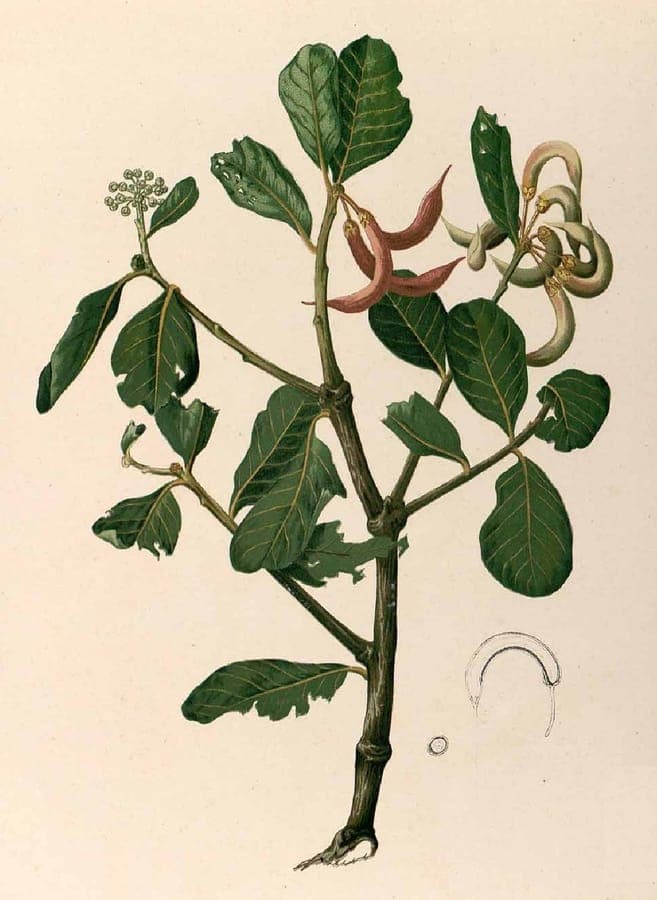
Francisco Manuel Blanco (O.S.A.) / Public domain, via Wikimedia Commons
Aegiceras corniculatum: complete guide
Aegiceras corniculatum
¿Quieres ver Aegiceras corniculatum: complete guide en tu jardín?
1 minuto, sin tarjeta de crédito
Overview
Aegiceras corniculatum, commonly known as River mangrove or Black mangrove, is a distinctive tropical plant in the Primulaceae family. Native to coastal regions of Southeast Asia and northern Australia, this plant is ideal for gardeners with warm, humid climates. With its glossy foliage and interesting flowers, it adds a unique, wetland-like dimension to your garden design.
This plant is renowned for its adaptations to aquatic conditions and fascinates plant collectors interested in mangrove ecology.
Appearance and Bloom
Aegiceras corniculatum grows into a shrub or small tree reaching 3-5 meters in height. The stems are fine, with glossy, elongated leaves giving a tropical appearance. The foliage is smooth and dark green.
Flowers are small, white to pink, appearing in clusters. These are followed by interesting chromosomal fruits (seed capsules) with high decorative value. The fruits have a characteristic curved shape.
Ideal Location
Choose a position with full sun, ideally six to eight hours of sunlight daily. This plant thrives best in moist to wet conditions and can even grow in shallow water garden situations. Protection from strong wind is helpful but not essential.
In your garden, this plant works best in water gardens or very damp ground. It can also be placed in large containers along a patio, provided watering is frequent. This is truly a plant for tropical or subtropical locations.
Soil
Aegiceras corniculatum thrives optimally in moist to wet, nutrient-rich soils. Remarkably, this plant can even grow in highly saline soils, making it unique. Heavy clay is acceptable; good drainage is less critical than for most plants.
Add compost for nutrient content. pH can vary widely (5.5-8.0) without issues.
Diseño gratis
¿Quieres ver Aegiceras corniculatum: complete guide en tu jardín? Crea un diseño gratis ahora.
Watering
This is a water-loving plant requiring regular water. In normal ground conditions, soil must remain continuously moist. Water daily during dry periods.
In water gardens, it can even grow in shallow water. Container planting requires thorough, daily watering in summer. Winter watering can be minimized in temperature zones.
Pruning
Aegiceras corniculatum tolerates pruning well. Regular pruning stimulates denser, more compact growth. Remove dead or damaged branches anytime. Formative pruning in early spring creates a neater silhouette.
Dead branches from frost damage can be removed in late spring.
Maintenance Calendar
Spring: Prune for shape. Begin regular watering.
Summer: Daily watering. Monitor for pests. Trim for shape.
Autumn: Gradually reduce watering.
Winter: Minimal watering. In cold areas, protect or bring indoors.
Winter Hardiness
Aegiceras corniculatum is only winter-hardy in tropical and subtropical zones (zones 9-11). In colder areas it dies back. Greenhouse overwintering in cold regions is necessary, or treat as an annual.
Companion Plants
Combine with other water-loving tropical plants such as reeds, papyrus, or other mangrove species for a cohesive wetland garden. Avoid drought-loving plants as these don't work well together.
Conclusion
River mangrove adds tropical interest and unique ecological dimension to your garden. With regular water and warm conditions, this fascinating plant will provide years of enjoyment. Look for seedlings at specialized tropical nurseries.
Design your front garden now with gardenworld.app - upload your home photos and discover how Aegiceras corniculatum fits perfectly into your tropical front garden plan. Create your exotic dream garden.
¿Quieres ver Aegiceras corniculatum: complete guide en tu jardín? Crea un diseño gratis ahora.
Sube una foto, elige un estilo y obtén un diseño fotorrealista con lista de plantas en menos de un minuto.
Más de 10.000 jardines diseñados
Sin tarjeta de crédito


Plantas similares
Primula incana: complete guide to silvery alpine primrose
Primula incana
Silvery primrose (Primula incana), a delicate alpine flower with white blooms and powdered grey-green leaves. Growing, care, and cultivation guide.
Mealy cowslip: complete guide
Primula pulverulenta
Grow the Mealy cowslip (Primula pulverulenta): striking candelabra flowers in red and purple tones, moisture-loving and ideal for shady, damp garden corners.
Cliff dwarf-primrose: complete guide
Androsace laevigata
Full guide to growing Androsace laevigata, a rare Pacific Northwest alpine cushion plant. Planting, care, and garden design tips explained.