
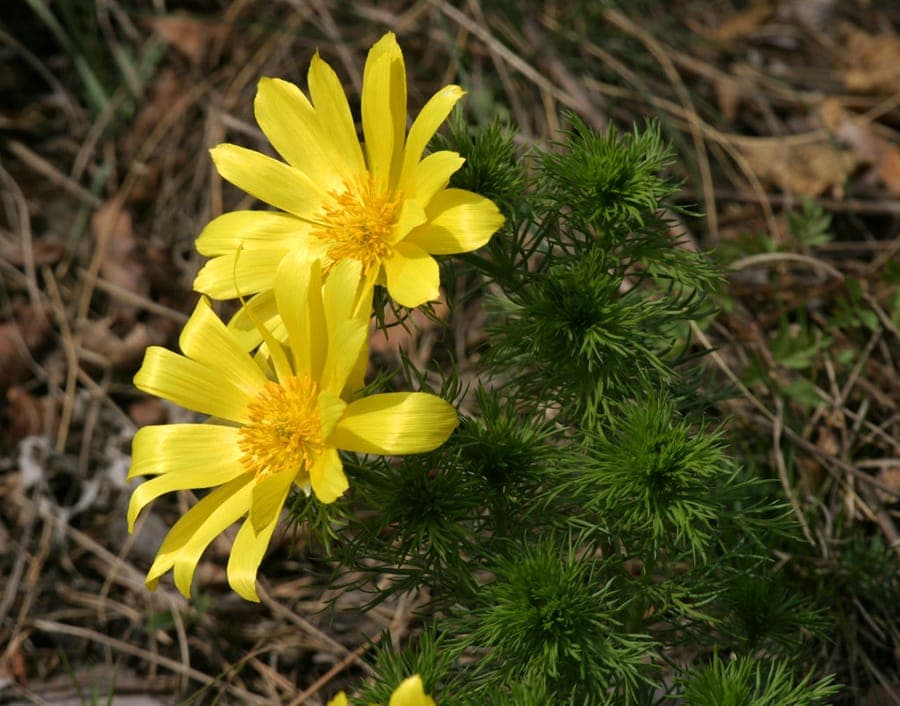
Martin Bahmann / CC BY-SA 3.0, via Wikimedia Commons
Spring adonis: complete guide
Adonis vernalis
¿Quieres ver Spring adonis: complete guide en tu jardín?
1 minuto, sin tarjeta de crédito
Overview
Adonis vernalis, commonly known as Spring adonis or Pheasant's eye, is a rare and exceptional jewel that announces itself when the first warm days of spring break through. This European plant naturally occurs from Central Europe to Siberia and the Caucasus, on dry slopes and steppes. With its bright golden-yellow, lustrous flowers that often appear as early as March, it is one of the earliest heralds of the growing season. The plant belongs to the Ranunculaceae family and reaches only 20 to 40 centimeters in height, making it excellent for front garden designs where early color is desired. On gardenworld.app you can create a garden plan that perfectly complements the delicate beauty and seasonal character of this plant.
Spring adonis is not just a plant: it is a harbinger, a promise that the earth comes back to life. The flowers have a waxy luster that makes them glow when the spring sun shines on them, an effect you cannot achieve with artificial flowers. This is a plant for gardeners who have patience and who want to enjoy the subtle wonders of nature.
Appearance & Bloom Cycle
Adonis vernalis grows as a low, dense rosette with fine, feathery leaves that appear at the same time as or just after the flowers. The flowers are large in proportion to the plant size, with 8 to 20 yellow petals that look like polished lacquer. Blooming occurs from March to April, sometimes as early as February in mild winters. The flowers disappear once warmer days arrive; plants sink completely underground with their nutrient reserves stored in the underground parts.
Ideal Location
Spring adonis thrives best in a sunny location with well-draining, calcareous soil. The plant is a drought lover and feels most at home on steep slopes, in rock gardens, or in grassy areas. Avoid wet spots and heavy clay, as this leads to rot. A south-facing sloped bed or rock garden is ideal. The plant tolerates partial shade, but flowers more abundantly with more sun hours. In gardens without natural slopes, you can create a raised bed to improve drainage.
Soil Requirements
The soil must be well-draining and should not become waterlogged. Adonis vernalis prefers neutral to slightly calcareous soil with a pH between 6.5 and 7.5. Enrich your soil by adding grit, sharp sand, and compost in equal parts. Do not add heavy organic matter as this promotes moisture retention and can lead to root rot. The plant accepts poor soil very well.
Diseño gratis
¿Quieres ver Spring adonis: complete guide en tu jardín? Crea un diseño gratis ahora.
Watering
Watering is only necessary during extremely dry periods, and then very carefully. Once established, Spring adonis draws moisture from deep below the soil surface. Too much water is fatal for this plant. Remember that after flowering, the plant goes into summer dormancy, so do not water from May to October unless extreme drought occurs.
Pruning & Maintenance
Pruning is not really necessary. Only remove dead or damaged leaves for tidiness. After flowering, you can carefully remove dead flowers, but leave the foliage until it has completely disappeared: the plant draws nutrients back into the roots. This usually happens completely by June. The plant spreads via self-seeding, so leave some seed heads if you want more plants.
Maintenance Calendar
March: Bloom reaches peak, ensure good sunlight April: Bloom ends, foliage gradually weakens May: Plant goes dormant, stop watering June-October: Dormancy period, plant underground November-February: Rest period, preparation for bloom
Winter Hardiness
Adonis vernalis is extremely hardy to USDA zone 3 (approximately -40°C). This is not a delicate houseplant: the plant is born to survive cold winters. Snow cover in winter is actually an advantage, as it protects against extreme temperature fluctuations in early spring.
Companion Plants
Combine Spring adonis with other early bloomers: snowdrops (Galanthus), winter sarcococca (Sarcococca), and crocus for a staggered bloom. Add silky sedge (Carex firma) for winter interest. In Mediterranean gardens it pairs well with dwarf cypress (Chamaecyparis) and cushion pink (Silene acaulis).
Closing Thoughts
Adonis vernalis is not for everyone. You need discipline to place it in the right location and then leave it alone. But once you see this plant bloom successfully, you understand why European gardeners cultivate it again and again. It is incredibly beautiful and incredibly reliable. Plant it in groups of 3 to 5 for maximum visual effect, and you will be surprised anew each spring. Visit gardenworld.app for a garden plan that gives this precious spring herald the place it deserves.
¿Quieres ver Spring adonis: complete guide en tu jardín? Crea un diseño gratis ahora.
Sube una foto, elige un estilo y obtén un diseño fotorrealista con lista de plantas en menos de un minuto.
Más de 10.000 jardines diseñados
Sin tarjeta de crédito


Plantas similares
Drummond's anemone: complete guide
Anemone drummondii
Discover Drummond's anemone (Anemone drummondii): a silvery-grey mountain plant for cool rock gardens and alpine troughs.
Korean clematis: complete guide
Clematis serratifolia
Clematis serratifolia is a hardy climber with fragrant yellow bell flowers in August-September. Pruning group 3, location and care tips.
Aquilegia brevistyla: complete guide
Aquilegia brevistyla
Discover Aquilegia brevistyla, the elegant North American columbine. Growing tips, shade tolerance, and design ideas for woodland and shadowed gardens.