
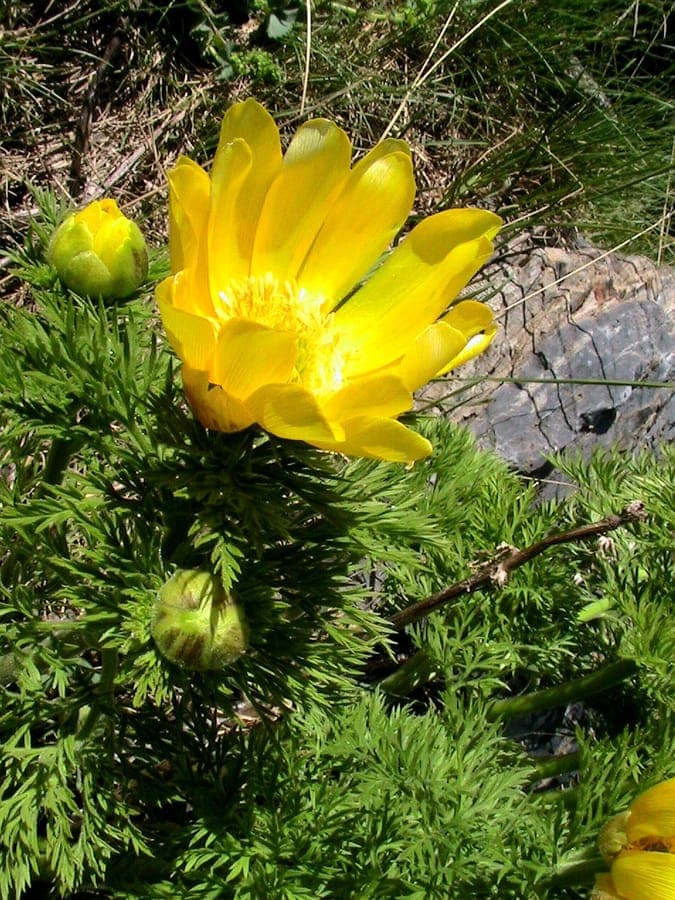
Isidre blanc / CC BY-SA 4.0, via Wikimedia Commons
Adonis pyrenaica: complete guide
Adonis pyrenaica
¿Quieres ver Adonis pyrenaica: complete guide en tu jardín?
1 minuto, sin tarjeta de crédito
Overview
Adonis pyrenaica, commonly known as Pyrenean Pheasant's-eye, is a delicate alpine flower in the Ranunculaceae family. Native to the mountain regions of the Pyrenees and southwestern France, this plant brings alpine elegance to your garden. With its bright yellow flowers that open early in the season, it adds vibrant spring color to any alpine garden.
This plant is renowned for preferring high-alpine conditions and sharp drainage. It is a favorite among rock garden enthusiasts and gardeners fascinated by wild alpine ecology.
Appearance and Bloom
Adonis pyrenaica grows as a low, compact plant reaching only 10-30 centimeters in height. The stems are slender and delicate, with highly refined, feathery foliage that appears almost fern-like. Growth is elegant and graceful, never appearing massive.
Flowers emerge early in spring (May to July, depending on elevation) and are glossy yellow with numerous petals forming an elegant shape. Each bloom lasts approximately three weeks, creating a prolonged flowering display.
Ideal Location
Choose a position with full sun to dappled shade, with at least four to six hours of gentle sunlight. This plant thrives best in elevated areas or raised beds where alpine conditions can be replicated. Good air circulation is essential.
In your garden, this plant works best in alpine rockeries, raised beds, or alpine container arrangements. It creates beautiful contrast against gray rocks or decorative stones.
Soil
Adonis pyrenaica requires well-drained, poor soils. Sandy, gritty mixtures with minimal organic material are ideal. pH should be acidic to neutral (pH 5.5-7.0).
Water retention must be minimal; this plant cannot tolerate heavy or wet soils. In gardens with heavy clay, we recommend creating raised beds with a drainage layer of broken crocks, followed by alpine mix (sand, fine gravel, perlite).
Diseño gratis
¿Quieres ver Adonis pyrenaica: complete guide en tu jardín? Crea un diseño gratis ahora.
Watering
During growth (spring), water regularly until the plant is well-established. However, they absolutely cannot tolerate excess moisture. Allow soil to dry slightly between waterings.
In summer and autumn, minimize watering considerably. In winter, when the plant sleeps, water minimally - only enough to prevent complete desiccation.
Container planting: water carefully; ensure water does not stagnate around roots.
Pruning
Adonis pyrenaica requires minimal pruning. After blooming, dead flower stems and leaves can be gently removed. Otherwise, allow growth and return to decay naturally for soil enrichment.
Avoid aggressive pruning as this can damage the plant. A very light cleanup is all that is needed.
Maintenance Calendar
Spring: Water carefully as growth begins. Remove previous season's dead material.
Late spring-Early summer: Regular watering. Remove spent flower stems.
Summer: Minimal care. Ensure good drainage.
Autumn-Winter: Virtually no watering. Protection from extreme rain.
Winter Hardiness
Adonis pyrenaica is hardy to approximately -15C, but requires excellent drainage during winter. Excessive winter wetness is fatal. In regions with heavy winter rain, we recommend protection with dry material or greenhouse overwintering.
Snow itself is not harmful, but snow followed by thaw can cause water damage. Good drainage is key.
Companion Plants
Combine Adonis pyrenaica with other alpine flowers such as Dianthus, Saxifraga, Sempervivum, and other rock garden favorites. Gray-foliaged plants like Artemisia make good partners. Avoid harsh, dominant plants.
Conclusion
Pyrenean Pheasant's-eye adds alpine elegance and early-season color to your garden. With proper drainage and placement, this delicate flower will provide years of enjoyment. Look for seeds or plants at specialized alpine plant nurseries.
Design your front garden now with gardenworld.app - upload your home photos and discover how Adonis pyrenaica fits beautifully into your alpine or rock garden design. Create your dream garden step by step.
¿Quieres ver Adonis pyrenaica: complete guide en tu jardín? Crea un diseño gratis ahora.
Sube una foto, elige un estilo y obtén un diseño fotorrealista con lista de plantas en menos de un minuto.
Más de 10.000 jardines diseñados
Sin tarjeta de crédito


Plantas similares
Drummond's anemone: complete guide
Anemone drummondii
Discover Drummond's anemone (Anemone drummondii): a silvery-grey mountain plant for cool rock gardens and alpine troughs.
Korean clematis: complete guide
Clematis serratifolia
Clematis serratifolia is a hardy climber with fragrant yellow bell flowers in August-September. Pruning group 3, location and care tips.
Aquilegia brevistyla: complete guide
Aquilegia brevistyla
Discover Aquilegia brevistyla, the elegant North American columbine. Growing tips, shade tolerance, and design ideas for woodland and shadowed gardens.