
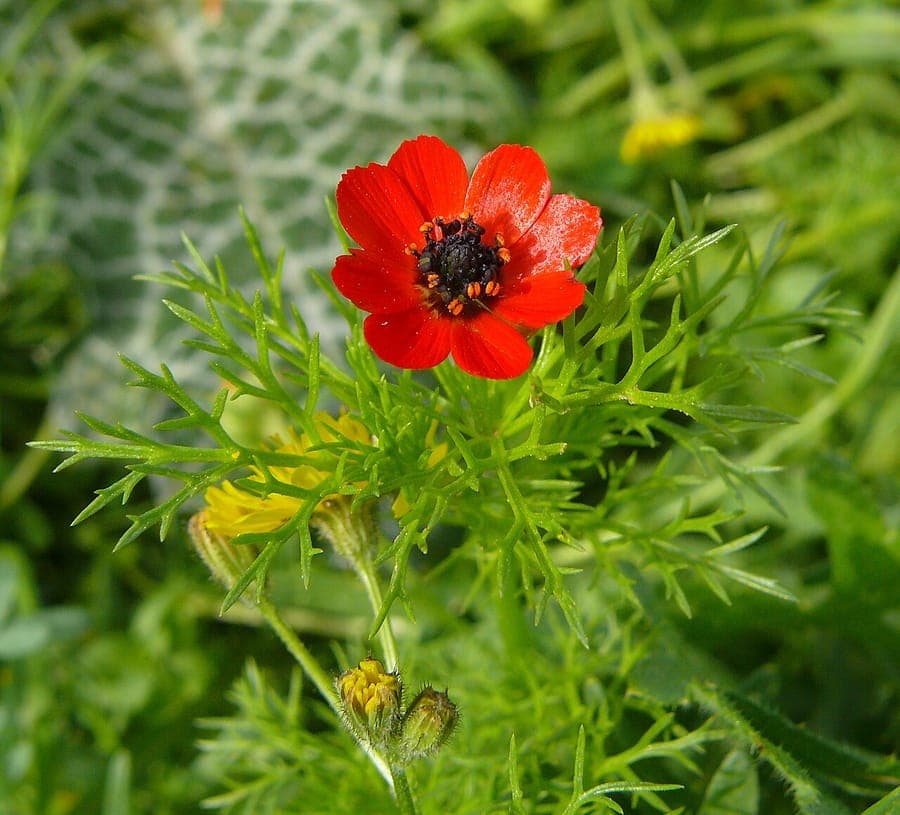
MathKnight and Zachi Evenor / CC BY-SA 4.0, via Wikimedia Commons
Adonis microcarpa: complete guide
Adonis microcarpa
¿Quieres ver Adonis microcarpa: complete guide en tu jardín?
1 minuto, sin tarjeta de crédito
Overview
Adonis microcarpa, commonly called pheasant's-eye, red chamomile or small-fruit pheasant's-eye, is an elegant spring-bloomer from southern and central Europe. This herbaceous plant is prized for its vibrant red flowers appearing in early spring. The plant grows low and forms attractive tufts of finely divided foliage.
This species is undervalued in contemporary gardens despite its robustness and perennial potential. Pheasant's-eye is ideal for natural gardening and wildflower communities.
Appearance and bloom
Adonis microcarpa grows as a low-growing plant, usually 20 to 30 centimetres tall. The foliage is finely divided, thread-like and fern-like - strongly resembling delicate fronds. The plant forms low tufts of densely divided foliage.
The flowers are the most striking feature - vivid red-orange, glossy flowers appear on short stems in March through May. The flowers have a characteristic glossy sheen due to their waxy texture. Each flower typically has about 8-15 sepals surrounding central carpels.
After flowering, the fruits (carpels) enlarge into small, lightly sculptured seed containers. The plant dies back after seed production until the next spring.
Ideal location
Adonis microcarpa grows best in sunny locations with well-draining soils. The plant tolerates partial shade but flowers more profusely in full sun. Plant on steep slopes, in rock gardens or in dry borders where water doesn't collect.
This plant suits wildflower meadows, natural gardening and alpine troughs. The plant can also grow in containers for refined placement in small gardens.
Soil
Adonis microcarpa grows best on light, well-draining, generally poor soils. Sand, gravel or chalky soils are ideal. The plant cannot tolerate wet feet and in damp soils rotting will occur.
If you have heavy soil, work in sand or gravel for better drainage. Feeding is not needed - the plant grows better in poor soil.
Diseño gratis
¿Quieres ver Adonis microcarpa: complete guide en tu jardín? Crea un diseño gratis ahora.
Watering
Adonis microcarpa tolerates drought once established. In the first growing year water moderately - give water until the plant has good roots, but avoid waterlogging. Mature plants need little water and actually suffer from excess moisture.
In Mediterranean climates supplemental water during very dry periods can be helpful, but generally under-watering is better than over-watering.
Pruning
Adonis microcarpa requires no pruning. Remove spent flowers after blooming to encourage seed production and natural self-seeding. Leave some seed heads for natural seed dispersal.
When foliage fades after flowering, dead foliage can be carefully removed.
Maintenance calendar
Spring: Plants germinate, water carefully, enjoy flowers, remove spent flowers. Summer: Seeds ripen, no further help needed, plant begins to die back. Autumn: Seeds disperse and remain in soil overwintering. Winter: Plant lies dormant, no maintenance needed.
Winter hardiness
Adonis microcarpa is fully hardy to very low temperatures. The plant survives much colder conditions than most garden plants. No protection is needed in any climate.
The plant grows better in temperate to cool climates, less well in very warm regions.
Companion plants
Adonis microcarpa combines well with other early spring-flowering wildflowers such as crocuses, hellebores and early tulips. In alpine troughs plant with alpine sedums and saxifrages. In dry borders group with other drought-tolerant species.
The plant provides beautiful effect when grouped in masses in wildflower meadows.
Closing
Adonis microcarpa is a valued, easy-growing spring bloomer that deserves more gardens. With well-draining soil, sunny location and minimal maintenance, this charming plant will return year after year. For more information about gardenworld.app, discover how you can transform your front garden. Visit gardenworld.app for further inspiration.
¿Quieres ver Adonis microcarpa: complete guide en tu jardín? Crea un diseño gratis ahora.
Sube una foto, elige un estilo y obtén un diseño fotorrealista con lista de plantas en menos de un minuto.
Más de 10.000 jardines diseñados
Sin tarjeta de crédito


Plantas similares
Drummond's anemone: complete guide
Anemone drummondii
Discover Drummond's anemone (Anemone drummondii): a silvery-grey mountain plant for cool rock gardens and alpine troughs.
Korean clematis: complete guide
Clematis serratifolia
Clematis serratifolia is a hardy climber with fragrant yellow bell flowers in August-September. Pruning group 3, location and care tips.
Aquilegia brevistyla: complete guide
Aquilegia brevistyla
Discover Aquilegia brevistyla, the elegant North American columbine. Growing tips, shade tolerance, and design ideas for woodland and shadowed gardens.