
Björn Appel / CC BY-SA 3.0, via Wikimedia Commons
Actinidia arguta: complete guide
Actinidia arguta
¿Quieres ver Actinidia arguta: complete guide en tu jardín?
1 minuto, sin tarjeta de crédito
Overview
Actinidia arguta, known as Hardy kiwi, Baby kiwi, Tara vine, or Japanese gooseberry, is a very productive climbing plant from Asia. This plant offers the spectacular advantage of true kiwi fruits (Actinidia deliciosa) without the extensive heat requirements - perfect for northern Dutch and Belgian gardens.
This is not an ornamental climber with modest fruits. Hardy kiwi delivers commercial quantities of sweet, nutritious fruits that are larger than grapes but smaller than true kiwis. With the right support and two plants (male and female), you get an impressive harvest.
Appearance and bloom
Actinidia arguta is a vigorous growing vine that can reach 4-5 meters long. The leaves are large, serrated, and light green with red veins underneath. These leaves provide attractive shade during the growing season.
The flowers are small, white with yellow stamens, and very fragrant (especially at night). They bloom from May to June and are inconspicuous but bird attractors. There are separate male and female plants - both are needed for fruit production (though some cultivars are hermaphroditic).
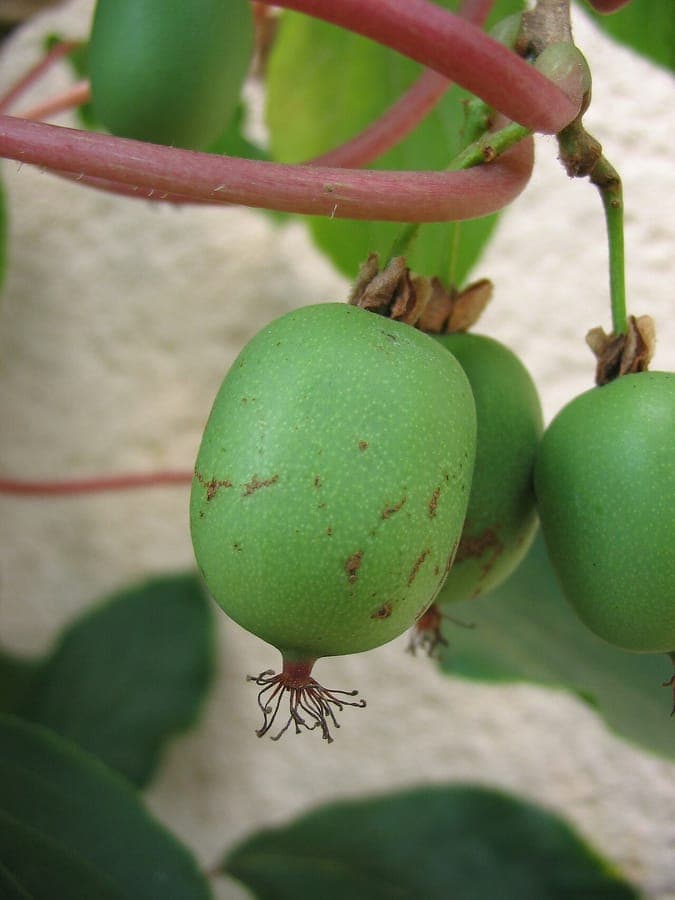
The fruits are the star of this plant: smooth, oval, dark green to red, about the size of a thumb. The flesh is light green to yellow, soft, and sweet with small, edible seeds. The taste is subtly sweet, without the tartness of many kiwi varieties. Harvest takes place from September to October.
Ideal location
Actinidia arguta thrives best in full sun to partial shade. A minimum of 5-6 hours of direct sunlight per day is desired for optimal fruit set. With less light, the plant grows well but bears fewer fruits.
Wind protection is important - strong wind can damage both the plant and the fruits. Plant against a warm wall, or along a screen or pergola in a more protected location.
The plant is hardy to about minus 25 degrees Celsius, so suitable for practically all Dutch and Belgian regions. Young plants may get frost damage to shoots in their first winter - protection helps.
Soil
Actinidia arguta prefers rich, well-draining soil with plenty of organic matter. The plant is fairly tolerant and grows in most types of soil, as long as it is not waterlogged.
Ideal composition:
- 40% garden soil/potting soil
- 30% well-rotted compost
- 20% sand or coarse sand
- 10% perlite
A pH range of 6.0-7.0 is ideal, but the plant tolerates acidic soil better than many other fruit gardens.
When planting: dig a hole twice as wide as the root ball and add well-rotted compost. Ensure good drainage - waterlogged conditions are worse than slightly under-watered conditions.
Diseño gratis
¿Quieres ver Actinidia arguta: complete guide en tu jardín? Crea un diseño gratis ahora.
Watering
Actinidia arguta needs regular water, especially during the growing season and during fruit development. The roots are fairly shallow, so surface drought can be harmful.
In the first year after planting: water regularly - the top 5-10 cm of soil should not dry out completely.
After establishment: water during dry periods. For optimal fruit production and size: water deeply (15-20 cm depth) once per week during dry periods.
Winter phase: minimal water, only in very dry conditions.
Pruning
Pruning is important for structure, form, and fruit bearing. This is not a plant form that keeps itself neat.
Guidelines:
- Late winter/early spring: remove all dead, sick, or damaged vines
- Summer (June-July): shorten side shoots to 4-6 leaf buds after fruiting (this stimulates fruiting)
- Autumn: thin out too dense growth so air circulates (disease prevention)
The plant always grows more vigorously than anticipated. Regular pruning (monthly during growing season) helps keep the plant productive and neat.
Maintenance calendar
Spring (March-May): Planting. Installation of strong support (very important). Begin regular watering. The plant starts to grow vigorously.
Summer (June-August): Regular watering. Prune side shoots after flowering. Insects and birds help with pollination.
Autumn (September-October): Harvest fruits. Possibly feed with potassium-rich fertilizer (helps winter hardiness).
Winter (November-February): Pruning of vines. Minimal maintenance. Protection of young plants.
Winter hardiness
Actinidia arguta is hardy to about minus 25 degrees Celsius. In the Netherlands and Belgium, no special winter protection needed after establishment.
For young plants and in very cold regions:
- Add mulch around base (5-10 cm)
- Use wind breaks
- Protect young shoots from late frost damage
The plant grows better in years after heavy frost than many expect - new shoots form quickly.
Companion plants
Works well with:
- Other fruit climbers (Passiflora)
- Flowering climbers (Clematis)
- Decorative vines (Hedera, Lonicera)
- Underplanting: Bergenia, Hosta, Fatshedera
Avoid too much competing planting directly around the base.
Closing
Actinidia arguta is a practical and productive choice for the gardener who wants both beauty and harvest. With its ornamental foliage, fragrant flowers, and sweet fruits, it provides nutrition and joy for years. Plant two specimens (male and female), ensure good support, and you are ready for a decade of Hardy kiwi enjoyment.
Available at Intratuin and Gamma in the Netherlands.
¿Quieres ver Actinidia arguta: complete guide en tu jardín? Crea un diseño gratis ahora.
Sube una foto, elige un estilo y obtén un diseño fotorrealista con lista de plantas en menos de un minuto.
Más de 10.000 jardines diseñados
Sin tarjeta de crédito


Plantas similares
Silver vine: complete guide
Actinidia polygama
Discover silver vine (Actinidia polygama): a hardy climbing plant with silvery foliage, loved by gardeners and cats alike.
[PENDING TRANSLATION] Kleurveranderende klimplant: complete gids
Actinidia kolomikta
[PENDING TRANSLATION] Ontdek de Actinidia kolomikta, een spectaculaire klimplant met kleurverwisselende bladeren. Perfecte toevoeging voor muren, pergola's en een vogelvrije tuin.
Golden kiwifruit: complete guide
Actinidia chinensis
Grow Actinidia chinensis (golden kiwifruit) successfully. Climber care, fruiting secrets, and how to harvest sweet kiwis.