
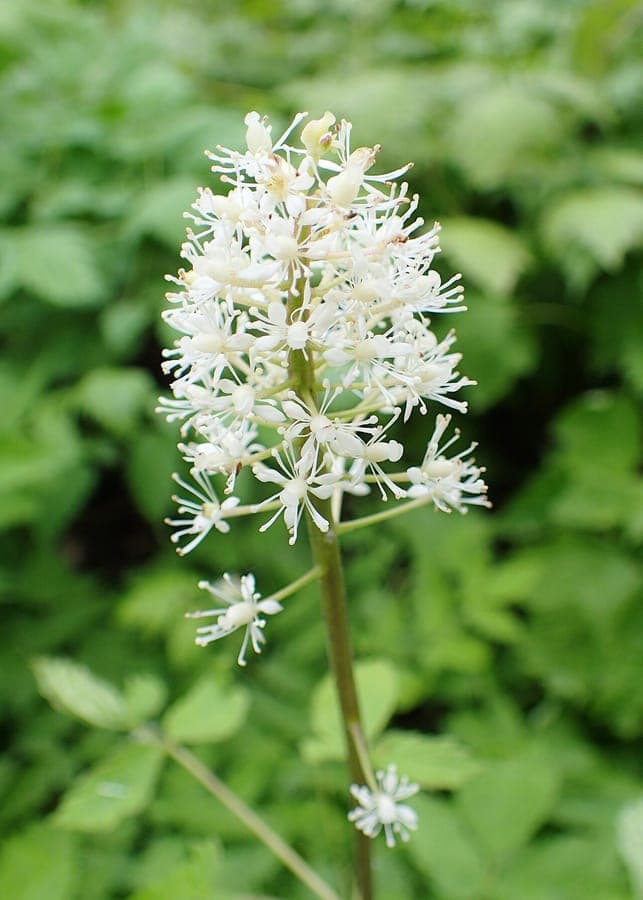
Krzysztof Ziarnek, Kenraiz / CC BY-SA 4.0, via Wikimedia Commons
Red baneberry (Actaea rubra): complete guide
Actaea rubra
¿Quieres ver Red baneberry (Actaea rubra): complete guide en tu jardín?
1 minuto, sin tarjeta de crédito
Overview
Actaea rubra, commonly known as red baneberry, snakeberry, or red cohosh, is a fascinating but highly toxic woodland herb native to North America. Prized by plant enthusiasts for its delicate spring flowers and striking autumn berries, this shade-loving plant brings quiet elegance to woodland gardens and shaded plantings.
Actaea rubra flourishes in deep shade and makes an excellent contribution to woodland garden designs and shaded borders. With its fine foliage and attractive winter berries, it brings subtle beauty to difficult garden spots.
CAUTION: All parts of this plant are highly toxic. Keep away from children and pets.
Appearance and Bloom
This is a fine herbaceous plant reaching 0.5-1 metre in height with delicate, multiple-divided leaves. Foliage is doubly compound, light green with fine texture.
In May to June, small white flowers appear in dense terminal racemes. While unassuming, these flowers signal forthcoming fruit development.
The true attraction lies in the berries: glossy red (sometimes white), approximately 1 cm diameter, appearing from August through October. These berries are highly toxic and must never be ingested.
Ideal Location
Actaea rubra thrives in deep shade beneath large trees in woodland settings. It tolerates part shade but flowers and berries may be reduced.
This herb is ideal beneath conifer or deciduous canopies and in established woodland areas. Avoid direct afternoon sun, which scorches foliage.
Even in very dim locations, the plant persists and may eventually reach flowering.
Soil
Actaea rubra grows well in rich, humus-laden forest soil with good drainage. Ideal pH is neutral to slightly acidic (6.0-7.0). Add compost or leaf mould before planting.
The plant thrives where leaf litter accumulates naturally. Its deep root system allows moderate drought tolerance once established.
Diseño gratis
¿Quieres ver Red baneberry (Actaea rubra): complete guide en tu jardín? Crea un diseño gratis ahora.
Watering
Regular watering is beneficial, especially in partial shade to sun exposures. Beneath established trees, natural leaf drip often provides sufficient moisture.
During establishment and dry periods, supplemental water supports vigour. Once mature, the plant tolerates drier conditions, particularly in deep shade.
Pruning
Minimal pruning is required. Remove dead or damaged foliage in spring. Spent flower heads may be removed post-bloom, though unnecessary for plant health.
Allow the plant to develop its natural form. Prune only if size becomes excessive or unwanted growth appears.
Maintenance Calendar
Spring (March-May): Check for winter damage. Apply compost. Mulch to maintain moisture. White flowers emerge.
Summer (June-August): Water as needed. Plant develops fully. Watch for occasional pests.
Autumn (September-November): Red berries ripen. Remove dead foliage. Apply compost for next season.
Winter (December-February): Plant is dormant. Add extra mulch in cold regions. No maintenance needed.
Winter Hardiness
Actaea rubra is extremely winter-hardy, native to subarctic North America. The plant tolerates temperatures to -40°C without damage. This makes it ideal for very cold climates.
The plant thrives in almost all northern European climates, even in the coldest regions.
Companion Plants
Red baneberry grows well with other shade-lovers: ferns, hostas, Carex species, and other woodland flora. It fits naturally beneath conifers or deciduous trees.
Avoid aggressive growers consuming substantial nutrition and moisture. Position where passersby cannot brush against it, given toxicity concerns.
Closing
Red baneberry is a fascinating yet toxic herb for shaded gardens in cold climates. Its delicate flowers and red berries bring subtle beauty to woodland settings.
Finding healthy plants through woodland plant specialists. For more shade garden information, visit gardenworld.app. Plant with care and caution!
WARNING: This plant is highly toxic. All parts can cause severe poisoning if ingested. Keep strictly away from children and pets.
¿Quieres ver Red baneberry (Actaea rubra): complete guide en tu jardín? Crea un diseño gratis ahora.
Sube una foto, elige un estilo y obtén un diseño fotorrealista con lista de plantas en menos de un minuto.
Más de 10.000 jardines diseñados
Sin tarjeta de crédito


Plantas similares
Drummond's anemone: complete guide
Anemone drummondii
Discover Drummond's anemone (Anemone drummondii): a silvery-grey mountain plant for cool rock gardens and alpine troughs.
Korean clematis: complete guide
Clematis serratifolia
Clematis serratifolia is a hardy climber with fragrant yellow bell flowers in August-September. Pruning group 3, location and care tips.
Aquilegia brevistyla: complete guide
Aquilegia brevistyla
Discover Aquilegia brevistyla, the elegant North American columbine. Growing tips, shade tolerance, and design ideas for woodland and shadowed gardens.