
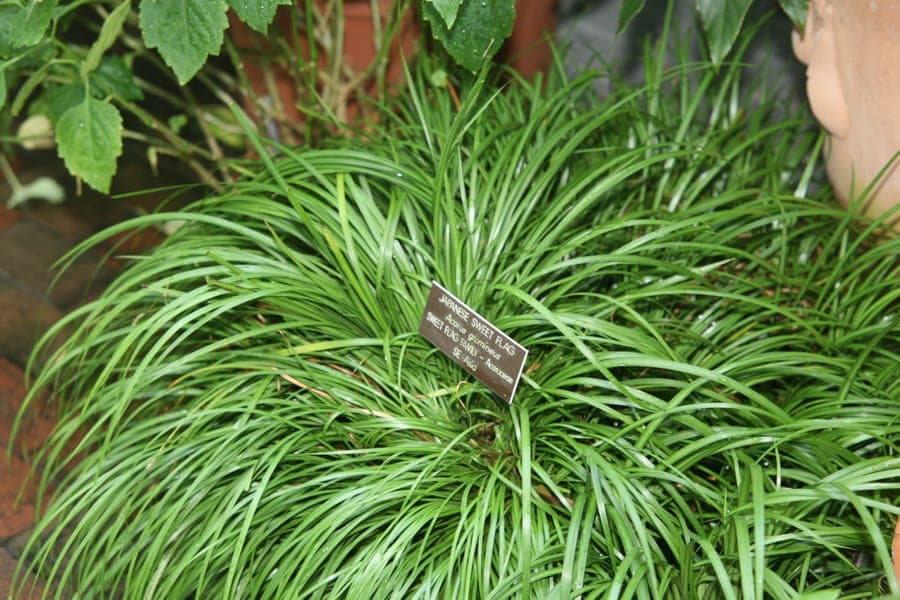
Cliff / CC BY 2.0, via Wikimedia Commons
Grassleaf sweet flag: complete guide
Acorus gramineus
¿Quieres ver Grassleaf sweet flag: complete guide en tu jardín?
1 minuto, sin tarjeta de crédito
Overview
Acorus gramineus, commonly known as grassleaf sweet flag or Japanese sweet flag, is an elegant water plant from the Acoraceae family. Native to regions ranging from the Eastern Himalayas to Japan and the Philippines, this plant thrives in moist mountain habitats. It is prized by gardeners for its delicate, grass-like foliage that adds refined texture to any garden setting.
The grassleaf sweet flag is an ideal choice for gardeners seeking a low-maintenance plant that performs well in shade to partial shade conditions. This makes it perfect for challenging corners or borders near ponds and water features.
Appearance and Bloom
This plant grows slowly, reaching a compact size of approximately 20-30 cm in height. The leaves are distinctly narrow and grass-like, typically measuring 2-3 mm wide with a fresh green color. During summer, Acorus gramineus produces subtle yellow-green flowers on spike-like inflorescences, though these are not particularly showy - the plant is primarily valued for its foliage.
The growth pattern creates a fountain-like effect, with new leaves continuously emerging from the center of the plant, resulting in a full, lush appearance. In autumn, the foliage may develop a slight golden-brown tint, providing additional visual interest throughout the seasons.
Ideal Location
Grassleaf sweet flag thrives in partial to full shade, making it perfect for areas beneath trees or on the north side of buildings. While it can tolerate full sun locations, the foliage maintains superior color and texture when protected from intense afternoon rays.
The plant is excellent for margins of water features, ponds, and streams, but also grows exceptionally well in regular garden borders as long as moisture is consistent. It also performs well in containers, making it ideal for terraces and balconies.
Soil
Acorus gramineus prefers consistently moist, well-draining soil. The plant performs best in muddy to wet conditions, typical of water garden environments. Acidic to neutral soil types enriched with organic matter are optimal.
Amend the planting hole with compost or leaf mold to improve water retention. The plant is quite tolerant of soil variations as long as sufficient moisture is maintained.
Diseño gratis
¿Quieres ver Grassleaf sweet flag: complete guide en tu jardín? Crea un diseño gratis ahora.
Watering
As a true water plant, this species must have consistently moist soil. In standard garden settings, regular watering is essential, particularly during dry spells. For water-garden plantings, supplemental watering is usually unnecessary.
When container-grown, daily watering is essential, especially during warm months. Check soil moisture by inserting your finger several centimeters into the soil; if dry, it is time to water.
Pruning
Grassleaf sweet flag requires minimal pruning. Remove only aged or damaged leaves. This can be done throughout the year, but early spring before new growth begins is most practical.
You can carefully remove old outer leaves to keep the plant compact and neat, which also encourages vigorous new growth from the center.
Maintenance Calendar
Spring: Remove aged foliage. Begin fertilizing as growth commences. Summer: Water regularly during dry periods. Monitor for pests. Fall: Reduce fertilization. Foliage remains green in temperate climates. Winter: Minimal maintenance needed. In harsh climates, above-ground foliage may die back, but the plant will regenerate in spring.
Winter Hardiness
Acorus gramineus demonstrates reasonable winter hardiness in temperate regions and can tolerate temperatures down to approximately -15°C. In severe winters, above-ground foliage may die back, but the plant will regenerate in spring.
In cold regions, mulching around the plant provides additional overwintering protection. Container-grown specimens can be brought indoors during extreme cold.
Companion Plants
Grassleaf sweet flag combines beautifully with other moisture-loving plants such as hostas, ferns, and other ornamental grasses. Its slender, vertical form provides striking contrast to rounded foliage and flowering specimens.
In water gardens, it pairs excellently with marsh plants, sedges, and other aquatic vegetation. In borders, it combines well with hellebores, astilbe, and other shade-tolerant perennials.
Closing Thoughts
Acorus gramineus is a beautiful, low-maintenance water plant for gardens seeking elegance and texture in moist or shaded zones. With minimal care, this plant will provide years of visual beauty.
Perfect for use in front gardens, along pathways, or near water features, grassleaf sweet flag offers versatility and natural charm. Discover today how to integrate this Asian jewel into your garden on gardenworld.app.
Searching for more information about shade-loving plants? Visit gardenworld.app for inspiration and advice tailored to your front garden!
¿Quieres ver Grassleaf sweet flag: complete guide en tu jardín? Crea un diseño gratis ahora.
Sube una foto, elige un estilo y obtén un diseño fotorrealista con lista de plantas en menos de un minuto.
Más de 10.000 jardines diseñados
Sin tarjeta de crédito


Plantas similares
Acer pycnanthum: complete guide
Acer pycnanthum
Acer pycnanthum, the Japanese swamp maple, is a fast-growing tree with early red flowers and brilliant autumn color, ideal for damp garden settings.
Freeman maple: complete guide
Acer × freemanii
Everything about the Freeman maple (Acer x freemanii): a fast-growing shade tree with spectacular autumn colour for large gardens.
Silver vine: complete guide
Actinidia polygama
Discover silver vine (Actinidia polygama): a hardy climbing plant with silvery foliage, loved by gardeners and cats alike.