
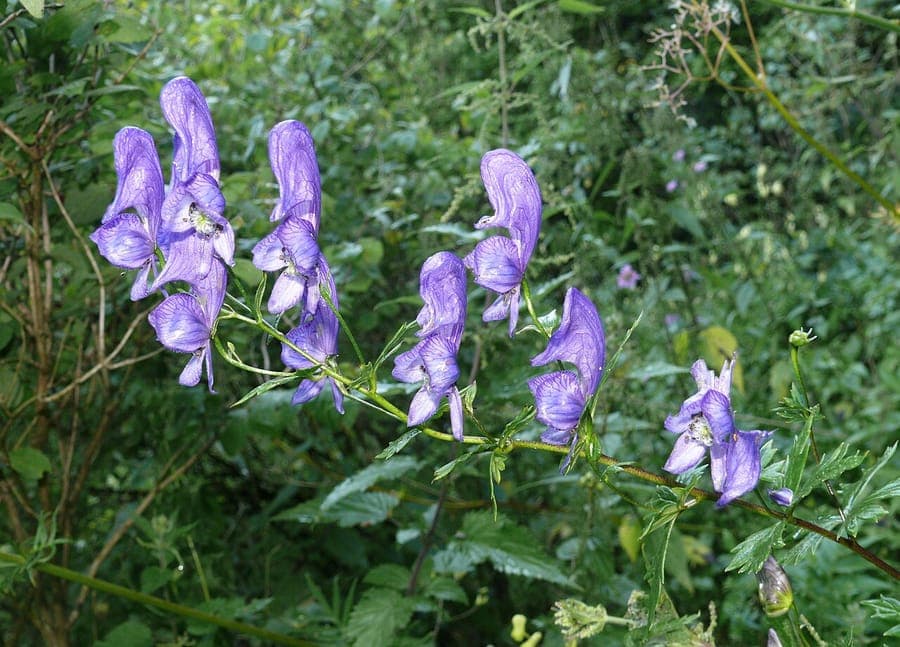
Bernd Haynold / CC BY 2.5, via Wikimedia Commons
Manchurian monkshood: complete guide
Aconitum variegatum
¿Quieres ver Manchurian monkshood: complete guide en tu jardín?
1 minuto, sin tarjeta de crédito
Overview
Aconitum variegatum, commonly called Manchurian monkshood or variegated monk's-hood, is a toxic alpine perennial from Central and Southeast Europe. Named for its distinctive spotted flowers, this Ranunculaceae member grows naturally on mountain meadows at 1000-2500 meters elevation.
Appearance and bloom
Manchurian monkshood reaches 60-120 cm tall with deeply divided, palmately lobed foliage. Characteristic helmet-shaped flowers appear in July and August in dense, branched spires. Blooms display striking blue-purple with white speckles on the hood. Attractive seed pods follow flowering.
Ideal location
This species thrives in partial shade to full sun on cool mountain slopes. It prefers airy, cool positions. In warmer regions, afternoon shade is essential for peak blooming. Wind protection enhances plant performance.
Soil requirements
Manchurian monkshood favors well-draining soil with pH 7.0-7.5. Heavy clay must be amended with sand and organic matter. Rich, humus-laden earth promotes vigorous growth. Excellent drainage prevents root rot.
Diseño gratis
¿Quieres ver Manchurian monkshood: complete guide en tu jardín? Crea un diseño gratis ahora.
Watering
Keep soil consistently moist but not waterlogged. Deep watering surpasses frequent spraying. Established plants tolerate drier periods. Mulch aids moisture retention and temperature regulation.
Pruning
Remove faded flower spikes for neater appearance. Cut stems to ground level after flowering. Strip away damaged foliage and diseased sections. Always wear gloves due to plant toxicity.
Maintenance calendar
Spring: Apply balanced fertilizer, manage moisture. Summer: Water regularly, deadhead. Autumn: Cut back stems. Winter: Minimal maintenance.
Winter hardiness
Manchurian monkshood is exceptionally hardy in USDA zones 3-8. Long winters pose no problem. Reliably returns yearly from rootstock. Winter protection unnecessary in temperate climates.
Companion plants
Pair with Delphinium, Lupine, Liriope, Astilbe, ferns, and Hosta. These combinations create stunning shaded borders. Keep away from vegetable gardens.
Final thoughts
Manchurian monkshood is an elegant choice for alpine meadow gardens and shaded borders. With careful handling of this toxic plant, it delivers lasting floral beauty and botanical interest.
Available at specialty plant nurseries throughout Europe and North America.
¿Quieres ver Manchurian monkshood: complete guide en tu jardín? Crea un diseño gratis ahora.
Sube una foto, elige un estilo y obtén un diseño fotorrealista con lista de plantas en menos de un minuto.
Más de 10.000 jardines diseñados
Sin tarjeta de crédito


Plantas similares
Drummond's anemone: complete guide
Anemone drummondii
Discover Drummond's anemone (Anemone drummondii): a silvery-grey mountain plant for cool rock gardens and alpine troughs.
Korean clematis: complete guide
Clematis serratifolia
Clematis serratifolia is a hardy climber with fragrant yellow bell flowers in August-September. Pruning group 3, location and care tips.
Aquilegia brevistyla: complete guide
Aquilegia brevistyla
Discover Aquilegia brevistyla, the elegant North American columbine. Growing tips, shade tolerance, and design ideas for woodland and shadowed gardens.