
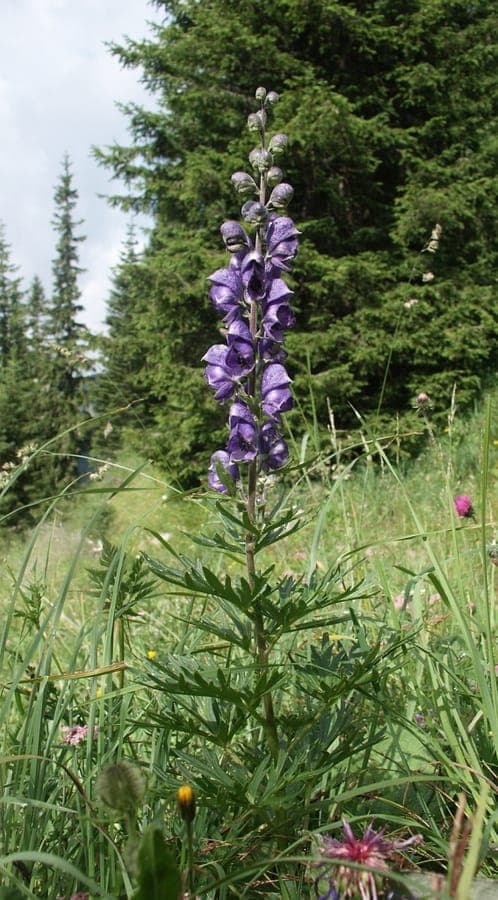
Bernd Haynold / CC BY-SA 2.5, via Wikimedia Commons
Monkshood: complete guide
Aconitum napellus
¿Quieres ver Monkshood: complete guide en tu jardín?
1 minuto, sin tarjeta de crédito
Overview
Monkshood (Aconitum napellus) is a spectacular poisonous plant from western and central Europe. This imposing upright plant is renowned for its deep blue-violet flowers in characteristic helmet shape. The name refers to blooms resembling a monk's hood.
Despite its toxicity, monkshood is widely used in garden borders and naturalistic plantings. All plant parts are poisonous and require careful handling.
Appearance & Bloom Cycle
Monkshood grows as an upright, sturdy shrubby plant 80 to 150 cm tall. Stems are erect, smooth, and green. Leaves are deeply dissected, nearly palmate, dark green and glossy.
Striking flowers appear July through September in dense flower spikes (racemes) at stem tops. Each floret is approximately 1.5-2 cm long, deep blue-violet to purple, with characteristic helmet or hood shape where the upper part curves over the entire flower.
A well-grown plant produces large quantities of flowers, creating an impressive summer display. Following bloom, capsules with seeds develop.
Ideal Location
Monkshood grows optimally in full sun to dappled shade. With minimum four hours direct sunlight daily, the plant flowers prolifically. In very hot climates, afternoon shade is beneficial.
The plant stands upright and stiff; wind causes minimal damage thanks to sturdy structure. Shelter improves appearance.
Soil Requirements
Monkshood grows well in moist, nutrient-rich soil with pH 7.0-7.5 (neutral to slightly alkaline). Unlike many alpine European plants, this species is not acid-loving.
The plant thrives in borders with well-structured, humus-rich soil. Add organic matter at planting.
Watering
Monkshood requires consistent moisture supply, especially during growth and flowering phases. Dry periods should be avoided; regular watering is important during dry summers.
Once established, the plant tolerates some drought. A 5-7 cm mulch layer aids moisture retention and frost protection.
Diseño gratis
¿Quieres ver Monkshood: complete guide en tu jardín? Crea un diseño gratis ahora.
Pruning
Pruning is not essential for monkshood. After bloom (October-November), faded flower spikes may be removed for aesthetic appearance.
Leave plant standing in winter; it dies back to ground level and regrows in spring.
Maintenance Calendar
March-April: Check for frost damage. Apply organic fertilizer. Plant regrows vigorously.
May-June: Monitor moisture. Ensure regular watering. Stake very tall plants.
July-August: Enjoy full bloom. Ensure adequate moisture supply. Remove lower yellowed leaves.
September-October: Harvest seed if desired. Remove spent flower spikes.
November-February: Plant dies back to ground level. Minimal watering needed. Carefully dispose of plant material due to toxicity.
Winter Hardiness
Monkshood is very hardy to -25°C (USDA zones 3-8). The plant dies back to ground level in winter. Root stocks easily survive severe frost.
Snow and ice pose no disadvantage. In spring, plant regrows vigorously.
Toxicity Warning
CRITICAL TOXICITY WARNING: All parts of Aconitum napellus are extremely poisonous. They contain aconitine alkaloids that can cause serious poisoning or death if ingested.
- Wear gloves for all handling
- Do not touch face or eyes with bare hands
- Wash hands thoroughly after contact
- Keep plant out of reach of children and pets
- Do not eat or drink near plant
- Avoid skin contact with plant sap
Companion Plants
Monkshood combines beautifully with other late-summer bloomers like chrysanthemums, delphiniums, and salvias. It also grows well in woodland settings with other shade-loving plants.
At gardenworld.app, safely integrate this spectacular plant into your design.
Closing
Monkshood brings dramatic blue color and height to your garden in late summer. With careful toxicity management, this plant grows easily and flowers prolifically. A true garden gem for experienced gardeners.
With gardenworld.app, responsibly plan this striking plant in your garden landscape.
¿Quieres ver Monkshood: complete guide en tu jardín? Crea un diseño gratis ahora.
Sube una foto, elige un estilo y obtén un diseño fotorrealista con lista de plantas en menos de un minuto.
Más de 10.000 jardines diseñados
Sin tarjeta de crédito


Plantas similares
Drummond's anemone: complete guide
Anemone drummondii
Discover Drummond's anemone (Anemone drummondii): a silvery-grey mountain plant for cool rock gardens and alpine troughs.
Korean clematis: complete guide
Clematis serratifolia
Clematis serratifolia is a hardy climber with fragrant yellow bell flowers in August-September. Pruning group 3, location and care tips.
Aquilegia brevistyla: complete guide
Aquilegia brevistyla
Discover Aquilegia brevistyla, the elegant North American columbine. Growing tips, shade tolerance, and design ideas for woodland and shadowed gardens.