
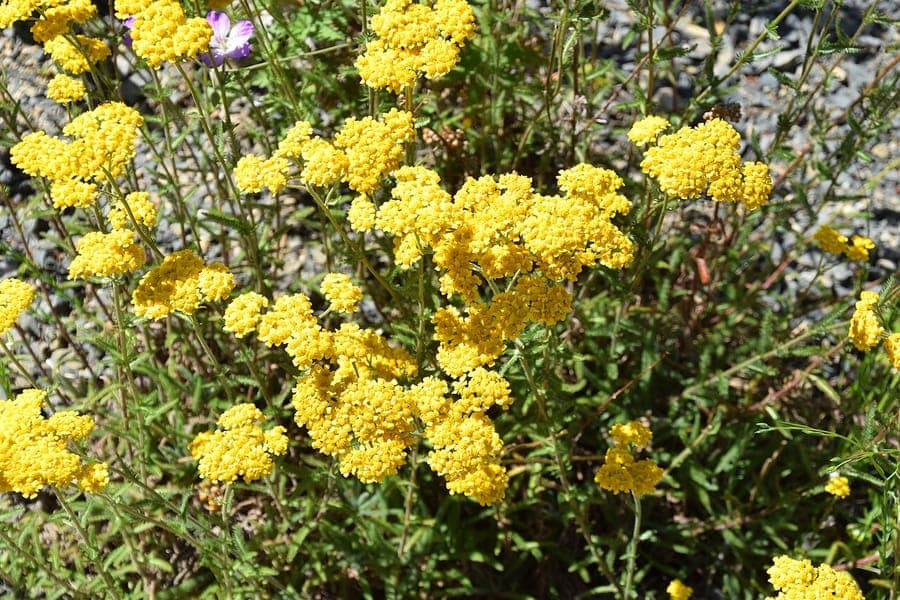
Krzysztof Golik / CC BY-SA 4.0, via Wikimedia Commons
Woolly yarrow (Achillea tomentosa): complete guide
Achillea tomentosa
¿Quieres ver Woolly yarrow (Achillea tomentosa): complete guide en tu jardín?
1 minuto, sin tarjeta de crédito
Overview
Woolly yarrow (Achillea tomentosa), also known as yellow milfoil, is a robust perennial in the Asteraceae family. Native to the Mediterranean region from Spain to Croatia, this plant excels in hot, dry gardens. Its silvery-gray, velvety foliage contrasts beautifully with bright golden-yellow flower clusters that bloom from May through September.
Appearance & Bloom Cycle
This compact perennial reaches 25-40 centimeters in height with fine, felted gray-green foliage. The distinctive fuzzy leaves feel soft to the touch. Bright yellow flat-topped flower clusters (umbels) appear from May to September, attracting butterflies and bees. Dried seedheads remain decorative well into winter.
Ideal Location
Plant woolly yarrow in full sun - at least six hours of direct sunlight daily. This plant deteriorates in shade, becoming leggy and producing pale, sparse flowers. Choose warm, dry sites with excellent air circulation. Avoid damp, shaded locations entirely.
Soil Requirements
This yarrow thrives in well-draining, poor-to-moderate soil. It tolerates sandy, rocky, and infertile conditions admirably. Heavy clay must be improved with sand and gravel. Ideal pH is 6.0-7.5, but the plant is not particular. Rich, wet soils encourage disease and weak growth.
Watering
Woolly yarrow is extremely drought-tolerant once established. Water regularly during its first growing season to encourage deep rooting. After establishment, the plant survives extended dry periods without supplemental water. Excess moisture invites root rot and fungal diseases.
Diseño gratis
¿Quieres ver Woolly yarrow (Achillea tomentosa): complete guide en tu jardín? Crea un diseño gratis ahora.
Pruning & Maintenance
Deadhead spent flowers to extend blooming and prevent rampant self-seeding. Prune hard in spring (March-April), cutting back the previous year's growth to about 10 centimeters. This promotes compact, bushy new growth. No other pruning is necessary for this naturally tidy plant.
Maintenance Calendar
March-April: Hard prune old growth to ground level. May-September: Deadhead faded flowers regularly. October-November: Remove spent seed heads (optional; they're attractive in frost). December-February: Rest period; no maintenance needed.
Winter Hardiness
Woolly yarrow is extremely winter-hardy (USDA zones 3-8) and overwinters reliably outdoors. It tolerates temperatures down to -20°C. Even in severe winters, the plant persists with minimal protection, though a light mulch safeguards gray foliage in extreme cold.
Companion Plants
Pair woolly yarrow with other drought-tolerant Mediterranean plants: sage, California poppy, lavender, and sedums. The bright yellow flowers contrast strikingly with purple-blue blooms of Russian sage and echinops. Low creeping thyme creates harmonious groundcover combinations.
Conclusion
Woolly yarrow transforms hot, dry gardens with its reliable color and silvery texture. This hardy perennial requires minimal care and thrives where other plants struggle. Plant it now in full-sun locations and enjoy years of golden blooms. For more garden inspiration and design ideas, visit gardenworld.app.
¿Quieres ver Woolly yarrow (Achillea tomentosa): complete guide en tu jardín? Crea un diseño gratis ahora.
Sube una foto, elige un estilo y obtén un diseño fotorrealista con lista de plantas en menos de un minuto.
Más de 10.000 jardines diseñados
Sin tarjeta de crédito


Plantas similares
Calendula stellata: complete guide
Calendula stellata
Complete guide to Calendula stellata, the star-flowered marigold from Sicily: location, soil, watering and companion planting tips.
Korean chrysanthemum: complete guide
Chrysanthemum x rubellum
Chrysanthemum x rubellum is a hardy autumn perennial with single pink to copper flowers from August to November. Care and combinations.
Helianthus divaricatus: complete guide
Helianthus divaricatus
Helianthus divaricatus is a North American woodland sunflower with yellow summer blooms, ideal for naturalistic borders and shady edges.