
Achillea pannonica: complete guide
Achillea pannonica
¿Quieres ver Achillea pannonica: complete guide en tu jardín?
1 minuto, sin tarjeta de crédito
Overview
Achillea pannonica, better known as Hungarian yarrow, is a graceful alpine plant from the mountain regions of Europe, from the Himalayan range to the Balkans. This robust, low-growing perennial offers gardeners elegant white flowers in compact form, perfect for rock gardens, alpine containers, and borders with well-draining soil.
Hungarian yarrow is a preferred choice for gardeners seeking alpine character and wild beauty with minimal maintenance requirements. With its fine, feathery foliage and dense flower clusters, this plant adds refinement to any alpine garden.
Appearance and Bloom
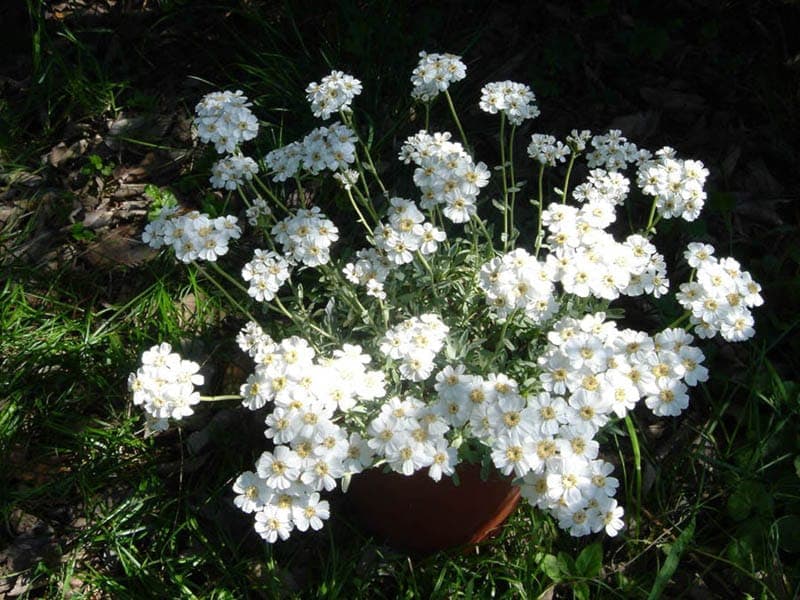
Achillea pannonica is a compact-growing plant with fine, highly divided foliage of characteristic grayish-green color. The leaves are very finely feathered with two to three times pinnate, creating an airy appearance. In summer, white to cream flowers appear in dense, flat flower clusters above the foliage.
The flowers are small but very numerous, forming clusters that make them very attractive to pollinators. The blooming period extends from June to September, adding extended seasonal interest. Dried flower heads remain decorative in autumn and winter, adding structure to garden rounds.
Ideal Location
Achillea pannonica thrives best in full sun, warm locations with excellent drainage. Plant south or southeast-facing, where the plant receives at least 6 hours of direct sunlight. The plant feels at home in rock gardens, atop stones, on well-drained sloping terrain.
Avoid shade and wet locations - these lead to diseases and poor growth. A location with good air movement helps prevent fungal issues. On slopes or raised beds is ideal. In hot climates, some afternoon shade may be tolerable.
Soil
Achillea pannonica requires very well-draining soil with low nutrient content. Poor, sandy, gravelly soils are perfect - this is essential for optimal growth. Do not add compost or feed when planting; the plant grows better in sparse conditions.
Heavy clay or wet soils must be heavily improved with sandy gravel or perlite. A pH between 6.0-7.5 is preferred. In pots, use cactus/alpine potting mix with plenty of grit and sand. Drainage must be perfect.
Diseño gratis
¿Quieres ver Achillea pannonica: complete guide en tu jardín? Crea un diseño gratis ahora.
Watering
Once established, Achillea pannonica is very drought tolerant and requires minimal watering. Overwatering is a major problem - avoid this completely. Water only during very dry periods or prolonged drought.
Young plants should be carefully watered until they have a good root system (first season). After this, practically no watering is needed in moderate climates. In extremely dry climates, give sporadic deep watering. Container plants may need somewhat more watering.
Pruning
Minimal pruning is needed. In late winter or early spring, remove dead foliage and withered stems. This encourages new growth. After flowering, you can remove faded flower heads for neater appearance, but this is optional.
Avoid heavy pruning which can harm the plant. The plant itself maintains a natural, compact form. Some thinning in the middle can be done if plant density becomes problematic.
Maintenance Calendar
March-April: Remove dead winter foliage. New growth begins. No feeding needed.
May-June: Becomes visibly developing; plant reaches full growth. Flowers begin appearing.
July-September: Bloom peak is reached. Minimal care needed. Enjoy flowers and pollinator visits.
October-November: Blooming gradually decreases. Leave dried stems for other benefits.
December-February: Plant is dormant. Minimal care. Planting preparation can be done.
Winter Hardiness
Achillea pannonica is very winter hardy to -25degC or lower, perfect for European gardens. No special protection needed in most climates. In very moisture-laden winters, poor drainage can be an issue - ensure perfect drainage to prevent root rot.
The plant grows successfully in European zones 3-9. In alpine and subalpine regions of Europe, this plant is a natural inhabitant.
Companion Plants
Achillea pannonica pairs excellently with other alpine plants. Saxifragas, sempervivums, sedums, and hypericum form harmonious groups. Blue alpine flax (Linaria) or alpine pinks (Dianthus) add color contrast.
In borders, combine with low-growing lavenders or catmints. Geraniums and helianthemums add visual interest. Silver-leafed plants like Artemisia or hoary rockrose create enchanting combinations.
Closing Thoughts
Achillea pannonica is an unparalleled choice for creating effortlessly low-maintenance alpine gardens. This European wildflower offers years of graceful beauty with minimal care. Find plants at alpine plant nurseries and garden centers like Intratuin and Gamma. With perfect drainage and sunny location, this Hungarian beauty will provide decades of enjoyment.
Visit gardenworld.app for more inspiration around rock garden design and alpine plant combinations.
¿Quieres ver Achillea pannonica: complete guide en tu jardín? Crea un diseño gratis ahora.
Sube una foto, elige un estilo y obtén un diseño fotorrealista con lista de plantas en menos de un minuto.
Más de 10.000 jardines diseñados
Sin tarjeta de crédito

