
Hectonichus / CC BY-SA 3.0, via Wikimedia Commons
Musk milfoil: complete guide
Achillea erba-rotta
¿Quieres ver Musk milfoil: complete guide en tu jardín?
1 minuto, sin tarjeta de crédito
Overview
Achillea erba-rotta, commonly called musk milfoil or simple-leaved yarrow, is an elegant alpine plant from the Asteraceae family. Originally from the south and central Alps, this plant documented since 1773 now thrives in mountain regions and alpine gardens.
The musk milfoil is renowned for its fine, feathery foliage and delicate white to pale-rose flowers appearing in late summer. The plant forms neat, compact clumps approximately 30 to 40 centimeters tall.
This alpine yarrow variant is markedly drought-tolerant but differs from many other yarrows by preference for moderately moist environments. The plant grows slowly but stably, reaching maturity over several years.
The musk milfoil is valuable for alpine gardens, rock crevices, and naturalizations in mountain areas. The plant earns its "musk" name because it releases subtle fragrance when foliage is crushed.
Available at nurseries specializing in alpine plants under names including yarrow, alpine yarrow, or Achillea erba-rotta.
Appearance and bloom
Achillea erba-rotta forms compact, distinctive rosette-like clumps with fine, many-times-cut, feathery foliage. The leaves are grayish-green to silvery, approximately 5 to 10 centimeters long, densely packed.
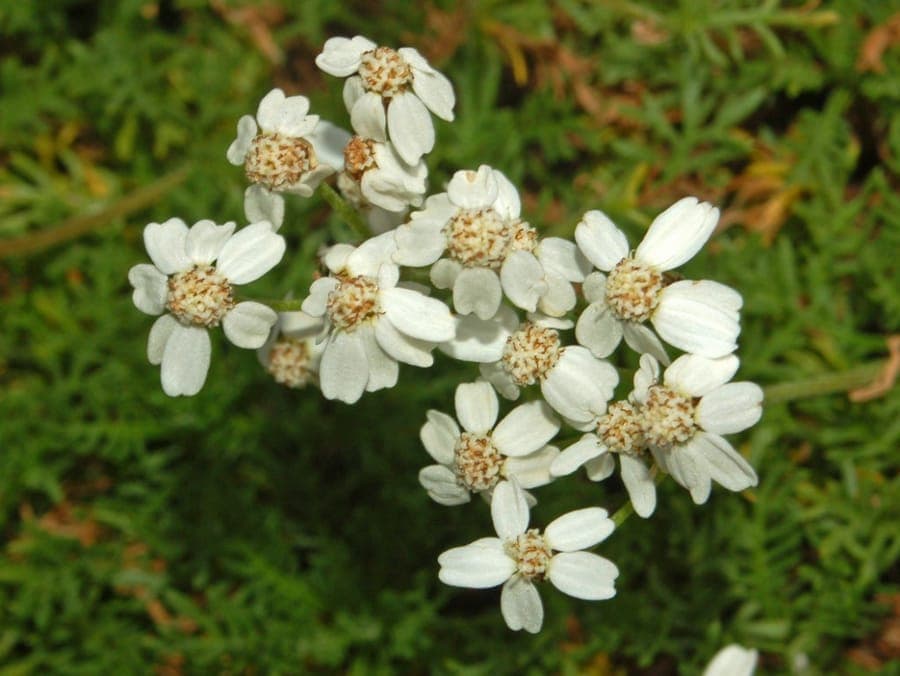
Flowers appear from July through September in broad, flat flower clusters (corymbi). The blooms are small, approximately 3 millimeters across, usually white to pale-rose with yellow stamens. Flowers form in densely packed clusters expanding to approximately 5 centimeters across.
The flower composition is doubly distinctive - not only are the flowers abundant, but the entire plant structure creates decorative architectural effect through foliage density.
Following bloom, very small seed capsules ripen. Seed production is limited; propagation usually occurs via side stems or root cuttings rather than seed.
Ideal location
Achillea erba-rotta thrives in full sun with at least 6 hours of direct sunlight daily. The plant shows pallor in partial shade and growth becomes very tight in full shade.
Position it in warm, well-drained locations on mountainside or alpine troughs. The plant thrives on stone terraces, alpine gardens, and crevices between rocks where drainage is continuous.
The plant grows best in windy, open environments where air circulation is free. Avoid sheltered, humid locations where fungal diseases might develop.
Seek locations with full sun and full-day exposure; partial shade results in weak, leggy growth.
Diseño gratis
¿Quieres ver Musk milfoil: complete guide en tu jardín? Crea un diseño gratis ahora.
Soil requirements
Achillea erba-rotta thrives best in well-draining, moderately fertile alpine soil. The ideal pH range is neutral to lightly alkaline (pH 7-8), though acidic soils are acceptable.
The ideal soil composition consists of 35% gritty sand, 30% fine gravel or perlite, 20% horticultural peat, and 15% compost. This mixture mimics alpine mountain soil structures.
In heavy soils, add generous sand; shifting toward mineral, poor soils is clearly better than fertile ones. The plant prefers nutrient-poor terrain.
Dig no deeper than 15 centimeters before encountering rocky substrate, as alpine plants prefer shallow, stable root systems.
Watering
Achillea erba-rotta has moderate water requirements. During growth (May-October), water weekly but allow soil to dry slightly between watering. Excessive water promotes disease more than drought stress.
Once established (after three years), the plant tolerates drought well and can survive weeks without water. The plant actually suffers more from waterlogging than from drought stress.
In winter, apply minimal water; the plant needs virtually no water during dormancy.
Pruning
Achillea erba-rotta requires minimal pruning. Remove dead flower clusters after September for neater appearance. Also carefully remove dead leaf masses in early spring.
The plant grows compact without dense growth. Further intervention is rarely needed.
Maintenance calendar
March-April: Check for winter damage. Carefully remove dead leaves. Begin weekly watering.
May-June: Rapid growth; ensure full sunshine. No further work needed.
July-September: Observe blooms. Water regularly. Remove dead flower clusters if desired.
October-March: Winter dormancy; minimal water. Plant may appear dead; do not remove.
Winter hardiness
Achillea erba-rotta is fully hardy to -15 degrees Celsius and survives harsh mountain winters without protection.
In very cold regions, a thin layer of grit mulch (5 centimeters) may provide extra insulation, though not necessary.
Companion plants
Achillea erba-rotta combines well with other alpine species such as alpine sedums, saxifrages, and alpine grasses.
Mix with low-growing alpine flowering plants, saxifrages, and other fine-leaved alpine species. The fine texture of Achillea erba-rotta balances better against larger foliage formations.
Closing thoughts
Achillea erba-rotta offers elegant alpine beauty with its fine foliage and delicate flowers. For alpine gardeners seeking characteristic mountain plant combinations, this yarrow deserves recognition as one of Europe's most subtly beautiful alpine species. With good drainage and full sun, it will perform stably for years.
Extraordinary durability combined with elegant presentation makes this plant exceptionally valuable. The robust nature of the species ensures long-term performance under challenging conditions. With proper establishment care, plants mature into reliable garden inhabitants that persist for decades without
¿Quieres ver Musk milfoil: complete guide en tu jardín? Crea un diseño gratis ahora.
Sube una foto, elige un estilo y obtén un diseño fotorrealista con lista de plantas en menos de un minuto.
Más de 10.000 jardines diseñados
Sin tarjeta de crédito


Plantas similares
Calendula stellata: complete guide
Calendula stellata
Complete guide to Calendula stellata, the star-flowered marigold from Sicily: location, soil, watering and companion planting tips.
Korean chrysanthemum: complete guide
Chrysanthemum x rubellum
Chrysanthemum x rubellum is a hardy autumn perennial with single pink to copper flowers from August to November. Care and combinations.
Helianthus divaricatus: complete guide
Helianthus divaricatus
Helianthus divaricatus is a North American woodland sunflower with yellow summer blooms, ideal for naturalistic borders and shady edges.