
Sten Porse / CC BY-SA 3.0, via Wikimedia Commons
Achillea cretica: complete guide
Achillea cretica
¿Quieres ver Achillea cretica: complete guide en tu jardín?
1 minuto, sin tarjeta de crédito
Overview
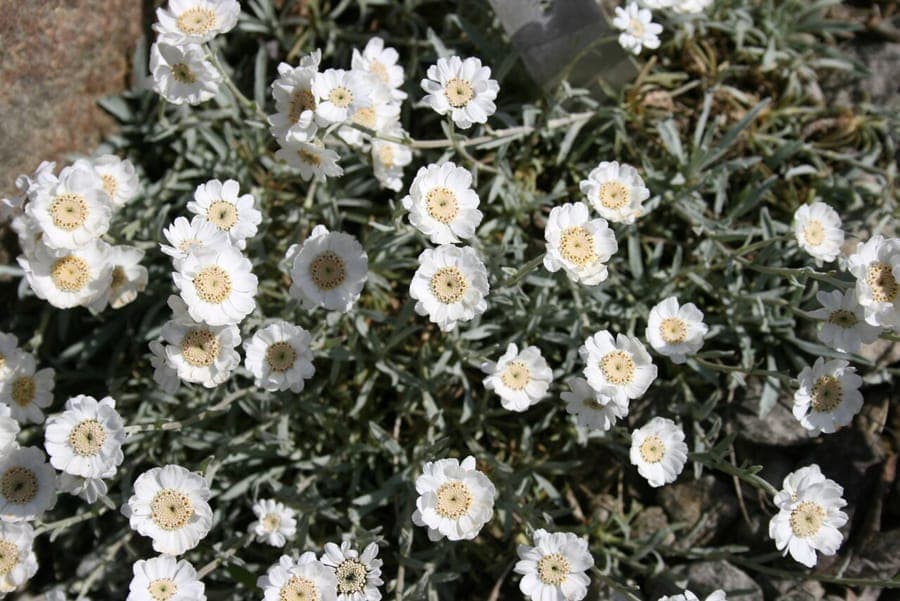
Achillea cretica, known as Cretan yarrow, is a beautiful Mediterranean herb garden plant native to the Aegean islands and Cyprus. This compact, low-growing plant stands out for its exceptionally fine, silver-green foliage and bright yellow flowers.
With very low water requirements, it is an ideal choice for dry, sunny locations where water is precious. It grows only 15-25 cm tall and is perfect for borders, rock gardens, and containers.
Appearance and bloom
Achillea cretica forms a compact mound of finely combed, silver-green foliage that remains attractive year-round. The plant grows low and spreads gently.
From April to June, bright yellow flowers appear in small, dense clusters. The blooming period can be extended to August by deadheading. The flowers attract butterflies and bees.
Ideal location
Plant Achillea cretica in full sun. At least 6-8 hours of direct sunlight daily is essential for compact growth and abundant flowering. In shade, the plant becomes lanky and produces fewer flowers.
The plant tolerates wind well. It is ideal for exposed locations along coasts and hillsides.
Soil
Achillea cretica grows well in well-draining, preferably poor soil. The plant tolerates even very dry, poor soils and thrives in sandy, rocky, or gravelly substrates.
Rich, nutrient-rich soils can lead to excessive foliage growth at the expense of flowers. Add sand to heavy clay soils.
Diseño gratis
¿Quieres ver Achillea cretica: complete guide en tu jardín? Crea un diseño gratis ahora.
Watering
Once established, Achillea cretica shows remarkable drought resistance. Watering is generally not needed except during extreme drought periods.
Avoid excessive moisture, especially in winter, as this can lead to root rot.
Pruning
Remove spent flowers regularly to encourage continuous blooming. At the end of the season, the plant can be lightly cut back to a compact shape.
Avoid heavy pruning, as this may damage the plant.
Maintenance calendar
January-March: Winter, minimal maintenance. April-June: Rich blooming, deadhead for extended flowering. July-September: Summer dormancy, minimal care. October-December: Fall preparation, no fertilizing.
Winter hardiness
Achillea cretica is hardy in zones 8-10. In cooler regions, frost protection is essential. In zones 5-7, it may be better grown as an annual or container plant.
In snowy regions, good drainage and avoiding waterlogging give the best survival chances.
Companion plants
Achillea cretica combines beautifully with other Mediterranean, drought-loving plants such as lavender, santolina, cistus, and thymes. This combination creates a harmonious, low-water garden design.
Also use in rock gardens, containers, and as a ground cover.
Closing
Achillea cretica is a charming, low-maintenance choice for dry gardens. With minimal care, it delivers bright yellow flowers season after season. Visit gardenworld.app/en for more Mediterranean garden ideas. Find plant material at Intratuin or Gamma.
¿Quieres ver Achillea cretica: complete guide en tu jardín? Crea un diseño gratis ahora.
Sube una foto, elige un estilo y obtén un diseño fotorrealista con lista de plantas en menos de un minuto.
Más de 10.000 jardines diseñados
Sin tarjeta de crédito


Plantas similares
Calendula stellata: complete guide
Calendula stellata
Complete guide to Calendula stellata, the star-flowered marigold from Sicily: location, soil, watering and companion planting tips.
Korean chrysanthemum: complete guide
Chrysanthemum x rubellum
Chrysanthemum x rubellum is a hardy autumn perennial with single pink to copper flowers from August to November. Care and combinations.
Helianthus divaricatus: complete guide
Helianthus divaricatus
Helianthus divaricatus is a North American woodland sunflower with yellow summer blooms, ideal for naturalistic borders and shady edges.