
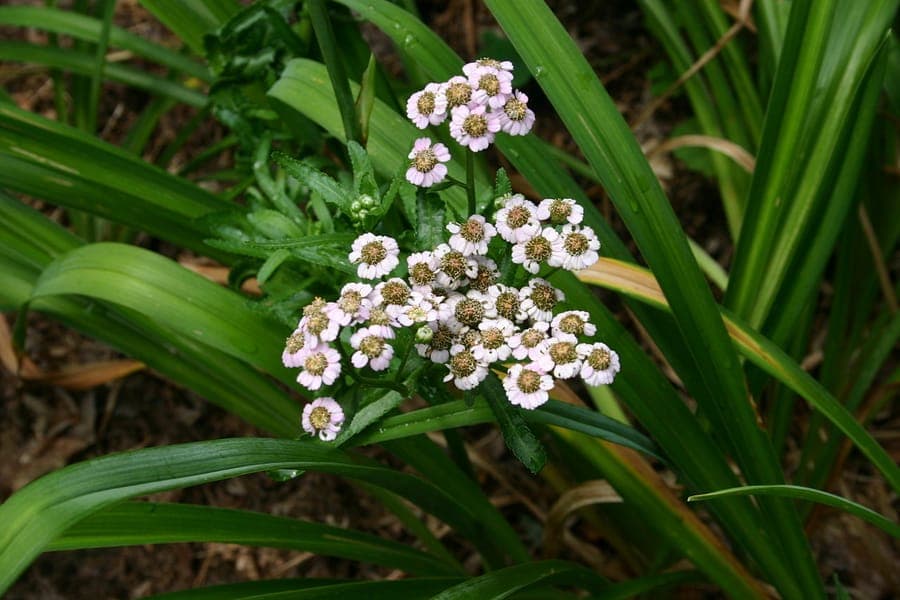
User:SB_Johnny / CC BY-SA 3.0, via Wikimedia Commons
Alpine yarrow: complete guide
Achillea alpina
¿Quieres ver Alpine yarrow: complete guide en tu jardín?
1 minuto, sin tarjeta de crédito
Overview
Alpine yarrow, scientifically known as Achillea alpina, is a delightful alpine plant belonging to the Asteraceae family. Native to Siberia, Japan, and China, this mountain-dwelling beauty performs exceptionally well in temperate European gardens.
Alpine yarrow is celebrated for its fine-textured foliage and small yellow flowers arranged in flat clusters. It is an ideal choice for gardeners seeking to incorporate alpine plants into their garden designs.
Appearance and bloom
Alpine yarrow grows as a compact herbaceous plant typically reaching 20-30 centimeters in height. The plant features characteristically fine-cut, feathery foliage creating an elegant appearance. This finely divided foliage displays a green to blue-green coloration and remains attractive throughout the year.
Flowers appear in July and August in small yellow corymbs or flower clusters. These delicate blooms are highly attractive to butterflies and other beneficial insects. After flowering, seeds develop and disperse via wind.
Ideal location
This plant loves full sun and grows best in locations receiving 6-8 hours of direct sunlight daily. However, Alpine yarrow can tolerate light shade, though flowering will be less abundant. Ensure the location is well-ventilated and avoid damp spots. A higher, drier location is optimal.
Soil
Alpine yarrow prefers lean, well-draining soils. Heavy clay soils must be amended with sand or perlite. The plant tolerates acidic to neutral soils with pH 6-7. Ensure soil is not too nutrient-rich, as excessive feeding promotes vegetative growth at the expense of flowering. In fertile areas, consider creating a separate growing bed.
Diseño gratis
¿Quieres ver Alpine yarrow: complete guide en tu jardín? Crea un diseño gratis ahora.
Watering
Once established, this is a very drought-tolerant plant. However, ensure young plants receive regular water until well-rooted, typically 2-3 seasons. Excessive water must be avoided as it causes root rot. Allow soil to dry between waterings. During dry periods, water deeply but infrequently.
Pruning
Alpine yarrow requires minimal pruning. Remove faded flowers and foliage in autumn or early spring to maintain neatness. In late winter, remove any damaged parts. The plant grows naturally compact without requiring formal shaping.
Maintenance calendar
Mar-Apr: Active growth May-Jun: Growth period and blooming preparation Jul-Aug: Flowering period, minimal watering Sep-Oct: Seed setting, plant stabilization Nov-Feb: Dormancy, no care required
Winter hardiness
Alpine yarrow is extremely hardy, surviving temperatures to -20 degrees Celsius and below. The plant easily survives winters throughout northern Europe. In very wet winters, water stagnation can become problematic.
Ensure the growing site drains well. Mulching can protect roots, though this is not always necessary in temperate zones.
Companion plants
Alpine yarrow pairs well with:
- Other alpine plants
- Lavender (Lavandula)
- Sedum
- Artemisia
- Dianthus
These combinations create interesting textural contrasts and extended bloom periods.
Conclusion
Alpine yarrow is a beautiful and low-maintenance plant that will enliven any alpine or dry garden. Its delicate foliage and yellow flowers make it a visually attractive choice for discerning gardeners. Visit gardenworld.app/en for more garden design inspiration.
¿Quieres ver Alpine yarrow: complete guide en tu jardín? Crea un diseño gratis ahora.
Sube una foto, elige un estilo y obtén un diseño fotorrealista con lista de plantas en menos de un minuto.
Más de 10.000 jardines diseñados
Sin tarjeta de crédito


Plantas similares
Calendula stellata: complete guide
Calendula stellata
Complete guide to Calendula stellata, the star-flowered marigold from Sicily: location, soil, watering and companion planting tips.
Korean chrysanthemum: complete guide
Chrysanthemum x rubellum
Chrysanthemum x rubellum is a hardy autumn perennial with single pink to copper flowers from August to November. Care and combinations.
Helianthus divaricatus: complete guide
Helianthus divaricatus
Helianthus divaricatus is a North American woodland sunflower with yellow summer blooms, ideal for naturalistic borders and shady edges.