
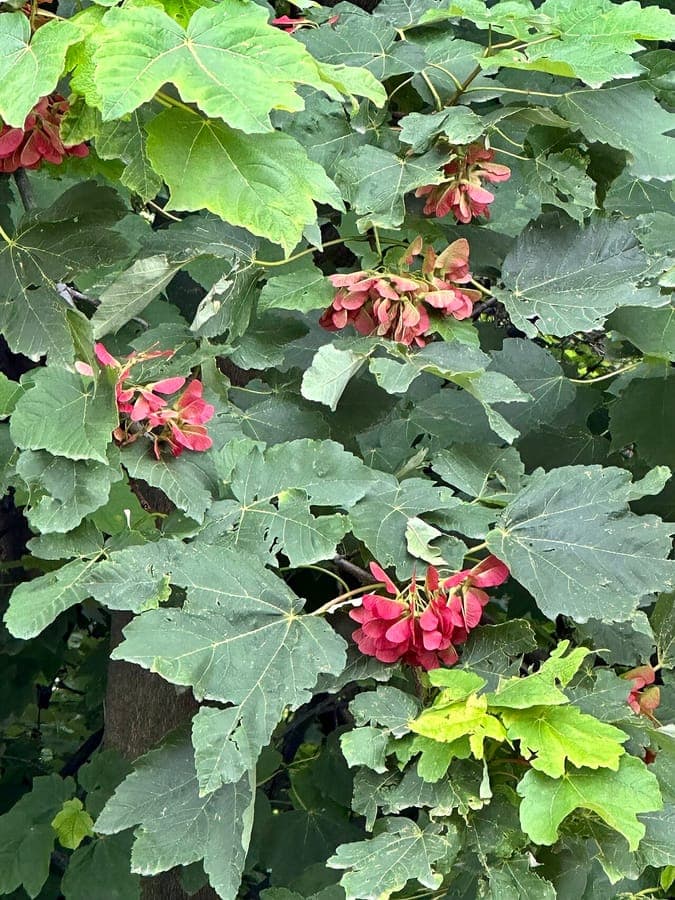
hllrnnr / CC0, via Wikimedia Commons
Acer velutinum: complete guide
Acer velutinum
¿Quieres ver Acer velutinum: complete guide en tu jardín?
1 minuto, sin tarjeta de crédito
Overview
Acer velutinum, commonly called velvet maple or Persian maple, is a beautiful deciduous tree native to the mountainous regions of Iran and the Caucasus. This medium-sized ornamental tree is prized for its distinctive soft, velvety foliage and exceptional cold-hardiness. With elegant branching architecture, spectacular autumnal colours, and tolerance for challenging climates, Acer velutinum deserves wider cultivation in European gardens.
Appearance & Bloom
Velvet maple reaches 10 to 15 metres in height, developing a dense, compact, naturally pyramidal crown. Leaves are large, deeply lobed, and possess the characteristic soft, velvety texture from which the common name derives. Foliage is dark green during the growing season, transforming in autumn to rich browns, deep reds, and golden yellows in spectacular display. Small green flowers appear in spring, followed by characteristic winged fruits (samaras).
Ideal Location
Velvet maple thrives in full sun to partial shade but tolerates stronger shade reasonably well. The tree is exceptionally frost-hardy and suitable for all European regions, including higher mountain elevations. Positioning away from strong north and east winds provides protection; shelter significantly improves growth and appearance.
Soil
Acer velutinum thrives in varied soils but prefers well-drained, slightly acidic, humus-rich earth. The tree tolerates dry soils but establishes more rapidly and grows more vigorously with consistent moisture availability. Heavy clay soils should be amended with compost and sand to improve drainage and root development.
Diseño gratis
¿Quieres ver Acer velutinum: complete guide en tu jardín? Crea un diseño gratis ahora.
Watering
Young trees should be irrigated regularly until well-rooted (first two seasons). Mature trees are quite drought-tolerant but appreciate regular moisture during dry periods and hot summers. Supplemental watering significantly enhances growth and leaf development in extended droughts.
Pruning
Velvet maple develops attractive form naturally and requires minimal pruning. Dead, damaged, or diseased branches may be removed in late winter (February-March). Heavy pruning should be avoided as the tree is somewhat susceptible to infection at wound sites.
Maintenance Calendar
February-March: Remove dead branches April-May: Flowering and leaf development May-October: Growth period October-November: Autumn colour display November-January: Dormancy and leaf fall
Winter Hardiness
Velvet maple is exceptionally cold-hardy, thriving to -20 degrees Celsius or colder. The tree is fully winter-hardy throughout all European regions, from northern Scandinavia to the Mediterranean.
Companion Plants
Velvet maple pairs beautifully with other Asian trees and shrubs including Malus, Ilex, and Cornus species. For underplanting, shade-tolerant groundcovers including Hedera helix, Sarcococca, and Aspidistra integrate seamlessly and enhance the overall composition.
Closing
Acer velutinum is an exceptional choice for gardeners seeking elegant, frost-hardy deciduous trees with fine texture, autumn colour, and specimen-quality branching. High-quality specimens are available from specialized nurseries throughout Europe. A worthy long-term investment for decades of enjoyment.
¿Quieres ver Acer velutinum: complete guide en tu jardín? Crea un diseño gratis ahora.
Sube una foto, elige un estilo y obtén un diseño fotorrealista con lista de plantas en menos de un minuto.
Más de 10.000 jardines diseñados
Sin tarjeta de crédito


Plantas similares
Acer pycnanthum: complete guide
Acer pycnanthum
Acer pycnanthum, the Japanese swamp maple, is a fast-growing tree with early red flowers and brilliant autumn color, ideal for damp garden settings.
Freeman maple: complete guide
Acer × freemanii
Everything about the Freeman maple (Acer x freemanii): a fast-growing shade tree with spectacular autumn colour for large gardens.
Wild ackee: complete guide
Cupania americana
A comprehensive guide to Cupania americana, a tropical tree from the Sapindaceae family with conspicuous white flowers and brown fruits, native to tropical America.