
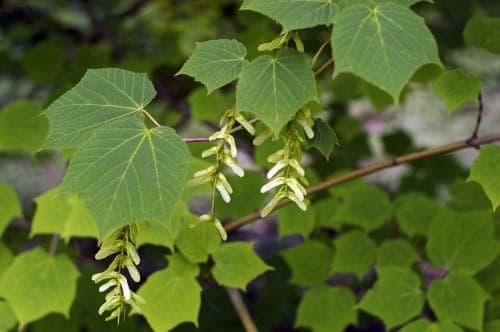
www.fitofoto.eu / CC BY 2.5, via Wikimedia Commons
Manchurian Striped Maple: complete guide
Acer tegmentosum
¿Quieres ver Manchurian Striped Maple: complete guide en tu jardín?
1 minuto, sin tarjeta de crédito
Overview
Manchurian striped maple (Acer tegmentosum) is an elegant tree species originating from the Russian Far East, Manchuria, and Korea. This distinctive tree belongs to the Sapindaceae family and is particularly noted for its unique striped trunk and branches, which display white stripes on a green background. The tree is perfect for gardeners wishing to embellish their front yard with a characterful, visually interesting tree with seasonal beauty.
Appearance and Bloom
Manchurian striped maple grows as a medium to small tree reaching 8-12 meters in height. The trunk and young branches are the most striking feature: they display vertical white stripes on green background, which is especially picturesque in winter. The foliage is opposite and lobed, similar to other maple species. In autumn, the foliage displays beautiful yellow to orange coloring. The flowers are small and inconspicuous, but form an essential part of the tree's biological cycle.
Ideal Location
Manchurian striped maple thrives best in a location with full to partial shade and protection from strong winds. In warm climates, partial shade is actually highly desirable. Ensure the tree has sufficient space to develop its natural form. A location where the striped trunk is clearly visible maximizes the landscape effect.
Soil
Manchurian striped maple is not particular about soil type but performs best in moist, well-draining, moderately fertile soil. The tree tolerates both acidic and neutral soils. In overly heavy clay soils, it is advisable to mix in well-draining potting soil. Ensure no waterlogging occurs.
Diseño gratis
¿Quieres ver Manchurian Striped Maple: complete guide en tu jardín? Crea un diseño gratis ahora.
Watering
During the growing season, water regularly, especially during dry periods. Once established, the tree is fairly drought-tolerant. In hot summers, additional water may be needed. In winter, watering can be significantly reduced.
Pruning
Manchurian striped maple requires minimal pruning if growing with proper support. Remove dead, diseased, or crossing branches. Avoid heavy pruning, as this can lead to water sprouts. The tree recovers slowly from severe pruning.
Maintenance Calendar
March-April: Beginning of growing season. April-May: Bloom. June-September: Summer growth. October-November: Fall color. December-February: Dormancy period.
Winter Hardiness
Manchurian striped maple is very hardy and can tolerate temperatures down to -25°C. This makes it an ideal choice for temperate to cold climates. In windy locations, winter protection may be beneficial.
Companion Plants
Manchurian striped maple combines beautifully with other trees and underplanting. Ideal companions are other maple species, birch trees, and shrubs with interesting structure. Underplanting with shade-loving perennials creates an integral garden landscape.
Closing Thoughts
Manchurian striped maple is a special tree for those who value structure and seasonal interest. With its striped trunk and yellow fall color, it brings Asian elegance to your front yard. Discover more tree selections at gardenworld.app/en.
¿Quieres ver Manchurian Striped Maple: complete guide en tu jardín? Crea un diseño gratis ahora.
Sube una foto, elige un estilo y obtén un diseño fotorrealista con lista de plantas en menos de un minuto.
Más de 10.000 jardines diseñados
Sin tarjeta de crédito


Plantas similares
Acer pycnanthum: complete guide
Acer pycnanthum
Acer pycnanthum, the Japanese swamp maple, is a fast-growing tree with early red flowers and brilliant autumn color, ideal for damp garden settings.
Freeman maple: complete guide
Acer × freemanii
Everything about the Freeman maple (Acer x freemanii): a fast-growing shade tree with spectacular autumn colour for large gardens.
Wild ackee: complete guide
Cupania americana
A comprehensive guide to Cupania americana, a tropical tree from the Sapindaceae family with conspicuous white flowers and brown fruits, native to tropical America.