
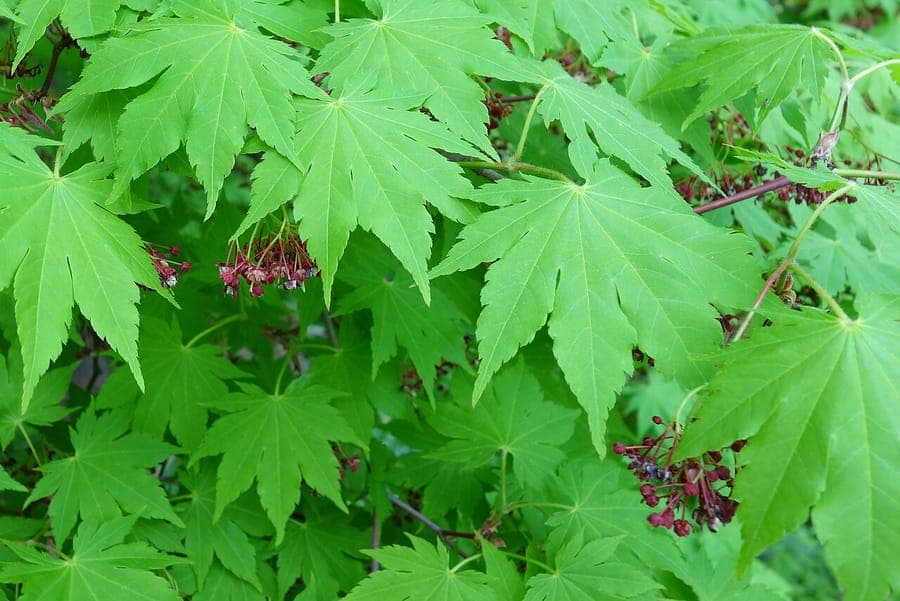
Daderot / CC0, via Wikimedia Commons
Siebold's Maple: complete guide
Acer sieboldianum
¿Quieres ver Siebold's Maple: complete guide en tu jardín?
1 minuto, sin tarjeta de crédito
Overview
Siebold's Maple (Acer sieboldianum) is a stunning deciduous tree from Japan distinguished by its delicate, deeply lobed leaves and spectacular fall color. This compact maple is perfect for gardens seeking subtle elegance and seasonal beauty without consuming enormous space. Originally cultivated in Japanese gardens for centuries, this species represents the pinnacle of ornamental tree selection for discerning gardeners seeking lasting visual interest and botanical distinction.
Appearance and Bloom
Acer sieboldianum grows as a graceful deciduous tree with a broad, spreading crown reaching 6-10 meters at maturity. The leaves are the highlight: deeply lobed with 7-11 points, finely toothed, and approximately 5-10 cm large. In spring, young leaves emerge with a beautiful greenish-red coloration before gradually turning dark green throughout summer. The fine texture of the foliage creates an airy, delicate appearance quite different from more robust maple species found in typical gardens.
The fall color is absolutely breathtaking, transitioning from yellows through brilliant oranges to intense deep reds, providing a stunning display that can last several weeks depending on weather conditions. Flowers are small and inconspicuous, reddish in tone, appearing in early spring before the new foliage fully develops. The fruits are characteristic winged seeds that drift gracefully on the breeze, fascinating to observe and beloved by children who collect them.
Ideal Location
This maple thrives best in partial shade to full sun conditions. In hot climates, morning sun with afternoon shade is ideal to prevent leaf scorch and heat stress. The tree prefers a location with good air circulation but protection from strong, drying winds that may damage slender branches. Sheltered valleys or locations on the east side of buildings often work well for optimal development. The tree reaches its full ornamental potential with consistent but not excessive light throughout the growing season.
Soil
Acer sieboldianum prefers moist, well-draining soil rich in organic matter and slightly acidic in character. A pH range of 6.0 to 7.5 is ideal for optimal growth and development. If you have heavy clay soil, amend it generously with aged compost, bark mulch, humus and perlite for significantly improved drainage. The tree absolutely never tolerates standing water or waterlogging conditions, as this causes rapid root rot and plant death. Good drainage is absolutely critical for long-term success and vigor.
Diseño gratis
¿Quieres ver Siebold's Maple: complete guide en tu jardín? Crea un diseño gratis ahora.
Watering
Water regularly and consistently, especially during the growing season and dry periods. Young trees require more frequent and thorough watering until well established, typically for the first 2-3 years of growth. Once mature and established, trees tolerate somewhat less frequent watering, though they dislike drought stress and will show visible stress symptoms. During hot summers, weekly deep watering may be necessary to maintain healthy growth. Mulching around the base helps retain soil moisture and regulate temperature.
Pruning
Prune in late winter or early spring before leaves emerge. Remove all dead, diseased, or crossing branches carefully. Maintain a balanced, natural crown form without excessive shaping or manipulation. This maple flowers on last year's wood, so heavy pruning may reduce spring flowering significantly. Minimal, selective pruning yields the best natural form and appearance overall.
Maintenance Calendar
- Spring: Water as soil dries. Apply fresh mulch layer annually. Begin post-winter care and inspection.
- Summer: Water regularly during dry spells. Monitor carefully for pests and disease issues.
- Fall: Continue watering until full leaf drop. Enjoy spectacular and extended fall color display.
- Winter: Winter dormancy period. Prune selectively in late winter before growing season begins.
Winter Hardiness
Acer sieboldianum is hardy in zones 5-7 and tolerates temperatures to -25 to -30 degrees Celsius. In colder climates, protection from extreme cold snaps and late spring frosts helps ensure survival. The tree is susceptible to late spring frost damage that can damage new growth, so position it in a sheltered location away from frost pockets in your garden.
Companion Plants
Underscore this maple beautifully with shade-loving understory plants that complement its character. Japanese Aucuba, fall bloomers like Anemone, Hosta varieties, Helleborus, and climbing ivy create a beautiful lower layer. The garden beneath the canopy naturally gains a restful, contemplative quality that Japanese gardens are famous for and valued by gardeners.
Closing
Siebold's Maple is an investment in decades of continuous beauty and enjoyment for you and your family. This refined tree adds elegance, structure, and spectacular seasonal color to any landscape. With proper placement and consistent basic care, this Japanese maple will provide enjoyment for generations to come, becoming more beautiful with age and maturity.
¿Quieres ver Siebold's Maple: complete guide en tu jardín? Crea un diseño gratis ahora.
Sube una foto, elige un estilo y obtén un diseño fotorrealista con lista de plantas en menos de un minuto.
Más de 10.000 jardines diseñados
Sin tarjeta de crédito


Plantas similares
Acer pycnanthum: complete guide
Acer pycnanthum
Acer pycnanthum, the Japanese swamp maple, is a fast-growing tree with early red flowers and brilliant autumn color, ideal for damp garden settings.
Freeman maple: complete guide
Acer × freemanii
Everything about the Freeman maple (Acer x freemanii): a fast-growing shade tree with spectacular autumn colour for large gardens.
Wild ackee: complete guide
Cupania americana
A comprehensive guide to Cupania americana, a tropical tree from the Sapindaceae family with conspicuous white flowers and brown fruits, native to tropical America.