
Jaknouse at English Wikipedia / Public domain, via Wikimedia Commons
Striped maple: complete guide
Acer pensylvanicum
¿Quieres ver Striped maple: complete guide en tu jardín?
1 minuto, sin tarjeta de crédito
Overview
The striped maple (Acer pensylvanicum), also known as moosewood, is a distinctive North American tree featuring characteristic green-white striped bark. This snakebark maple ranges from southeastern Canada through eastern and central United States.
The striped maple offers year-round seasonal interest with striking bark, delicate foliage, and bright yellow autumn color. It is a perfect choice for gardeners who appreciate subtle botanical details.
Appearance & Bloom Cycle
The striped maple grows as a slender tree 6 to 8 meters tall with elegant, upright form. The bark is most striking: green with characteristic white to cream vertical stripes, especially visible in winter.
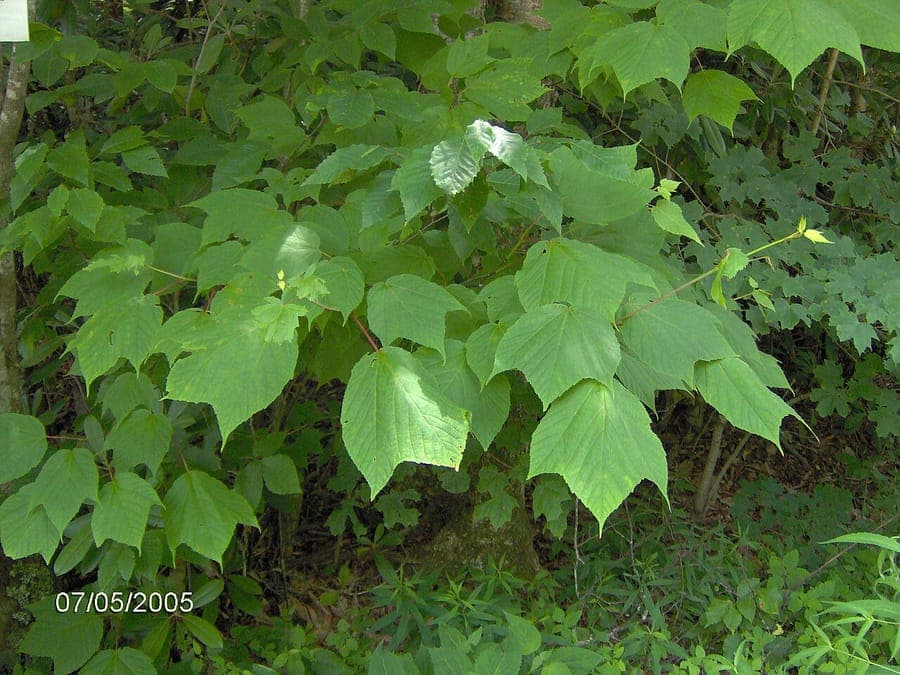
Leaves are large and heart-shaped, 8-15 cm long, trilobate (three-pointed), bright green in summer and brilliant yellow in autumn. Foliage is very finely toothed.
From May through June, small yellowish-green flowers appear in pendulous clusters. These are very conspicuous and attract numerous pollinators. Following bloom, green samara develop, turning brown in October and dropping.
Ideal Location
The striped maple grows optimally in dappled shade. Full sunlight can damage bark in very warm summers. The plant prefers shelter from strong, dry winds.
In woodland settings, beneath larger trees, or at woodland edges, this maple grows best.
Soil Requirements
The striped maple grows in moist, nutrient-rich soil with pH 4.4-6.5. The plant is somewhat acid-loving. Well-draining soil is essential; waterlogging causes root rot.
Amend planting soil generously with leaf mold or compost. The plant behaves as a forest specimen, favoring humus-rich, moderately fertile soils.
Diseño gratis
¿Quieres ver Striped maple: complete guide en tu jardín? Crea un diseño gratis ahora.
Watering
The striped maple requires consistent moisture supply, especially in first growing season. Soil should not dry completely. A 7-10 cm mulch layer aids moisture retention.
During dry summers, regular watering is important. This tree dries out faster than other maples and experiences water stress easily.
Pruning
The striped maple requires minimal pruning. The natural, upright form is elegant without intervention. Remove only dead, diseased, or damaged branches in late winter.
Avoid heavy pruning; this disturbs form and diminishes bark appeal.
Maintenance Calendar
March-April: Check for winter damage. Remove dead branches. Apply organic fertilizer.
May-June: Intensively monitor water status. Maintain mulch layer. Observe flowering phase.
July-August: Provide extra water during dry periods. Shade helps prevent bark stress.
September-October: Enjoy yellow autumn color. Gradually reduce moisture.
November-February: Admire striped bark in winter. Minimal watering needed.
Winter Hardiness
The striped maple is very hardy to -26°C (USDA zones 4-8). The plant tolerates very cold winters without damage. The characteristic bark remains intact and appears especially beautiful against snow.
Severe frost poses no problem. Frost damage is rare.
Companion Plants
The striped maple combines elegantly with other snakebark maples including red-barked maple, and Japanese maples. Well-suited for woodland garden planting with rhododendrons, azaleas, and woodland understory plants.
At gardenworld.app, incorporate this tree into your design and explore winter and summer effects.
Closing
The striped maple brings refined seasonal interest to your garden with its characteristic striped bark, delicate foliage, and bright yellow autumn color. A perfect tree for those who appreciate botanical details and wish to celebrate seasonal change.
With gardenworld.app, plan this elegant tree optimally within your garden landscape.
¿Quieres ver Striped maple: complete guide en tu jardín? Crea un diseño gratis ahora.
Sube una foto, elige un estilo y obtén un diseño fotorrealista con lista de plantas en menos de un minuto.
Más de 10.000 jardines diseñados
Sin tarjeta de crédito


Plantas similares
Acer pycnanthum: complete guide
Acer pycnanthum
Acer pycnanthum, the Japanese swamp maple, is a fast-growing tree with early red flowers and brilliant autumn color, ideal for damp garden settings.
Freeman maple: complete guide
Acer × freemanii
Everything about the Freeman maple (Acer x freemanii): a fast-growing shade tree with spectacular autumn colour for large gardens.
Wild ackee: complete guide
Cupania americana
A comprehensive guide to Cupania americana, a tropical tree from the Sapindaceae family with conspicuous white flowers and brown fruits, native to tropical America.