
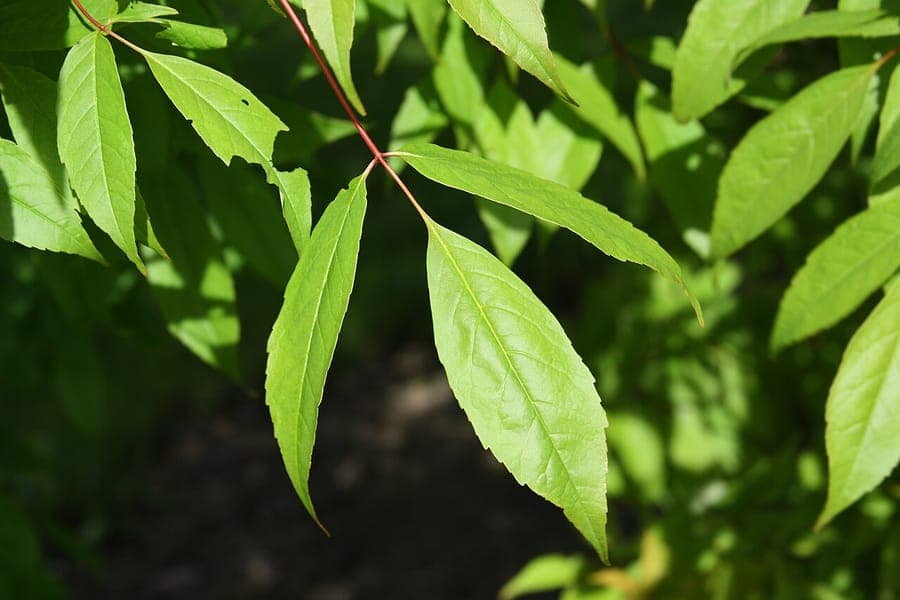
Abarmot / CC BY-SA 3.0, via Wikimedia Commons
Acer mandshuricum: complete guide
Acer mandshuricum
¿Quieres ver Acer mandshuricum: complete guide en tu jardín?
1 minuto, sin tarjeta de crédito
Overview
Acer mandshuricum, commonly known as Manchurian maple, is an elegant deciduous tree in the Sapindaceae family. This tree originates from Southeast Russia, North China and Korea and is known for its graceful trilobate leaves and spectacular autumn coloration. The tree typically reaches a height of 6-10 meters with a broad crown.
This is a valuable addition to gardens where seasonal interest and refined beauty are desired.
Appearance & bloom
Acer mandshuricum features characteristic trilobate leaves that are long and narrow. The leaves display a matte green color in summer and transform in autumn to beautiful shades of red, orange and yellow. The leaf undersides may have a softer reddish-purple tint.
The tree produces inconspicuous greenish flowers in early spring before the leaves fully emerge. The fruits are winged seeds (samaras) that split into two parts.
Ideal location
Acer mandshuricum grows best in full sun to light half-shade. The tree thrives with at least 4-5 hours of direct sun per day. The tree prefers protected locations from strong winds.
Soil
The tree prefers well-draining soil, not too wet. A slightly acidic to neutral soil (pH 6-7) is ideal. However it is adaptable to various soils. Avoid waterlogging in winter.
Watering
Water regularly the first year after planting. Once established, Acer mandshuricum is drought-tolerant. Water during dry periods in summer. No extra water needed in winter.
Diseño gratis
¿Quieres ver Acer mandshuricum: complete guide en tu jardín? Crea un diseño gratis ahora.
Pruning
Pruning is minimal. Remove dead or damaged branches in late winter. Avoid heavy pruning as this can introduce disease.
Maintenance calendar
Spring (March-May): Begin watering. Observe new leaf growth. Apply thin mulch around the tree. Summer (June-August): Water if it's dry. Observe tree growth and formation. Autumn (September-October): Enjoy beautiful autumn coloration. Water as needed. Winter (November-February): Minimal care. Check for diseases. Pruning can be done in February.
Winter hardiness
Acer mandshuricum is moderately to well winter-hardy and can tolerate temperatures down to approximately -10 C. It prefers protected locations in very cold areas.
Companion plants
Acer mandshuricum combines beautifully with:
- Cherry laurel (Prunus laurocerasus)
- Mahonia (Mahonia aquifolium)
- Ornamental grasses (Miscanthus)
- Skimmia (Skimmia japonica)
- Heuchera (Heuchera micrantha)
Closing
Acer mandshuricum is an elegant, long-lived tree that provides interest for decades. With minimal maintenance it will transform your garden with its delicate leaves and spectacular autumn coloration. A perfect choice for those wanting to create a refined, Asian atmosphere.
Available at major garden centers. For more ornamental tree options visit gardenworld.app/en
¿Quieres ver Acer mandshuricum: complete guide en tu jardín? Crea un diseño gratis ahora.
Sube una foto, elige un estilo y obtén un diseño fotorrealista con lista de plantas en menos de un minuto.
Más de 10.000 jardines diseñados
Sin tarjeta de crédito


Plantas similares
Acer pycnanthum: complete guide
Acer pycnanthum
Acer pycnanthum, the Japanese swamp maple, is a fast-growing tree with early red flowers and brilliant autumn color, ideal for damp garden settings.
Freeman maple: complete guide
Acer × freemanii
Everything about the Freeman maple (Acer x freemanii): a fast-growing shade tree with spectacular autumn colour for large gardens.
Wild ackee: complete guide
Cupania americana
A comprehensive guide to Cupania americana, a tropical tree from the Sapindaceae family with conspicuous white flowers and brown fruits, native to tropical America.