
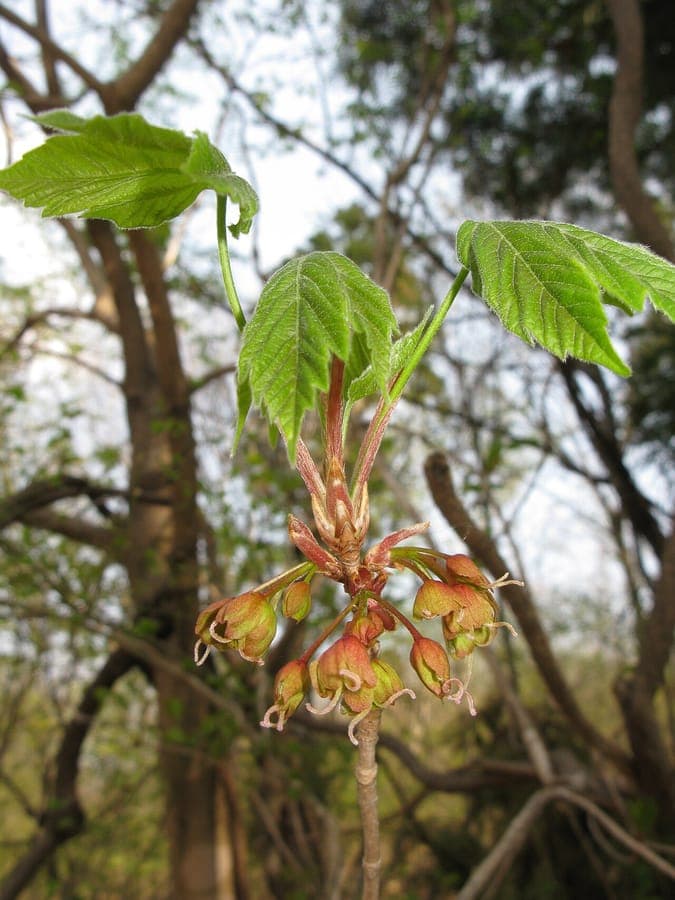
Qwert1234 / CC BY-SA 3.0, via Wikimedia Commons
Acer diabolicum: complete guide
Acer diabolicum
¿Quieres ver Acer diabolicum: complete guide en tu jardín?
1 minuto, sin tarjeta de crédito
Overview
Acer diabolicum, commonly known as Devil's maple or Horned maple, is a captivating Japanese ornamental tree that captivates gardeners with its unique appearance and manageable growth habit. This deciduous species earns its colorful common name from its characteristic spiky seed pods resembling tiny devil's horns. The Devil's maple belongs to the Acer genus, a group renowned for autumn color and refined growing requirements, making it a valuable addition to shaded garden spaces where many other trees struggle.
This graceful tree grows at a moderate pace, ultimately reaching 8 to 12 meters in height depending on conditions. The tree is fully winter hardy throughout Northern Europe, offering outstanding autumn color that progresses from vibrant red through golden yellow hues.
Appearance and bloom
The Devil's maple immediately draws attention through its distinctive fruit structures. The opposite leaves are large, reaching up to 12 centimeters in length, with clearly serrated margins typical of Acer species. The leaf arrangement is elegant and orderly throughout the growing season.
Small, inconspicuous yellow-green flowers appear in spring, typically April through May, arranged in drooping clusters. These delicate flowers are easy to overlook but signal the coming autumn spectacle.
The most remarkable feature is the double-winged fruit (samara) with distinctive spikes projecting from the lower surface, creating the characteristic "devil" appearance. These fruits mature in autumn, displaying yellow-green and reddish coloration. They serve not only as decorative garden elements but also ensure seed dispersal through wind and animal activity.
The bark of mature trees is smooth and gray-green, providing visual interest during winter months. Autumn foliage transforms to brilliant orange and red tones, creating a visual highlight in any garden setting.
Ideal location
Devil's maple thrives best in partial to light dappled shade. Full sun can lead to leaf scorch during hot summers. A location beneath larger trees where filtered light passes through the canopy provides ideal conditions.
This tree excels in Japanese gardens, woodland gardens, and shaded corners. Its moderate growth rate makes it suitable for smaller properties as well. Position it where you can enjoy its features year-round - spring flowers, summer green foliage, autumn red fruits and color, and winter branch structure.
Provide minimum spacing of 1.5 to 2 meters from other large trees and approximately 3-4 meters from buildings.
Soil
Acer diabolicum is not extremely particular regarding soil type but performs best in slightly acidic to neutral soil with pH between 5.5 and 7.0. The soil must be well-draining, preventing waterlogging that causes root rot.
Amend planting holes with organic material such as composted leaf mold or garden compost before planting. This improves both drainage and moisture retention, creating an optimal balance. In heavy clay soils, adding sand or perlite is advisable.
Avoid compacted, poorly-drained soils. For gardens on clay-heavy terrain, excavate a planting pit at least 1.5 to 2 times larger than the root ball.
Diseño gratis
¿Quieres ver Acer diabolicum: complete guide en tu jardín? Crea un diseño gratis ahora.
Watering
Young Devil's maple requires regular watering, especially during the first growing season and through dry periods. Keep soil evenly moist but never waterlogged. A thick mulch layer around the tree (approximately 5-7 centimeters, kept away from the trunk) helps retain soil moisture.
Once established, Devil's maple is quite drought-tolerant, though it performs better with regular watering. Provide supplemental water during hot summers, especially if leaf discoloration appears - a sign of drought stress.
Winter water requirements are reduced. Check soil moisture by feeling 10 centimeters deep. If this layer feels completely dry, watering is needed.
Pruning
Devil's maple requires minimal pruning. The tree naturally develops an attractive rounded shape. Remove only dead, damaged, or crossing branches.
Best pruning occurs during winter dormancy or immediately after spring flowering. Avoid late-summer pruning, which stimulates tender new growth vulnerable to frost damage.
For older specimens, light thinning pruning allows sunlight to penetrate the tree's interior.
Maintenance calendar
March/April: Inspect for damaged branches and remove as needed. Apply compost layer around root base.
May through July: Water regularly during dry periods. Monitor for pest problems.
August: Gradually reduce watering as preparation for autumn.
September/October: Enjoy autumn color display. Collect fallen seed pods if saving seed.
November/December: Winter maintenance - check tree support (for recently planted specimens) and repair damage.
January/February: Prune diseased/dead branches if necessary.
Winter hardiness
Devil's maple is fully hardy to USDA zone 5 (minimum -28 degrees C), meaning it grows without winter protection throughout Northern Europe and the British Isles. Young specimens benefit from some protection during harsh winters with strong winds.
Protection can consist of loose burlap wrapping or leaf mulch around the root base. Never use plastic covering, which causes waterlogging and fungal problems.
Companion plants
Devil's maple combines beautifully with shade-tolerant groundcovers including ivy, Solomon's seal, and shade ferns. Hellebores (winter roses) provide early spring color before the maple leafs out.
Larger companion plantings might include other Acer species, Pieris, Enkianthus, or small Azalea varieties. This combination creates an authentic Japanese garden atmosphere.
Closing thoughts
Devil's maple is a fascinating choice for gardeners seeking something beyond standard Japanese maples. With unique fruits, spectacular autumn color, and shade tolerance, Acer diabolicum provides year-round garden interest. The tree requires minimal maintenance, making it suitable for both beginning and experienced gardeners.
Look for this gem at specialty nurseries and garden centers. Choose healthy specimens with strong branch structure for best garden performance. Devil's maple will provide many years of garden enjoyment and conversation.
¿Quieres ver Acer diabolicum: complete guide en tu jardín? Crea un diseño gratis ahora.
Sube una foto, elige un estilo y obtén un diseño fotorrealista con lista de plantas en menos de un minuto.
Más de 10.000 jardines diseñados
Sin tarjeta de crédito


Plantas similares
Acer pycnanthum: complete guide
Acer pycnanthum
Acer pycnanthum, the Japanese swamp maple, is a fast-growing tree with early red flowers and brilliant autumn color, ideal for damp garden settings.
Freeman maple: complete guide
Acer × freemanii
Everything about the Freeman maple (Acer x freemanii): a fast-growing shade tree with spectacular autumn colour for large gardens.
Wild ackee: complete guide
Cupania americana
A comprehensive guide to Cupania americana, a tropical tree from the Sapindaceae family with conspicuous white flowers and brown fruits, native to tropical America.