
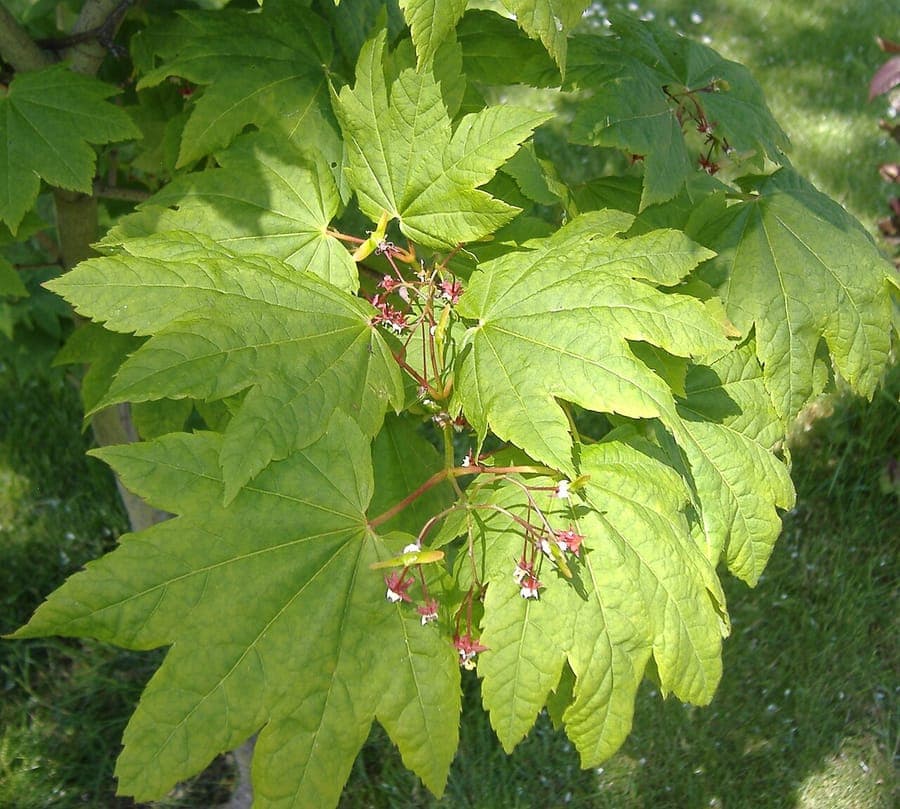
Tony Perodeau / CC BY-SA 3.0, via Wikimedia Commons
Vine maple: complete guide
Acer circinatum
¿Quieres ver Vine maple: complete guide en tu jardín?
1 minuto, sin tarjeta de crédito
Overview
The vine maple (Acer circinatum) is an elegant shrubby tree native to the temperate rainforests of the Pacific Northwest, from Alaska to northern California. This ornamental maple derives its common name from its gracefully arching, vine-like growth habit. The vine maple is renowned for its distinctively rounded leaves and spectacular autumn coloration.
This plant creates stunning accents in both contemporary and naturalistic gardens, especially where vertical movement and seasonal color are desired. It represents a botanical treasure for discerning gardeners.
Appearance & Bloom Cycle
The vine maple grows as a fine, elegant shrub or small tree reaching 4 to 6 meters high. Stems display green and red coloration, intensifying throughout seasons. The most distinctive feature is the foliage: nearly circular leaves, 5-10 cm diameter, with fine serrated margins and deeply lobed venation resembling an open hand.
Small, green to reddish-purple flowers appear in May, hanging in pendulous clusters. These attract numerous pollinators. After flowering, characteristic winged fruits (samaras) develop in red-brown, ripening in October.
Autumn is the supreme show: leaves transform yellow through deep red-orange with occasional purple tones, lasting until November.
Ideal Location
The vine maple thrives in dappled to full shade. Excessive direct southern sun can scorch foliage. In warm summer regions, afternoon protection is essential.
The plant prefers locations sheltered from strong winds. Severe exposure can damage branches.
Soil Requirements
The vine maple grows optimally in nutrient-rich, moist but well-draining soil with pH 5.5-7.5. The plant behaves like a forest understory specimen, favoring rich, humus-laden soils.
Amend planting soil generously with compost or leaf mold. This improves moisture retention and nutrient availability.
Diseño gratis
¿Quieres ver Vine maple: complete guide en tu jardín? Crea un diseño gratis ahora.
Watering
The vine maple requires consistent moisture assessment. During growing season, soil should not dry completely. Ideally, soil remains consistently moist but never waterlogged.
Water during dry periods, especially in first and second growing seasons. A 7-10 cm organic mulch layer significantly aids moisture retention. In full summer heat, daily watering may be needed in very dry regions.
Pruning
The vine maple requires minimal pruning. Its growth pattern is naturally elegant without intervention. Remove only dead, damaged, or diseased branches in late winter (February-March).
If a tree form is preferred, gradually remove lower branches, though the shrub form is typically more attractive and natural.
Maintenance Calendar
March-April: Check for winter damage. Apply tree-specific organic fertilizer.
May-June: Ensure consistent moisture supply. Maintain mulch layer.
July-August: Provide shade during extreme heat. Extra water during droughts.
September-October: Enjoy autumn color display. Gradually reduce moisture.
November-February: Winter dormancy. Minimal watering needed.
Winter Hardiness
The vine maple is very hardy to -23°C (USDA zones 5-7). The plant tolerates snow and frost without issues. However, late spring frosts can damage young shoots.
In very cold continental climates, minor cane dieback may occur, though rarely. Shelter helps prevent this.
Companion Plants
The vine maple combines beautifully with Japanese and American maples, Japanese eared maple, and palm maple. It also grows excellently alongside rhododendrons, azaleas, and other shade-loving shrubs.
At gardenworld.app, incorporate the vine maple into your design and visualize how this ornamental value stands against other plant choices.
Closing
The vine maple brings botanical elegance and annual color spectacle to your garden. With consistent moisture and protection from extremes, this tree grows excellently. A true jewel for those who appreciate fine details and seasonal beauty.
With gardenworld.app, visualize how this magnificent maple transforms your garden landscape.
¿Quieres ver Vine maple: complete guide en tu jardín? Crea un diseño gratis ahora.
Sube una foto, elige un estilo y obtén un diseño fotorrealista con lista de plantas en menos de un minuto.
Más de 10.000 jardines diseñados
Sin tarjeta de crédito


Plantas similares
Acer pycnanthum: complete guide
Acer pycnanthum
Acer pycnanthum, the Japanese swamp maple, is a fast-growing tree with early red flowers and brilliant autumn color, ideal for damp garden settings.
Freeman maple: complete guide
Acer × freemanii
Everything about the Freeman maple (Acer x freemanii): a fast-growing shade tree with spectacular autumn colour for large gardens.
Wild ackee: complete guide
Cupania americana
A comprehensive guide to Cupania americana, a tropical tree from the Sapindaceae family with conspicuous white flowers and brown fruits, native to tropical America.