
Magnus Manske / CC BY-SA 3.0, via Wikimedia Commons
Spiny bear's-breeches: complete guide
Acanthus spinosus
¿Quieres ver Spiny bear's-breeches: complete guide en tu jardín?
1 minuto, sin tarjeta de crédito
Overview
Acanthus spinosus, commonly called spiny bear's-breeches or prickly acanthus, is an impressive foliage plant from the Acanthaceae family. Originally from southeastern Europe to southern Turkey, this plant documented since 1753 now thrives in gardens throughout Europe.
The spiny acanthus is renowned for its striking architectural appearance with deeply cut, spine-tipped leaves that stand out almost sculpturally. The plant forms massive, dense clumps 1 meter or taller in height and equally broad.
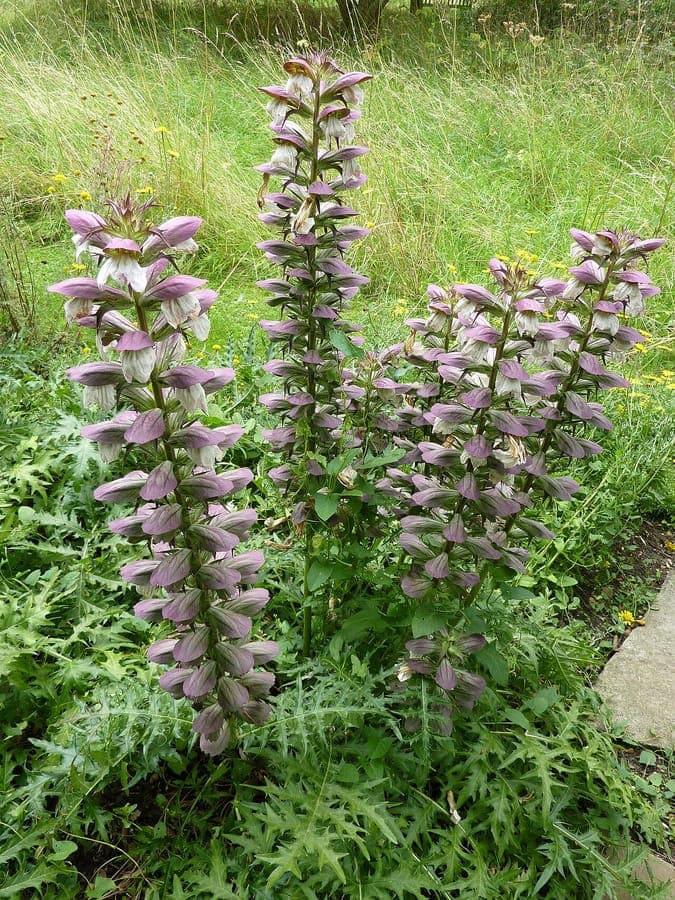
The summer blooms are truly spectacular - vertical, torch-like inflorescences reaching 60 centimeters tall filled with small white to pale-purple flowers with characteristic purple bracts. These flower spikes are long-lasting and serve as popular cut flowers.
The spiny acanthus is vigorous and self-regulating. It self-seeds gently, supporting naturalization in suitable climates. The plant is very winter hardy in temperate zones.
Available at nurseries specializing in Mediterranean plants under names including spiny acanthus, Acanthus spinosus, or prickly acanthus.
Appearance and bloom
Acanthus spinosus forms dense clumps of large, deeply compound leaves. The leaves are pinnatisect - deeply cut into needle-like, spiny segments with sharp points. Mature leaf sizes reach 50 centimeters or longer.
The leaf formation is the primary landscape feature. During warm summer, the plant grows rapidly from dormancy and forms impressive, dark green foliage masses that stand architecturally distinct against light backgrounds.
Blooming occurs from June through August. Vertical, proudly upright torch-like inflorescences emerge above the foliage canopy. Each bloom can reach 40 to 60 centimeters tall and contains dozens of small two-lipped flowers with purple bracts and white petals.
Following bloom, seed pods ripen and develop popping mechanisms for seed dispersal. Seed production is prolific and supports natural seeding.
Ideal location
Acanthus spinosus thrives in full sun to half-shade, ideally with at least 4 to 6 hours of direct sunlight. The plant tolerates shade but blooms minimally in deep shade.
Position it in warm, windbreak locations where the imposing structure achieves optimal visual impact. The plant thrives against walls, as screen elements, or in mass plantings.
Spiny acanthus grows best in warm microclimates where night temperatures remain moderate. In northwest Europe, it tolerates cold but bloom frequency may reduce in colder years.
Avoid very wet, waterlogged locations; drainage is essential though moisture tolerance is present.
Soil requirements
Acanthus spinosus grows in a broad range of soil types but thrives best in well-draining, moderately fertile soil. Both acidic and alkaline soils are acceptable, with pH between 5.5 and 8.5.
The ideal soil composition consists of 40% compost, 30% leaf mold, 15% sand for drainage, and 15% fine leaf mulch. This mixture mimics Mediterranean forest soils.
In heavy clay soils, add substantial sand (30-40%) to improve drainage. In very fertile soils, the plant grows luxuriantly but blooming may be reduced.
The plant accepts moderately poor soils and even tolerates sandy conditions; nutrient status limits growth more if suboptimal.
Diseño gratis
¿Quieres ver Spiny bear's-breeches: complete guide en tu jardín? Crea un diseño gratis ahora.
Watering
Acanthus spinosus has moderate water requirements. During growth (May-October), keep soil consistently moist but not waterlogged. Water deeply twice weekly during dry periods.
Once established (after two years), the plant tolerates significant drought and can survive months with minimal rainfall. The deep-rooting system draws water from deep soil layers.
In winter, apply virtually no water except during very dry periods. The plant prefers somewhat drier conditions during winter dormancy.
Pruning
Acanthus spinosus requires little pruning after blooming. The plant grows open and transparent without dense growth.
Remove dead inflorescences after August for neater appearance, though dead material can remain for bird food. Carefully remove damaged leaves, being mindful of sharp spiny edges.
In early spring, cut back to approximately 30 centimeters height to encourage compact, bushy growth. However, this weakens growth. Most gardeners leave the plant unpruned for full height.
Maintenance calendar
March-April: Check for winter damage, add compost to plant base. Begin regular watering.
May-June: Observe rapid growth, ensure adequate water. Flower formation begins.
July-August: Peak bloom period, harvest cut flowers if desired. Continue regular watering.
September-October: Bloom period wanes, seeds ripen. Gradually reduce watering.
November-February: Winter dormancy; minimal water. Plant may appear dead; do not remove.
Winter hardiness
Acanthus spinosus is hardy to approximately -8 to -12 degrees Celsius, depending on genotype. In many northwest European gardens, it survives winter without protection in open ground.
In colder regions, add mulching (10-15 centimeters) or protect with reed surrounds or burlap in severe winters. Protection becomes less necessary as the plant matures and strengthens.
Companion plants
Acanthus spinosus combines spectacularly with other Mediterranean, warmth-loving species such as lavender (Lavandula), sage (Salvia), and rock rose (Cistus).
Mix with flowering perennials like lychnis, betony (Betonica), and ornamental grasses for dynamic mixed borders. The structural architecture of Acanthus spinosus balances soft-blooming species.
Avoid competitive giants that might obscure the spiny beauty.
Closing thoughts
Acanthus spinosus delivers architectural drama and Mediterranean elegance to gardens. Its spiny leaves, imposing structure, and spectacular flower spikes make it a statement plant that performs for years. With minimal care once established, it tolerates dry conditions and accommodates soil irregularities.
Position it prominently where its structure fully expresses itself. The plant deserves recognition as one of Europe's most dramatic Mediterranean perennials.
Extraordinary durability combined with elegant presentation makes this plant exceptionally valuable. The robust nature of the species ensures long-term performance under challenging conditions. W
¿Quieres ver Spiny bear's-breeches: complete guide en tu jardín? Crea un diseño gratis ahora.
Sube una foto, elige un estilo y obtén un diseño fotorrealista con lista de plantas en menos de un minuto.
Más de 10.000 jardines diseñados
Sin tarjeta de crédito


Plantas similares
Limestone wild petunia: complete guide
Ruellia strepens
Ruellia strepens is a long-blooming perennial native to central and eastern North America, with lavender trumpet flowers from June to September.
Shrimp plant: complete guide
Justicia brandegeeana
Everything about the shrimp plant (Justicia brandegeeana): cultivation, ideal location, watering, pruning and overwintering of this popular tender ornamental.
Caricature-plant: complete guide
Graptophyllum pictum
Grow the vibrant Caricature-plant with its striking patterned foliage. Care tips, cultivation, and pairing ideas for indoors and outdoors.