
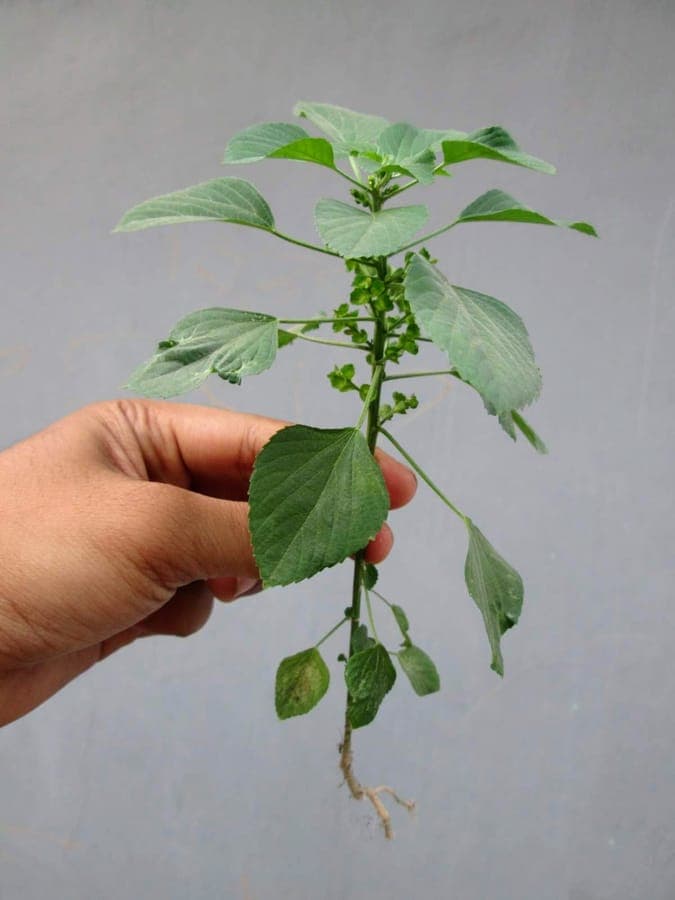
Aris riyanto / CC BY-SA 4.0, via Wikimedia Commons
Indian acalypha: complete guide
Acalypha indica
¿Quieres ver Indian acalypha: complete guide en tu jardín?
1 minuto, sin tarjeta de crédito
Overview
Indian acalypha, also known as copperleaf or Indian-nettle, is a fascinating ornamental plant from tropical Asia. This compact-growing shrublet is renowned for its striking foliage colored in shades of red to brown with interesting leaf textures. In tropical and subtropical climates, it grows into a full, graceful shrub reaching about 30 to 50 centimeters tall. The plant thrives both indoors and outdoors in warmer regions. It is also valued in traditional medicine across Southeast Asia.
Appearance and bloom
Indian acalypha has a compact, bushy growth habit with sturdy, upright stems. The leaves are alternate and oval to lanceolate-shaped with coarse margins and prominent veining. Foliage is glossy dark-green to reddish-brown, depending on light conditions and plant variety. Young leaves are often brighter, fading as they mature. Small, inconspicuous greenish to red flowers appear in drooping clusters at leaf axils and are not the plant's main attraction. The true beauty lies in the decorative foliage. In tropical conditions, the plant blooms almost year-round.
Ideal location
Indian acalypha thrives in bright, indirect light. Do not place in full direct sunlight, as this can scorch and dry the leaves. Ideal locations are near south or west-facing windows with filtering through sheer curtains. Indoors, position away from intense afternoon sun. Very shady spots must be avoided as they cause foliage pallor and poor growth. For outdoor culture in warmer climates, partial shade is acceptable.
Soil
Indian acalypha grows best in airy, well-draining potting mix with high organic content. Combine potting soil with additions of perlite or sand for better drainage. A mix of 50% potting soil, 30% leaf mold, and 20% perlite works excellently. Heavy clay soils must be avoided. Ensure good drainage with holes in pots. A drainage layer of 2 to 3 centimeters at pot bottom prevents waterlogging. Monthly light feeding helps keep the plant healthy.
Watering
Indian acalypha has moderate water needs. Potting mix should be moist but not soggy. Water when the top 1 to 2 centimeters of soil feels dry. Overwatering is very harmful and causes root rot. In summer, you'll likely water 2 to 3 times weekly; in winter, about once weekly. Rainwater is preferable to tap water due to chlorine content. Ensure water drains well after watering. Higher humidity helps; misting leaves with fine spray promotes plant health.
Diseño gratis
¿Quieres ver Indian acalypha: complete guide en tu jardín? Crea un diseño gratis ahora.
Pruning
Regular pruning keeps Indian acalypha compact and full. Pruning can be done year-round, but spring is best. Remove all wilted, yellow, or damaged leaves. Pinch growing shoot tips to encourage branching and bushier growth. This creates a denser, fuller appearance. Remove very long or thin branches. Regular pruning also promotes better flower production. Use sterilized pruning tools to prevent disease transmission.
Maintenance calendar
January to March: pruning as needed, inspect for pests, monitor winter temperatures. April to June: regular watering, monthly feeding, ensure good air circulation. July to September: increase watering for heat, regular misting for humidity. October to December: reduce watering, maintain minimum 15C temperature, rest period. Annual spring feeding supports healthy growth.
Winter hardiness
Indian acalypha is not winter-hardy in temperate climates. The plant tolerates winter temperatures around 10 to 15C but prefers minimums of 15 to 18C. Below 10C, the plant becomes dormant and leaves drop. In cold climates, it's suitable only as a houseplant. Protect against drafts and temperature fluctuations. In very warm indoor spaces, dry air can be problematic. Ensure adequate air circulation to prevent fungal issues.
Companion plants
Indian acalypha combines well in groups with other tropical foliage plants like Coleus, Caladium, and Begonia rex. The reddish-brown tones pair nicely with yellow-flowering tropical plants. In indoor culture, combine with other shade-tolerant green foliage plants. For outdoor culture in tropical regions, pairs well with shrubs of similar height. Avoid pairing with aggressive root competitors. Grouping in different pot sizes provides visual dimension.
Closing thoughts
Indian acalypha is a charming, easy-to-grow ornamental requiring less fussing than many other tropical houseplants. With suitable lighting, moderate watering, and regular pruning, you'll create a full, graceful plant. Whether you choose it for your bedroom, living room, or plant collection, this green treasure will bring you much joy. Visit local plant nurseries for young specimens and professional care advice.
gardenworld.app: Discover more tropical plant combinations on gardenworld.app for your interior.
gardenworld.app: Complete your interior design with the right plants on gardenworld.app!
¿Quieres ver Indian acalypha: complete guide en tu jardín? Crea un diseño gratis ahora.
Sube una foto, elige un estilo y obtén un diseño fotorrealista con lista de plantas en menos de un minuto.
Más de 10.000 jardines diseñados
Sin tarjeta de crédito


Plantas similares
Woolly mercury: complete guide
Mercurialis tomentosa
All about Mercurialis tomentosa, the woolly mercury from southwestern Europe: site, soil, watering, care and garden design tips.
Shurur: complete guide
Euphorbia fruticosa
Everything about Shurur: cultivation in dry climates, xeriscaping, care and tips for drought-resistant gardens in warm climates
Glary spurge: complete guide
Euphorbia glareosa
Everything about glary spurge: cultivation, maintenance, frost hardiness and use in Mediterranean and mountain-inspired gardens